There is something wonderful about enjoying a traditional Thanksgiving-style dinner without having to roast an entire turkey. Whether you are preparing a smaller holiday meal, planning a Sunday family dinner, or simply craving tender turkey with homemade-style gravy, this Slow Cooker Turkey Breast and Gravy recipe is an excellent choice.
Using boneless turkey breast roasts, prepared gravy packets, and a combination of traditional herbs and seasonings, this recipe creates a comforting meal with very little hands-on work. Everything cooks slowly in the crockpot, allowing the turkey to become tender while the gravy develops a rich, savory flavor.
One of the best things about this recipe is its simplicity. You do not need to spend hours watching the oven or worrying about roasting a whole bird. Season the turkey, prepare the gravy mixture, place everything in the slow cooker, and let it cook until perfectly tender.
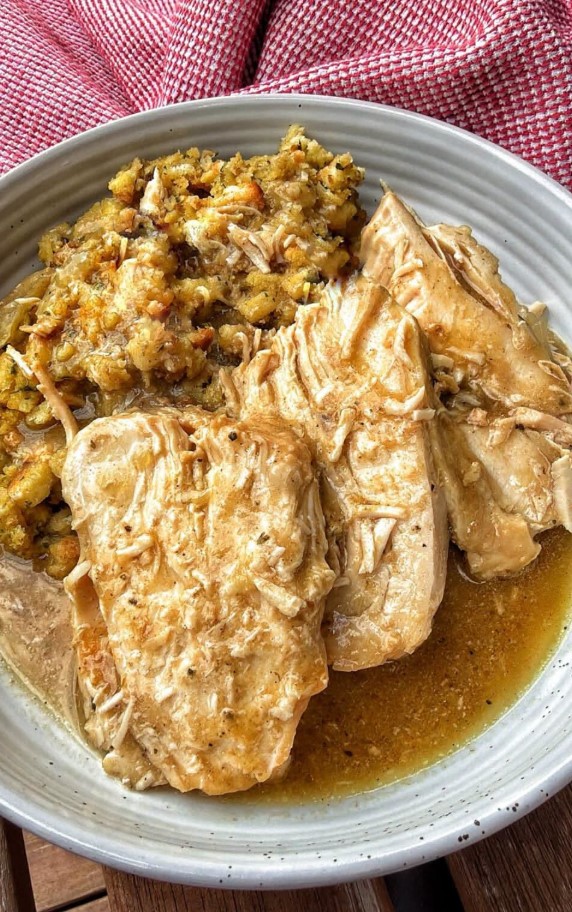
The finished turkey can be sliced for a traditional dinner or gently broken into pieces and served directly in the gravy. Either way, it pairs beautifully with mashed potatoes, egg noodles, rice, and your favorite holiday sides.
Why You Will Love This Slow Cooker Turkey Recipe
There are several reasons this recipe deserves a place in your regular meal rotation.
- Easy preparation: Most of the work involves seasoning the turkey and mixing the gravy ingredients.
- Perfect for smaller gatherings: You can enjoy Thanksgiving flavors without preparing a whole turkey.
- Tender, flavorful meat: Slow cooking allows the turkey breast to become tender and absorb the flavors of the herbs and gravy.
- Convenient gravy: The gravy packets included with the turkey roasts provide a simple starting point for a savory sauce.
- Make-ahead friendly: The cooked turkey and gravy can be refrigerated or frozen for another meal.
- Versatile serving options: Enjoy it with mashed potatoes, rice, egg noodles, or inside hot turkey sandwiches.
Ingredients You Will Need
This recipe uses two boneless turkey breast roasts, each package labeled approximately 3 pounds, including its gravy packet.
For the Turkey
- 2 Butterball boneless turkey breast roasts, completely thawed, approximately 3 pounds each including the gravy packets
- Avocado oil, enough to lightly coat both turkey roasts
- Poultry seasoning, to taste
- Dried sage, to taste
- Dried rosemary, a small amount
- Celery salt, a small amount
- Black pepper, to taste
For the Gravy
- 2 gravy packets included with the turkey roasts
- 2 cups water
- Turkey bouillon, starting with 1 teaspoon and adjusting to taste
- Poultry seasoning, to taste
- Dried sage, to taste
- Black pepper, to taste
- White pepper, a small amount
- Dried parsley, to taste
Optional Ingredients for Thicker Gravy
- 1 tablespoon cornstarch
- 1 tablespoon cold water
- Additional cornstarch and water if needed
Alternatively, you can use Wondra flour according to its package instructions.
Important seasoning note: The turkey roasts, included gravy packets, and bouillon already contain salt. Start with small amounts of celery salt and bouillon, then taste the finished gravy before adding more.
Preparation and Cooking Time
- Preparation time: 20 minutes
- Cooking time: Approximately 8 hours on LOW
- Total time: Approximately 8 hours and 20 minutes
- Servings: 8 to 12
Cooking time varies depending on your slow cooker and the size of the turkey roasts. Begin checking earlier, around 5 to 6 hours, and use a meat thermometer to confirm doneness.
How to Make Slow Cooker Turkey Breast and Gravy
Step 1: Thaw the Turkey Completely
Before beginning, make sure both turkey breast roasts are completely thawed.
The safest approach is to thaw them in the refrigerator according to the package instructions. Even if the packaging includes directions for cooking directly from frozen in an oven, those instructions do not apply to this slow cooker recipe.
Once thawed, remove the turkey from its outer packaging.
Set aside the two gravy packets because you will need them to prepare the cooking liquid.
Step 2: Decide Whether to Remove the Netting
Many boneless turkey breast roasts come wrapped in string netting that helps them maintain their shape.
You have two options depending on how you want the finished turkey to look.
If you prefer tender pieces of turkey that naturally fall apart and mix into the gravy, remove the cooking netting before placing the roasts in the slow cooker.
If you prefer slices that hold together more neatly, leave the cooking netting on during cooking. Once the turkey is fully cooked and rested, carefully remove the netting before slicing.
Always remove all outer plastic packaging before cooking.
Step 3: Season the Turkey Breasts
Place the thawed turkey roasts on a clean surface.
Lightly coat both pieces with avocado oil, making sure the surface is covered.
Sprinkle the turkey with poultry seasoning, dried sage, a little dried rosemary, black pepper, and a small amount of celery salt.
Rub the seasonings gently over the entire surface so the flavor is distributed evenly.
The poultry seasoning gives the turkey its familiar holiday flavor, while the extra sage adds a traditional Thanksgiving aroma.
If you have enough time, you can loosely cover the seasoned turkey and refrigerate it overnight. This allows the seasonings to sit against the meat before cooking.
Keep the turkey refrigerated rather than leaving it at room temperature.
Step 4: Prepare the Gravy Mixture
In a medium-sized bowl, add both gravy packets.
Pour in the two cups of water and whisk until the packets are dissolved.
Add a small amount of turkey bouillon, poultry seasoning, dried sage, black pepper, a little white pepper, and dried parsley.
Whisk everything together until the mixture is smooth and evenly combined.
Start with approximately one teaspoon of turkey bouillon. You can add more later if the finished gravy needs additional flavor.
Although the original preparation uses approximately one heaping tablespoon, different brands of bouillon have different salt levels. It is better to start with less than risk making the gravy too salty.
Step 5: Arrange Everything in the Slow Cooker
Place the seasoned turkey breast roasts inside a slow cooker large enough to hold both pieces comfortably.
Make sure the lid can close completely without pressing against the turkey.
Pour the prepared gravy mixture over the turkey breasts.
The liquid will surround the meat as it cooks, allowing the turkey to develop flavor while creating a delicious gravy.
You do not need to add extra water at this stage unless the gravy packet instructions specifically require it.
Step 6: Cook on LOW
Cover the slow cooker with its lid and set it to LOW.
Allow the turkey to cook slowly until both roasts reach an internal temperature of at least 165°F (74°C) in their centers.
The original preparation took approximately eight hours, but your slow cooker may cook faster or slower.
Begin checking around the 5-to-6-hour mark.
If you removed the netting before cooking, check several of the thickest turkey pieces to make sure all portions are fully cooked.
Avoid relying on cooking time alone. A meat thermometer is the most reliable way to confirm that the turkey is safe to serve.
Step 7: Rest and Cut the Turkey
Once the turkey has reached 165°F, carefully remove the roasts from the slow cooker.
Place them on a serving platter and allow them to rest for approximately 10 to 15 minutes.
If you left the cooking netting on, remove it carefully after resting.
You can now choose how to serve the turkey.
For a traditional presentation, slice the turkey into thick pieces.
For a more rustic, comforting meal, gently separate the meat into larger chunks using two forks.
Because the turkey becomes very tender during slow cooking, some pieces may naturally fall apart. This is perfectly fine and makes the turkey especially delicious when served with gravy.
Step 8: Finish the Gravy
Stir the gravy remaining in the slow cooker and taste it carefully.
If necessary, adjust the seasoning with a little more poultry seasoning, sage, black pepper, or turkey bouillon.
If you enjoy a thinner gravy, you can serve it exactly as it is.
If you prefer a thicker consistency, follow the thickening instructions below.
Once the gravy is ready, return the sliced or shredded turkey to the slow cooker and stir gently so the meat is coated with the sauce.
Step 9: Serve and Enjoy
Serve the turkey directly from the slow cooker or transfer it to a warm serving dish.
Spoon plenty of gravy over the turkey and serve alongside mashed potatoes, egg noodles, rice, stuffing, or your favorite holiday vegetables.
For a traditional Thanksgiving-style dinner, add cranberry sauce and a few comforting side dishes.
How to Make the Gravy Thicker
The original recipe produces a relatively thin gravy that is easy to spoon over mashed potatoes and turkey.
However, if you prefer a thicker sauce, you can easily adjust the consistency.
Start by transferring the gravy from the slow cooker into a saucepan.
Place the saucepan over medium heat and bring the gravy to a gentle simmer.
In a small bowl, whisk together one tablespoon of cornstarch with one tablespoon of cold water until completely smooth.
Slowly pour the mixture into the simmering gravy while whisking continuously.
Allow the gravy to cook for a few minutes until it thickens.
If it is still thinner than you prefer, prepare another small slurry and add it gradually.
You can also use Wondra flour according to the package instructions.
If using ordinary all-purpose flour, mix it with cold water before adding it to the hot gravy and allow the mixture to simmer long enough to cook out the raw flour taste.
Once the consistency is right, return the hot gravy to the turkey.
Should You Remove the Turkey Netting Before Cooking?
This depends on how you prefer to serve the finished turkey.
Remove the netting before cooking: This produces very tender turkey that can break into chunks and mix easily with the gravy. It is especially good when serving the meat over mashed potatoes or noodles.
Leave the netting on: This helps the turkey roasts maintain their shape during slow cooking. After cooking and resting, remove the netting and slice the meat.
Both methods work well. The choice simply depends on whether you prefer sliced turkey or tender pieces that fall apart into the gravy.
Easy Ways to Use Leftover Turkey and Gravy
One of the biggest advantages of this recipe is that the leftovers are just as useful as the original meal.
Hot Turkey Sandwiches
Warm turkey sandwiches are an easy way to enjoy the leftovers.
Place slices of turkey on soft bread or rolls and spoon warm gravy over the top.
You can also prepare an open-faced sandwich with mashed potatoes on the side for a comforting lunch or dinner.
Turkey Sliders
For smaller portions, use dinner rolls to make turkey sliders.
Fill each roll with tender turkey and add a little stuffing or cranberry sauce if desired.
Serve extra gravy on the side for dipping.
These little sandwiches are especially convenient when feeding a group or using leftover turkey after Thanksgiving.
Turkey and Mashed Potato Bowls
Place a generous serving of mashed potatoes in a bowl and top with warm turkey and gravy.
Add a side of vegetables for a simple meal that uses ingredients you may already have in the refrigerator.
Turkey and Egg Noodles
Cook egg noodles separately according to the package instructions.
Drain them and place them in serving bowls before adding the turkey and gravy.
Keeping the noodles separate prevents them from absorbing all the sauce while the turkey is stored.
How to Turn This Recipe into Turkey Stew
If you want to transform the turkey and gravy into a heartier one-pot meal, you can add vegetables and potatoes.
During the final two hours of cooking, add:
- 2 drained cans of new baby potatoes
- Frozen mixed vegetables, according to package instructions
- Frozen pearl onions, if desired
- Frozen peas, added near the end of cooking
The potatoes add extra substance, while the vegetables create a more complete meal.
Allow enough time for everything to become hot and tender. The turkey must still reach 165°F in its thickest portions.
If you prefer to serve the stew over noodles, cook the egg noodles separately and spoon the turkey mixture over them just before serving.
This is a wonderful way to turn a simple turkey dinner into a filling comfort-food meal.
Oven-Roasted Alternative
If you do not have a slow cooker, you can also prepare the turkey breasts in a conventional oven.
Completely thaw the turkey roasts and leave the inner cooking netting on to help them maintain their shape.
Rub them lightly with avocado oil and season with poultry seasoning, sage, rosemary, celery salt, and black pepper.
Place the turkey roasts separately in a shallow roasting pan.
Roast uncovered at 325°F (163°C) until the center of each roast reaches 165°F.
As a general reference, one thawed three-pound turkey roast may take approximately 1 hour and 45 minutes to 2 hours. Two roasts and differences between ovens can change the cooking time, so check each roast individually.
Allow the turkey to rest for approximately 10 minutes before removing the netting and slicing.
Prepare the gravy separately on the stovetop using the included gravy packets and their required liquid amounts. Add the herbs and seasonings to taste.
This is an alternative preparation method, while the slow cooker remains the main method for this recipe.
What to Serve with Turkey Breast and Gravy
This tender turkey and savory gravy can be served with many traditional side dishes.
Here are some delicious combinations:
- Mashed potatoes: Probably the most classic pairing. The gravy makes creamy potatoes even more satisfying.
- Egg noodles: Their soft texture works beautifully with the turkey and sauce.
- Steamed rice: A simple option that absorbs the savory gravy.
- Thanksgiving stuffing: Add a traditional bread stuffing to create a complete holiday-style meal.
- Green bean casserole: A creamy vegetable side that complements the turkey.
- Roasted carrots: Their natural sweetness balances the savory flavors.
- Cranberry sauce: A little sweetness and acidity provide a refreshing contrast.
You can keep the meal simple with just mashed potatoes and vegetables or prepare a larger spread for a special occasion.
How to Make This Recipe Ahead of Time
This recipe is especially convenient when you are planning Thanksgiving dinner and want to reduce the amount of work required on the holiday itself.
You can prepare the turkey and gravy one or two days ahead.
Once the turkey has finished cooking, slice or break it into pieces and store it together with the gravy in shallow, covered containers.
Refrigerate promptly and use within three days.
When you are ready to serve, transfer the turkey and gravy to a covered baking dish and reheat in a 325°F oven until the turkey reaches 165°F throughout.
If the gravy has become too thick, add a small splash of water and stir carefully.
You can also reheat the turkey and gravy on the stovetop. Once everything is thoroughly heated, transfer it to a preheated slow cooker on the WARM setting to keep it at 140°F or above for serving.
Do not use the slow cooker to reheat cold leftovers. Reheat them first using the oven, stovetop, or microwave.
How to Freeze Turkey Breast and Gravy
If you want to prepare the recipe even further in advance, freezing is another convenient option.
Allow the cooked turkey and gravy to cool before transferring them into freezer-safe containers.
Divide everything into portions that are convenient for future meals and leave a little room at the top of each container for expansion.
Label the containers with the date and place them in the freezer.
For the best quality, use the frozen turkey and gravy within two to three months.
When you are ready to enjoy it, thaw the container in the refrigerator.
Reheat the turkey and gravy thoroughly until the meat reaches 165°F. Stir gently and add a little water if the gravy needs to be loosened.
Helpful Tips for the Best Results
Thaw the turkey completely. This is essential for safe and even slow cooking. Never put a frozen turkey breast into the slow cooker for this recipe.
Season lightly at first. The included gravy packets and bouillon already contain salt. You can always add more seasoning after cooking, but it is difficult to correct gravy that has become too salty.
Use a slow cooker that fits the turkey. Both roasts should fit comfortably with enough room for the lid to close properly.
Choose your preferred texture. Remove the netting before cooking for tender chunks or leave it on for slices that hold their shape better.
Check the temperature early. Slow cookers vary, so start checking around five to six hours rather than assuming every turkey will need eight hours.
Allow the turkey to rest. A short resting period makes the meat easier to slice or separate.
Keep the gravy with the turkey. Storing the cooked meat in its gravy helps keep it moist and makes reheating easier.
Frequently Asked Questions
Can I make this recipe with only one turkey breast?
Yes. You can use one boneless turkey breast roast and its included gravy packet.
Use approximately one cup of water and half the remaining seasonings. Begin checking the turkey earlier because a single roast may cook faster.
Do I need to thaw the turkey before slow cooking?
Yes. The turkey breasts must be completely thawed before placing them in the slow cooker.
Follow the refrigerator thawing instructions on the package.
Can I use chicken bouillon instead of turkey bouillon?
Yes. Chicken bouillon works as a substitute if turkey bouillon is unavailable.
Start with a small amount because the gravy packets already provide salt and flavor. Taste the finished gravy before adding more.
Can I use dried herbs instead of fresh herbs?
Yes. This recipe uses dried sage, dried rosemary, poultry seasoning, and dried parsley. Dried herbs are convenient because they can be measured and stored easily.
How long does the turkey need to cook?
The original preparation took approximately eight hours on LOW. However, the actual cooking time depends on your slow cooker and the size of the roasts.
Begin checking around five to six hours and make sure both turkey breasts reach 165°F in their centers.
Can I make the gravy thicker without cornstarch?
Yes. Wondra flour is another option. You can also use ordinary all-purpose flour, but it should first be mixed with cold water and simmered long enough to remove the raw flour taste.
Can I prepare this recipe for Thanksgiving?
Absolutely. It is especially useful for smaller Thanksgiving gatherings or families who prefer white meat.
You can also prepare it a day or two ahead, refrigerate the turkey with its gravy, and reheat it before serving.
How long do leftovers last?
Store leftover turkey and gravy in shallow, covered containers in the refrigerator and use within three days.
Reheat thoroughly to 165°F before serving.
Can I use the leftovers for sandwiches?
Yes. The tender turkey works beautifully in hot sandwiches and sliders.
Place the turkey inside bread or small rolls and add warm gravy. You can also include stuffing or cranberry sauce for extra flavor.
Can I add potatoes and vegetables to the slow cooker?
Yes. Drained canned baby potatoes, frozen mixed vegetables, pearl onions, and peas can turn the dish into a hearty turkey stew.
Add ingredients according to their cooking requirements so everything becomes tender and reaches a safe serving temperature.
Conclusion
Slow Cooker Turkey Breast and Gravy is a wonderful option when you want all the comforting flavors of a traditional Thanksgiving dinner without the work of preparing an entire turkey.
With boneless turkey breast roasts, a few simple herbs, prepared gravy packets, and a slow cooker, you can create a tender and flavorful meal that works just as well for an ordinary Sunday dinner as it does for a smaller holiday gathering.
What makes this recipe particularly convenient is the flexibility it offers. You can leave the turkey netting on for neat slices or remove it before cooking if you prefer tender pieces that fall apart into the gravy. You can also keep the sauce relatively thin for spooning over mashed potatoes or thicken it to create a richer consistency.
Another advantage is how easily the recipe fits into a busy holiday schedule. Preparing the turkey ahead of time allows you to spend less time in the kitchen when guests arrive. The leftovers can also be transformed into hot sandwiches, sliders, turkey bowls, or even a hearty stew with potatoes and vegetables.
Whether you serve it with mashed potatoes, stuffing, egg noodles, or rice, this dish brings the familiar flavors of Thanksgiving to the table with very little hands-on effort.
Sometimes you do not need a whole roasted turkey to enjoy a memorable holiday-style meal. A tender turkey breast, plenty of savory gravy, and a few favorite side dishes are more than enough to create a comforting dinner everyone can enjoy.