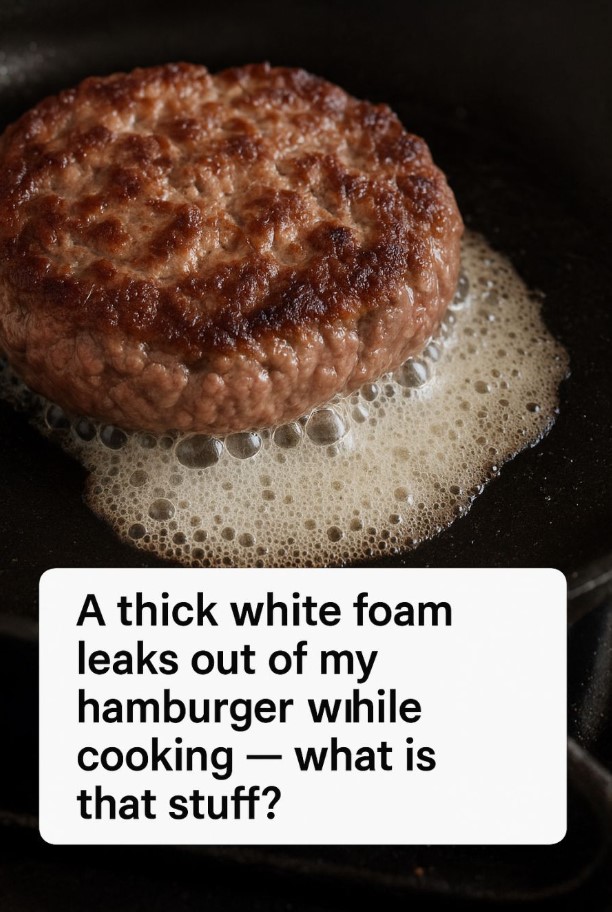
Why a Thick White Foam Leaks Out of Your Hamburger While Cooking (and What It Really Is)
If you’ve ever cooked a hamburger and noticed a thick white foam or goo seeping out of the patty, you’re not alone. For many people, this sight can be confusing or even alarming, raising questions about whether the meat is spoiled or unsafe to eat. The good news is that, in most cases, this white substance is completely normal and harmless.
This phenomenon is a natural reaction that occurs when ground beef is exposed to heat. It has everything to do with the structure of meat and how its components respond during cooking. While it may look strange, understanding what’s happening can help you cook burgers with more confidence and less concern.
What the White Foam Actually Is
Hamburger meat is made up of muscle fibers, water, fat, and proteins. When the meat begins to heat up, the muscle fibers tighten and contract. As they do, they squeeze out moisture trapped inside the meat. This moisture contains water along with dissolved proteins, such as albumin.
When these protein-rich juices reach a hot cooking surface, the proteins coagulate — meaning they solidify and clump together. This process creates the thick, white, foamy substance you see leaking from the patty. It’s very similar to the white residue that appears when cooking eggs or boiling meat, and it’s a natural result of heat acting on protein.
Because ground beef has much more exposed surface area than a whole cut of meat, this effect is often more noticeable in hamburgers than in steaks or roasts.
Why Some Burgers Produce More Foam Than Others
Not all burgers behave the same way in the pan or on the grill. Several factors can influence how much white foam appears:
Fat and Moisture Content
Burgers with higher fat levels or added moisture tend to release more liquid during cooking. As the fat melts and the water heats up, more protein-filled juices are forced out, leading to increased foam.
Frozen vs. Fresh Patties
Frozen burgers often contain extra water from the freezing process. Ice crystals formed during freezing can damage the meat’s structure, causing it to release more liquid when cooked. This extra moisture can make the white foam more noticeable.
Seasoning Timing
Salt draws moisture out of meat. If burgers are salted too far in advance, more water and proteins will be released during cooking, which can increase the amount of foam. Seasoning just before cooking helps limit this effect.
Added Fillers or Processing
Some ground meats contain added liquids or binders. These additions can increase moisture loss during cooking, contributing to more foaming.
Is the White Foam Safe to Eat?
In nearly all cases, yes. The white foam is simply cooked protein and water, and it does not indicate that the meat is unsafe. As long as the beef was fresh before cooking and reaches a safe internal temperature, the presence of foam alone is not a food safety concern.
However, you should be cautious if:
- The meat has a strong, unpleasant odor
- The foam has unusual colors such as green or yellow
- The raw meat feels excessively slimy
In these cases, it’s best to discard the meat, as those signs may indicate spoilage.
Cooking Techniques That Can Reduce Foaming
While the foam itself isn’t harmful, some people prefer to minimize it for better appearance and texture. A few simple cooking techniques can help:
- Preheat your pan or grill well. A hot surface helps sear the outside quickly, locking in moisture and reducing protein leakage.
- Avoid overcrowding. Cooking too many patties at once traps steam, encouraging more moisture to build up in the pan.
- Pat the patties dry. Removing surface moisture before cooking can reduce excess liquid.
- Season just before cooking. This limits how much moisture salt draws out of the meat.
- Choose quality ground beef. Less processed meat with balanced fat content often releases fewer juices.
When the Foam Might Be a Warning Sign
Although the foam itself is usually harmless, it should be considered alongside other signs. If the meat smells sour, has a sticky or slimy texture before cooking, or shows discoloration, those are indicators that the meat may no longer be fresh. In such cases, it’s safer not to consume it.
Conclusion
Seeing thick white foam seep out of a hamburger while it cooks can be surprising, but it’s almost always a normal and harmless part of the cooking process. This substance is simply a combination of water and natural proteins being released as the meat heats up and the muscle fibers contract. While it may not look appealing, it does not mean the burger is spoiled or unsafe.
The amount of foam you see depends on factors like fat content, moisture levels, whether the meat was frozen, and how it’s seasoned and cooked. By using proper cooking techniques — such as starting with a hot pan, avoiding overcrowding, and seasoning at the right time — you can reduce the appearance of foam and improve the overall quality of your burgers.
Understanding what’s happening in the pan turns a moment of confusion into knowledge. Instead of worrying, you can focus on cooking flavorful, juicy burgers with confidence, knowing that this common kitchen occurrence is simply science at work and not a sign that something has gone wrong.