Discovering mysterious objects tucked away in old boxes, drawers, or sewing tins can feel like stepping into a small piece of history. These items often carry stories from another time—when everyday tools were handcrafted, multifunctional, and built to last.
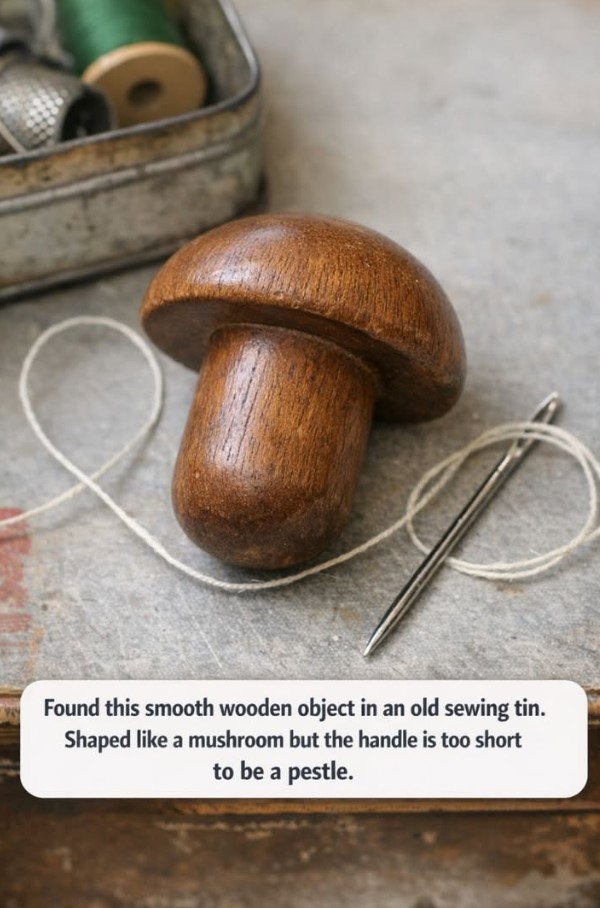
One such puzzling discovery is a smooth wooden object shaped like a mushroom, with a short handle that doesn’t quite match the typical design of common tools. At first glance, it might seem decorative or even confusing. But objects like this often have a very practical purpose rooted in traditional crafts.
So what exactly could this unusual item be? Let’s explore the possibilities and uncover the likely answer behind this vintage mystery.
A Closer Look at the Object
The object in question has a few defining features:
- A rounded, dome-shaped top (like a mushroom cap)
- A short, sturdy handle
- A smooth wooden surface
- Found inside or near a sewing kit or tin
These details provide important clues. The material, shape, and location all suggest that this item was used for a specific purpose related to sewing or fabric care.
The Most Likely Answer: A Darning Mushroom
This object is most commonly identified as a darning mushroom.
A darning mushroom is a traditional sewing tool used to repair holes in fabric—especially socks, stockings, and knit garments. Before modern clothing production and fast fashion, people repaired their clothes instead of replacing them, making tools like this essential in every household.
How a Darning Mushroom Works
The design of the darning mushroom is simple but effective:
- The rounded top provides a firm surface to stretch fabric over
- The hole (such as in a sock) is positioned over the curved surface
- The user stitches across the hole, reinforcing the damaged area
The smooth wooden surface prevents snagging, while the curved shape makes it easier to maintain even tension while sewing.
Why the Shape Matters
The mushroom-like shape is not accidental. It serves several practical purposes:
- Even tension: The dome helps stretch the fabric evenly
- Better visibility: The curved surface makes it easier to see the damaged area
- Control: The short handle allows the user to hold it securely while sewing
This clever design has remained largely unchanged for generations because it works so well.
A Tool from a Different Era
Darning mushrooms were especially popular before the mid-20th century, when repairing clothes was a common skill. Families often kept sewing kits filled with essential tools, including needles, thread, scissors—and a darning mushroom.
Finding one today is like uncovering a small piece of domestic history. It reflects a time when people valued resourcefulness, craftsmanship, and sustainability.
Could It Be Something Else?
While a darning mushroom is the most likely answer, there are a few other possibilities:
- A small wooden pestle (though the short handle makes this less likely)
- A darner for hats or gloves (similar use, slightly different shape)
- A craft tool for shaping fabric or leather
However, the combination of its shape and where it was found strongly supports the idea that it’s a sewing tool.
Why People Are Rediscovering It Today
Interestingly, tools like the darning mushroom are making a comeback. As more people embrace sustainable living and slow fashion, repairing clothes is becoming popular again.
Using traditional tools:
- Reduces waste
- Saves money
- Preserves clothing longer
- Encourages practical skills
This once-forgotten object is now appreciated for its usefulness and simplicity.
Conclusion :
What might first appear as a strange wooden object is actually a clever and practical tool with a rich history. The darning mushroom is a reminder of a time when people took pride in maintaining and repairing their belongings rather than replacing them.
Its simple design, durable material, and clear purpose show how everyday objects were thoughtfully made to solve real problems. Even today, it remains just as useful as it was generations ago.
So if you ever come across one of these in an old sewing tin, you’re not just holding a tool—you’re holding a piece of history, craftsmanship, and timeless practicality.