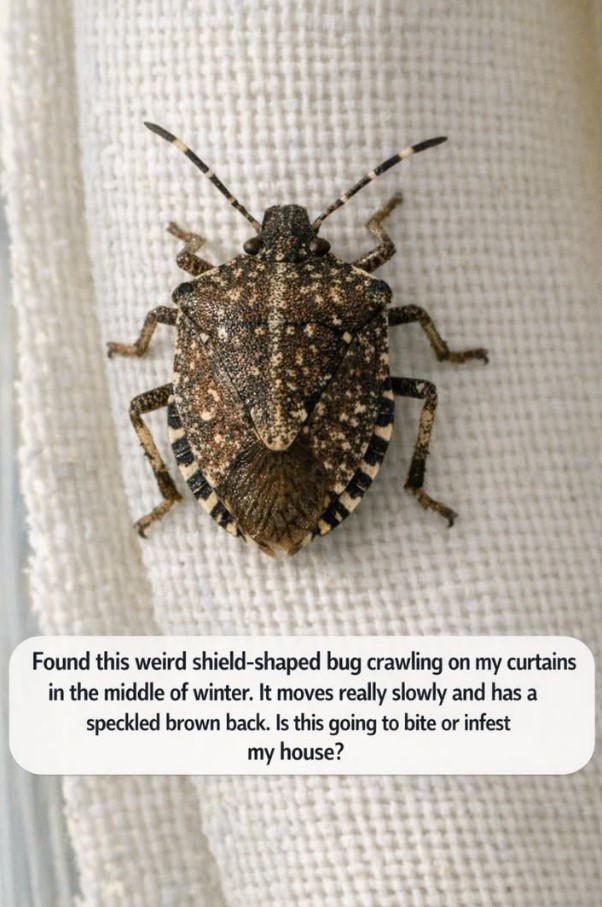
Finding a strange bug in your home — especially in the middle of winter when you expect insects to be dormant — can be unsettling. When it was shield-shaped, slow-moving, and speckled brown, your first questions probably included:
- Is it dangerous?
- Will it bite?
- Could it spread or infest my house?
Those are totally normal concerns. But most insects that accidentally wander indoors this time of year are harmless house visitors looking for warmth, not pests planning an invasion.
The good news is that this kind of bug is likely a harmless native species, and there are simple ways to identify it and keep it from spending the season in your living spaces.
What That Shield-Shaped Bug Might Be
Based on your description — shield-shaped body, speckled brown back, slow movement, and appearing in winter — this insect most closely matches one of the following possibilities:
1. A Type of Stink Bug (Non-Biting)
Many harmless species of shield-shaped bugs are commonly called stink bugs. They’re named for the shape of their back, which often looks like a flattened shield.
Key characteristics:
- Speckled or mottled brown/gray coloring
- Wide, rounded body
- Slow, deliberate crawling
- Often found indoors in colder months
Unlike aggressive insects, stink bugs do not bite or sting people or pets. If they feel threatened, some species can emit a mild odor, but that’s just a defense mechanism, not a human-harmful action.
2. A Leaf Footed Bug or Plant Bug Wanderer
Some sap-feeding bugs resemble shield shapes and may wander indoors accidentally. Like stink bugs, they’re generally harmless to humans but prefer plants and outdoor vegetation.
If you had plants inside or recently brought greenery in from outside, these bugs might have hitched a ride.
3. A Beetle or Other Non-Threatening Crawler
Certain beetles that overwinter outdoors can occasionally wander inside through tiny cracks or open doors. Many species are slow and speckled, and most are completely harmless.
Beetles don’t bite people and are not interested in household fabrics or food.
Why It Appeared Inside in Winter
You might wonder why an insect would show up inside during cold months. Here are a few common reasons:
- Seeking warmth: When outdoor temperatures drop, insects often enter structures looking for a more stable environment.
- Cracks or gaps: Even well-sealed homes can have tiny openings around windows, doors, or siding where insects can enter.
- Indoor plants: Bugs can hitch a ride on houseplants or cut flowers brought in from outside.
Finding one bug doesn’t mean there’s an infestation — it usually means one insect accidentally found its way in.
Will It Bite or Harm You?
Based on your description, it’s extremely unlikely that this bug will:
- Bite you or your family
- Sting
- Spread disease
- Infest your house fabric or belongings
Most shield-shaped, slow-moving insects you find indoors in winter are not aggressive and are simply trying to survive cool conditions.
Even insects that look intimidating typically do not bite unless mishandled or squished in your hand.
Does Its Presence Mean an Infestation?
One isolated sighting does not mean your home is infested. Insects often wander in one at a time through tiny gaps, especially during seasonal transitions.
Signs of a real infestation would be:
- Multiple insects seen frequently
- Bugs in hidden areas like behind furniture or appliances
- Odd debris, holes, or damage around fabrics or food stores
If you only saw this one bug, it’s most likely a one-off visitor.
What You Can Do Next
Here are simple steps you can take that don’t involve panic:
1. Safely Remove It
- Use a cup and piece of paper to gently capture and release it outside.
- Wear a light glove if you’re unsure — most are harmless.
2. Check for Entry Points
Look for tiny openings around:
- Windows and doors
- Basement or attic vents
- Gaps in siding or weatherstripping
Sealing these reduces future accidental visitors.
3. Keep Surfaces Clean
Bugs are less attracted to areas without crumbs, spills, or indoor vegetation.
4. Observe But Don’t Stress
Most of the time, one wandering insect doesn’t indicate anything serious.
When to Be More Concerned
While rare, you would want to consult an expert or pest professional if:
- You start finding many insects indoors
- You notice damage to stored food or fabrics
- You see insects that behave aggressively or bite
But based on your description — slow, shield-shaped, speckled brown — what you found is almost certainly a harmless bug passing through.
Conclusion :
Discovering a strange bug on your curtain in the middle of winter can be surprising — especially if it looks unusual or moves slowly. But in most cases, insects like the one you described are harmless wanderers that accidentally enter homes while seeking warmth or shelter.
The shield shape and speckled brown coloring suggest a common outdoor insect like a stink bug or similar harmless species. These insects don’t bite people, don’t infest fabrics or food, and usually don’t indicate a larger problem.
A calm removal, a quick check for open entry points, and basic housekeeping are all you need. Most people find that after releasing the bug outdoors and sealing potential gaps, their homes quickly return to bug-free comfort.
If you ever notice multiple sightings or insects in hidden spots, feel free to ask for advice on how to handle that. For now, what you saw was likely an accidental winter visitor — not a threat. 😊