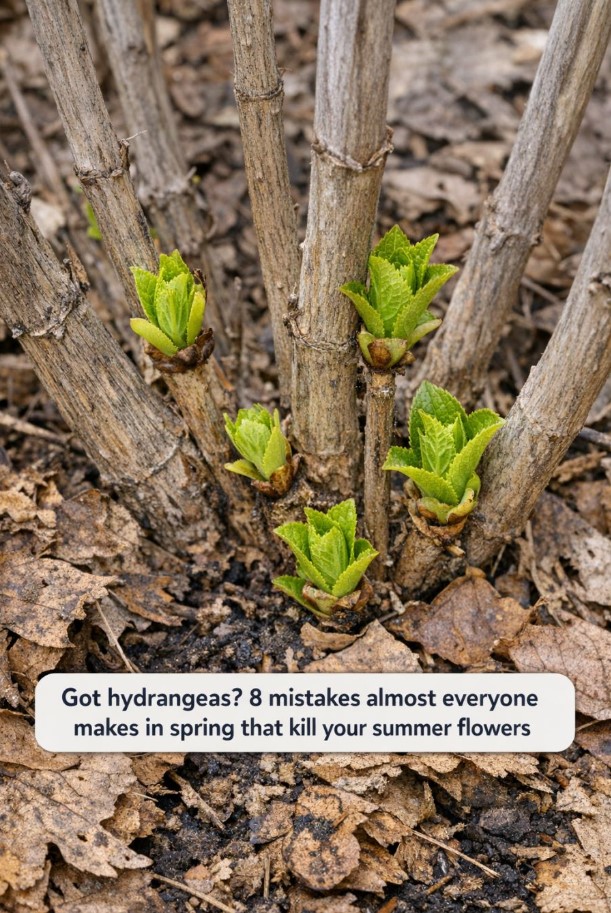
Hydrangeas are one of the most beloved flowering plants in home gardens. Their large, colorful blooms can completely transform a yard, creating a soft, elegant, and vibrant look throughout the summer. However, many gardeners are disappointed when their hydrangeas fail to bloom or produce weak, sparse flowers.
The truth is, hydrangeas are sensitive plants. What you do in early spring has a direct impact on how well they perform in summer. Even small mistakes can reduce flowering, damage growth, or weaken the plant for the entire season.
In this guide, we’ll explore the most common spring mistakes people make with hydrangeas—and how to avoid them so you can enjoy full, healthy, and beautiful blooms all summer long.
1. Pruning at the Wrong Time
One of the biggest mistakes gardeners make is pruning hydrangeas too early in spring—or worse, cutting the wrong type of stems.
Some hydrangeas bloom on “old wood” (last year’s growth), while others bloom on “new wood” (current season’s growth). If you cut old-wood hydrangeas too aggressively in spring, you may accidentally remove the flower buds.
This leads to lush green growth but very few or no flowers in summer.
Tip: Always identify your hydrangea type before pruning and research its blooming pattern.
2. Cutting Too Much Growth
Even when pruning is done at the right time, cutting too much can still be harmful. Hydrangeas need their stems to support flower development.
Over-pruning can stress the plant and reduce its ability to produce strong blooms.
Tip: Only remove dead, damaged, or weak stems unless you are sure light shaping is safe for your variety.
3. Not Removing Winter Damage Properly
After winter, hydrangeas often have dead or frost-damaged stems. Leaving these behind can affect new growth and reduce plant health.
However, cutting too deep into healthy tissue can also remove future flower buds.
Tip: Carefully trim only the clearly dead or brittle parts, and leave healthy green buds intact.
4. Improper Watering in Early Spring
Hydrangeas love moisture, but inconsistent watering in spring can create problems. Too little water slows growth, while overwatering can cause root stress.
Dry soil in early growth stages can lead to weak flowering later in the season.
Tip: Keep soil consistently moist but not soggy. A balanced watering routine is key.
5. Using Too Much Fertilizer Too Early
Many gardeners think more fertilizer means more flowers, but that’s not always true. Excess nitrogen in early spring encourages leafy growth instead of blooms.
This can result in a big, green plant with very few flowers.
Tip: Use a balanced or bloom-focused fertilizer and apply it at the correct time, not immediately at the start of spring.
6. Planting in the Wrong Location
Hydrangeas need the right balance of sunlight and shade. Too much direct sun can dry them out, while too much shade can reduce blooming.
Spring is when location mistakes become obvious, as the plant begins its active growth cycle.
Tip: Most hydrangeas do best in morning sun and afternoon shade.
7. Ignoring Soil Conditions
Hydrangeas are sensitive to soil quality and pH levels. Poor soil drainage or incorrect pH can limit nutrient absorption and affect bloom color and strength.
For example, soil conditions can even influence whether blooms appear blue, pink, or purple in certain varieties.
Tip: Use well-draining soil enriched with organic matter like compost.
8. Not Protecting New Spring Growth
Early spring growth is delicate. Late frost, strong winds, or sudden temperature changes can damage new shoots and flower buds.
If this happens, the plant may survive—but flowering will be reduced.
Tip: Keep an eye on weather changes and protect young plants if cold snaps occur.
Extra Care Tips for Healthier Hydrangeas
To help your hydrangeas thrive beyond avoiding mistakes, follow these simple care habits:
- Water deeply but less frequently
- Mulch around the base to retain moisture
- Avoid planting too close to competing plants
- Monitor for pests like aphids or spider mites
- Deadhead spent blooms when appropriate
These small steps help strengthen your plant and improve summer flowering.
Why Spring Care Matters So Much
Spring is the foundation of the hydrangea’s entire growing season. During this time, the plant decides how many buds to form, how strong its stems will be, and how much energy it can store for blooming.
Mistakes made during this stage cannot always be corrected later in summer. That’s why early care is essential for long-lasting, healthy flowers.
Conclusion :
Hydrangeas are rewarding plants, but they require careful attention—especially in spring. Simple mistakes like incorrect pruning, poor watering habits, or improper fertilizing can have a big impact on summer blooms.
The good news is that with the right knowledge and a little care, these issues are easy to avoid. By understanding your plant’s needs and adjusting your spring routine, you can enjoy fuller, healthier, and more colorful hydrangeas all season long.
A thriving hydrangea garden isn’t about complicated techniques—it’s about consistent, mindful care at the right time of year. And spring is where it all begins.