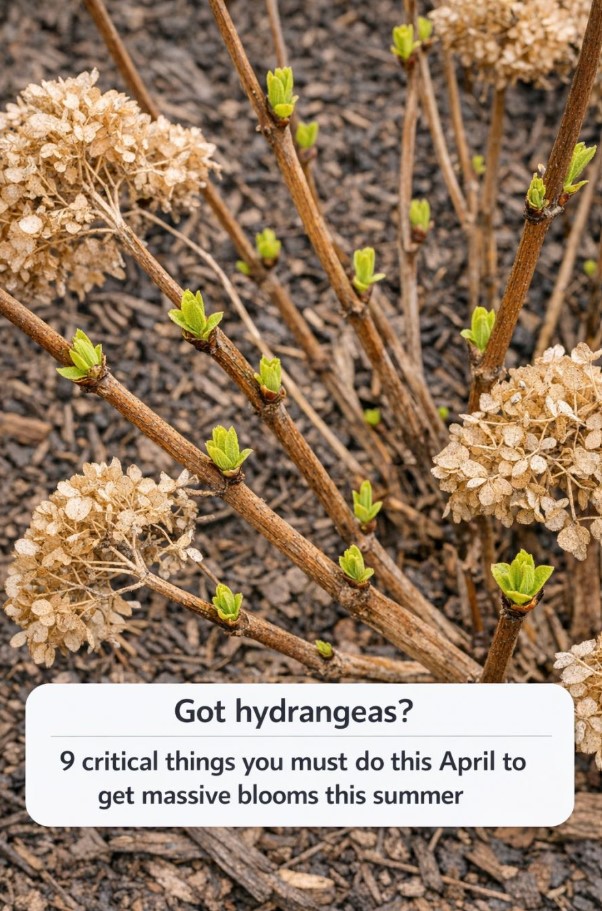
Hydrangeas are one of the most rewarding plants you can grow—but only if you treat them right at the right time. If you’ve ever had a hydrangea bush full of leaves but barely any flowers, you’re not alone. The secret to big, vibrant blooms doesn’t start in summer—it starts in spring, especially in April.
April is a crucial month because this is when hydrangeas wake up from dormancy and begin active growth. What you do (or don’t do) during this short window can determine whether your plant produces large, beautiful blooms—or struggles all season.
The good news? You don’t need complicated techniques. Just a few key actions, done correctly, can completely transform your hydrangeas.
Here are 9 essential things you must do in April to set your hydrangeas up for a stunning summer display.
1. Water Deeply and Consistently
As temperatures rise, hydrangeas begin to grow rapidly—and that means they need more water.
Instead of watering lightly every day, it’s better to water deeply once or twice a week. This encourages strong root growth and helps the plant handle heat later in summer.
Dry soil during this stage can stress the plant and reduce flower production.
2. Remove Old, Dead Flower Heads
If you left dried blooms on your hydrangea over winter (which many gardeners do for protection), April is the time to remove them.
Cut them just above the first set of healthy buds. This helps redirect energy into new growth and future flowers.
3. Know Your Hydrangea Type Before Pruning
This is one of the most important rules.
Some hydrangeas bloom on old wood, while others bloom on new wood. If you prune incorrectly, you could accidentally remove this year’s flowers.
- Old wood types: only light pruning
- New wood types: can handle more pruning
Cutting the wrong stems at the wrong time can mean zero blooms for the entire season.
4. Prune Carefully (Not Aggressively)
April is still a sensitive time for pruning.
Focus only on:
- Dead stems
- Damaged branches
- Weak growth
Avoid heavy pruning unless you are certain your plant blooms on new wood. Proper pruning helps channel energy into stronger stems and bigger flowers.
5. Feed Your Hydrangeas the Right Way
Hydrangeas benefit from feeding in early spring, but timing and type matter.
Use:
- A balanced fertilizer
- Or one designed for flowering plants
Apply it when new growth starts appearing, and always water afterward so nutrients reach the roots effectively.
Avoid over-fertilizing, especially with high nitrogen—it can lead to lots of leaves but fewer flowers.
6. Add or Refresh Mulch
Mulch is one of the simplest ways to improve your hydrangea’s health.
Benefits include:
- Retaining moisture
- Regulating soil temperature
- Protecting roots
- Reducing weeds
If your mulch layer is thin, April is the perfect time to add more around the base of the plant.
7. Check Soil Quality and Drainage
Hydrangeas thrive in rich, well-draining soil. Poor soil conditions can limit growth and reduce bloom size.
In April, you can:
- Add compost to improve nutrients
- Ensure water drains properly
- Adjust soil pH if needed
Healthy soil = stronger roots = bigger blooms.
8. Protect New Growth from Late Frost
Spring weather can be unpredictable. A sudden cold snap can damage new buds and reduce flowering.
If frost is expected:
- Cover plants overnight
- Use light fabric or garden covers
- Remove protection during the day
Protecting early growth is key because those buds often turn into summer flowers.
9. Make Sure Your Plant Gets the Right Light
Hydrangeas don’t like extreme conditions.
Too much sun can dry them out, while too much shade can reduce blooming.
Ideal conditions:
- Morning sun
- Afternoon shade
Balanced light exposure helps the plant produce larger and more vibrant flowers.
Why April Care Is So Important
April is when hydrangeas shift from dormancy to active growth. During this stage:
- Buds are forming
- Roots are expanding
- Energy is being directed toward future blooms
If the plant is stressed now—due to lack of water, poor pruning, or bad soil—it will struggle later.
In simple terms:
👉 Strong spring care = stronger summer blooms
Common Mistakes to Avoid
Even experienced gardeners make these mistakes:
- Over-pruning too early
- Letting soil dry out
- Using too much fertilizer
- Ignoring plant type
- Not protecting against frost
Avoiding these errors is just as important as doing the right things.
Extra Tips for Bigger Blooms
To maximize results, you can also:
- Space plants properly for airflow
- Remove weak stems to encourage stronger growth
- Keep soil consistently moist (not soggy)
- Monitor for pests early
These small habits can make a noticeable difference.
Conclusion :
If you want massive, beautiful hydrangea blooms this summer, April is your moment to act. This is when your plant sets the foundation for everything that follows.
By focusing on proper watering, careful pruning, feeding, and protection, you give your hydrangeas exactly what they need to thrive. The difference between a plant full of leaves and one covered in flowers often comes down to what you do right now.
Hydrangeas aren’t difficult—but they are sensitive to timing. With just a little attention this month, you can enjoy a garden full of large, vibrant blooms that last all season long.
So don’t wait—April care is the secret to a spectacular summer garden 🌸