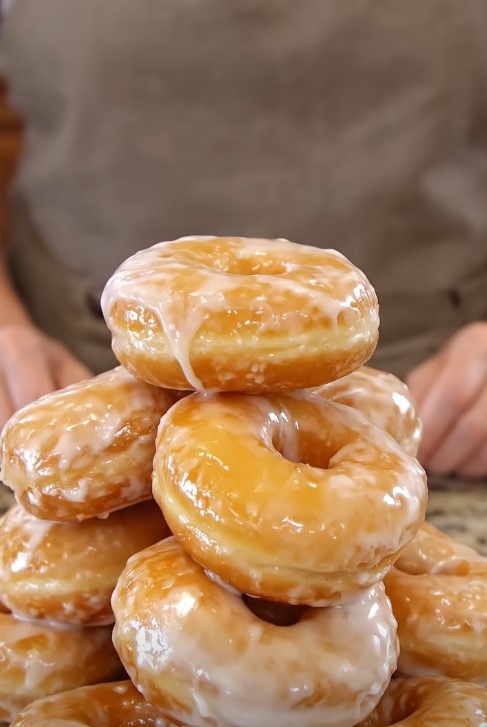
Few treats are as universally loved as a soft, warm glazed doughnut. That first bite—light, fluffy, slightly sweet, and covered in a smooth sugary glaze—is something that feels almost magical. It’s no surprise that bakery-style doughnuts have become a favorite comfort food around the world.
Among them, the famous Krispy Kreme–style doughnut stands out for its signature texture: airy, melt-in-your-mouth softness with a delicate sweetness that isn’t overpowering. While grabbing a box from a bakery is convenient, there’s something even more rewarding about making them at home from scratch.
Homemade Krispy Kremes give you the same pillowy texture and glossy glaze, but with the satisfaction of creating them yourself. With simple ingredients and a little patience, you can recreate this iconic treat in your own kitchen and enjoy them fresh, warm, and absolutely irresistible.
Why Make Krispy Kreme-Style Doughnuts at Home?
Making doughnuts at home may seem like a bakery-level skill, but it’s actually more approachable than most people think. The process is enjoyable, hands-on, and incredibly rewarding.
Here’s why homemade doughnuts are worth trying:
- You get them fresh and warm, straight from your kitchen
- You control the ingredients and sweetness level
- You can avoid preservatives found in store-bought versions
- You can customize flavors and toppings
- The smell of frying dough is absolutely amazing
Most importantly, homemade doughnuts bring people together. Whether it’s a weekend breakfast or a fun baking project, they turn an ordinary day into something special.
The Secret Behind Soft, Fluffy Doughnuts
The key to achieving that signature Krispy Kreme texture is yeast-based dough. Unlike cake doughnuts, yeast doughnuts are light and airy because the yeast creates tiny air pockets as the dough rises.
Another important factor is patience. Allowing the dough enough time to rise—sometimes twice—makes all the difference between dense doughnuts and fluffy, bakery-style perfection.
Temperature also plays a role. Warm milk helps activate the yeast, while properly heated oil ensures even frying without absorbing too much grease.
Ingredients You’ll Need
For the Dough
- Warm milk (helps activate yeast and adds softness)
- Active dry yeast
- Granulated sugar
- Large egg
- Unsalted butter, melted
- All-purpose flour
- Salt
- A pinch of nutmeg (optional, for classic bakery flavor)
For the Glaze
- Powdered sugar
- Milk or water
- Vanilla extract
- Melted butter (optional for extra richness)
For Frying
- Neutral oil (such as vegetable or sunflower oil)
Each ingredient plays a role in creating the soft texture and glossy finish that makes these doughnuts so irresistible.
Step 1: Activating the Yeast
Start by warming the milk until it is slightly warm—not hot. If it’s too hot, it can kill the yeast.
Add the yeast along with a small amount of sugar and let it sit for 5–10 minutes. You should see a foamy layer form on top. This means the yeast is active and ready to work.
If nothing happens, the yeast may be expired and should be replaced.
Step 2: Preparing the Dough
In a large bowl, mix flour, sugar, salt, and optional nutmeg.
Add the activated yeast mixture, egg, and melted butter. Stir until a rough dough forms.
Transfer it to a floured surface and knead for about 6–10 minutes. The dough should become smooth, elastic, and slightly soft to the touch.
Kneading is important because it develops gluten, which helps trap air and creates that light texture after frying.
Step 3: First Rise
Place the dough in a lightly greased bowl and cover it with a clean towel or plastic wrap.
Let it rise in a warm place for 1 to 2 hours, or until it doubles in size.
This step is where the dough becomes airy and soft. The yeast is actively working, creating the structure needed for fluffy doughnuts.
Step 4: Shaping the Doughnuts
Once the dough has risen, gently punch it down to release air.
Roll it out on a floured surface to about half an inch thickness.
Use a round cutter or glass to cut circles, then cut out the center to form the classic doughnut shape.
Place the shaped doughnuts onto parchment paper, leaving space between them.
Don’t forget the doughnut holes—they fry up into delicious bite-sized treats.
Step 5: Second Rise
Cover the shaped doughnuts and let them rest for another 30–45 minutes.
This second rise helps them puff up again and ensures a light texture after frying.
They should look slightly bigger and airy before going into the oil.
Step 6: Frying the Doughnuts
Heat oil in a deep pan to about 350°F (175°C).
Carefully place a few doughnuts into the oil at a time. Do not overcrowd the pan.
Fry each side for about 1 minute or until golden brown.
Remove them and place on a paper towel or wire rack to drain excess oil.
At this stage, they should be soft, golden, and already smell amazing.
Step 7: Making the Glaze
While the doughnuts are still slightly warm, prepare the glaze.
Mix powdered sugar, milk, and vanilla extract until smooth. Adjust consistency as needed—it should be thin enough to coat but thick enough to stick.
Dip each warm doughnut into the glaze and allow the excess to drip off.
As it cools, the glaze forms a shiny, sweet coating just like the classic bakery version.
Tips for Perfect Homemade Krispy Kremes
To get the best results, keep these tips in mind:
- Always use fresh yeast for best rise
- Don’t rush the rising process
- Maintain consistent oil temperature
- Glaze doughnuts while they are still warm
- Avoid over-flouring the dough
Small details make a big difference in texture and taste.
Variations You Can Try
Once you master the basic recipe, you can experiment:
- Chocolate glaze for a richer flavor
- Cinnamon sugar coating instead of glaze
- Filled doughnuts with jam or cream
- Sprinkles or crushed nuts for decoration
These variations let you customize the recipe to your taste.
Common Mistakes to Avoid
Even simple errors can affect your results:
- Using oil that is too hot or too cold
- Skipping the second rise
- Over-kneading the dough
- Glazing when doughnuts are too cold
Avoiding these will help you achieve soft, bakery-quality doughnuts every time.
Conclusion :
Homemade Krispy Kremes are more than just a sweet treat—they’re a rewarding baking experience. From mixing and kneading the dough to watching it rise and finally coating warm doughnuts in sweet glaze, every step brings joy.
While they require time and patience, the result is absolutely worth it: soft, fluffy, melt-in-your-mouth doughnuts that rival any bakery version.
Whether you’re making them for family, friends, or just treating yourself, this recipe proves that you don’t need a bakery to enjoy bakery-quality doughnuts. With simple ingredients and a little love, you can bring the magic of Krispy Kreme right into your kitchen.