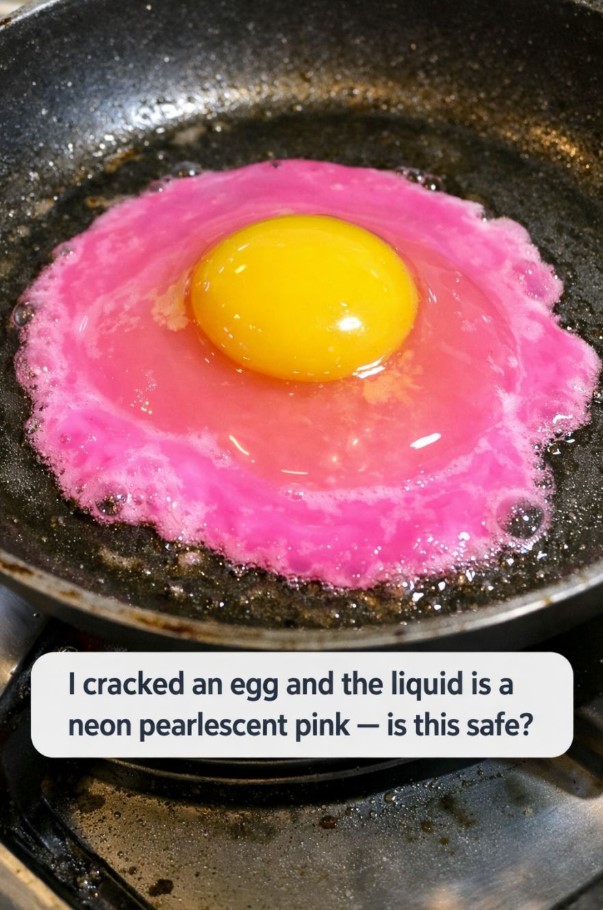
Cracking an egg is something most of us do without a second thought. You expect to see a clear or slightly cloudy egg white and a yellow yolk—nothing unusual. But what happens when you crack an egg and instead of the familiar appearance, you’re met with something shocking, like a neon or pearlescent pink liquid?
It’s the kind of moment that instantly raises concern. Is it just a harmless variation, or could it be a sign that something is seriously wrong? When you encounter something so visually unusual in your food, it’s natural to question whether it’s safe to continue cooking—or if you should throw everything away immediately.
In this article, we’ll break down exactly what a pink or iridescent egg white means, why it happens, and most importantly, whether it’s safe to eat.
What a Normal Egg Should Look Like
Before understanding what’s wrong, it helps to know what’s normal.
A fresh egg typically has:
- A clear or slightly cloudy egg white
- A firm, yellow or orange yolk
- Little to no odor
A cloudy white is actually a sign of freshness, not spoilage. However, any unusual colors—especially pink, green, or shimmering tones—are not considered normal.
The Real Cause — Bacterial Contamination
If the liquid inside an egg appears pink, pearlescent, or iridescent, the most likely cause is bacterial contamination, specifically from a type of bacteria known as Pseudomonas.
- These bacteria can produce pigments that change the color of the egg white
- The result can appear pink, greenish, or even slightly glowing or shiny
- This is a clear sign that the egg has spoiled
In simple terms:
👉 A pink egg is not just unusual—it’s a warning sign.
Why This Happens
Bacteria can enter an egg in several ways:
- Tiny cracks in the shell (sometimes invisible)
- Improper storage conditions
- Contamination during handling or processing
Once inside, bacteria multiply and produce pigments that change the egg’s appearance. These changes are not cosmetic—they indicate that the egg is no longer safe.
Is It Safe to Eat a Pink Egg?
No — you should not eat it.
Food safety experts strongly advise discarding any egg with:
- Pink or iridescent egg whites
- Unusual colors (green, fluorescent, etc.)
- Strange or off-putting smell
These signs indicate spoilage and possible harmful bacteria that could cause foodborne illness
Even if it doesn’t smell bad, it can still be unsafe.
Pink vs. Other Egg Oddities (What’s Safe and What’s Not)
It’s important not to confuse a pink egg with other harmless variations:
Safe:
- Small red or brown spots (blood spots)
- Cloudy egg whites
- Pale or darker yolks
These are natural and safe.
Not Safe:
- Pink, green, or shimmering egg whites
- Strong unpleasant odor
- Slimy or unusual texture
These are signs of spoilage and should never be ignored.
What Should You Do If This Happens?
If you crack an egg and see pink liquid:
- Throw it away immediately
- Do not taste or cook it
- Wash any surfaces, bowls, or utensils that came into contact with it
- Check other eggs from the same carton before using them
If the rest look normal, they are usually still safe—but inspect carefully.
A Simple Tip to Avoid This Problem
A helpful habit is to:
👉 Crack eggs into a separate bowl first before adding them to your recipe
This way, if one egg is spoiled, you won’t ruin the entire dish.
Conclusion :
Seeing a bright pink or pearlescent egg can be surprising—and even a little alarming—but it’s actually your body’s warning system doing its job. While many egg variations are completely harmless, this is one situation where you should not take any chances.
A pink egg is not a rare curiosity or a harmless anomaly—it’s a clear sign of bacterial contamination and spoilage. Even if everything else seems normal, the safest choice is always to discard it.
In the end, food safety is about being cautious when something doesn’t look right. Trust your instincts: if the color is unusual, it’s better to throw it away than risk getting sick.
Moments like this remind us that even everyday foods can sometimes surprise us—and knowing how to respond makes all the difference between a safe meal and a potential problem.