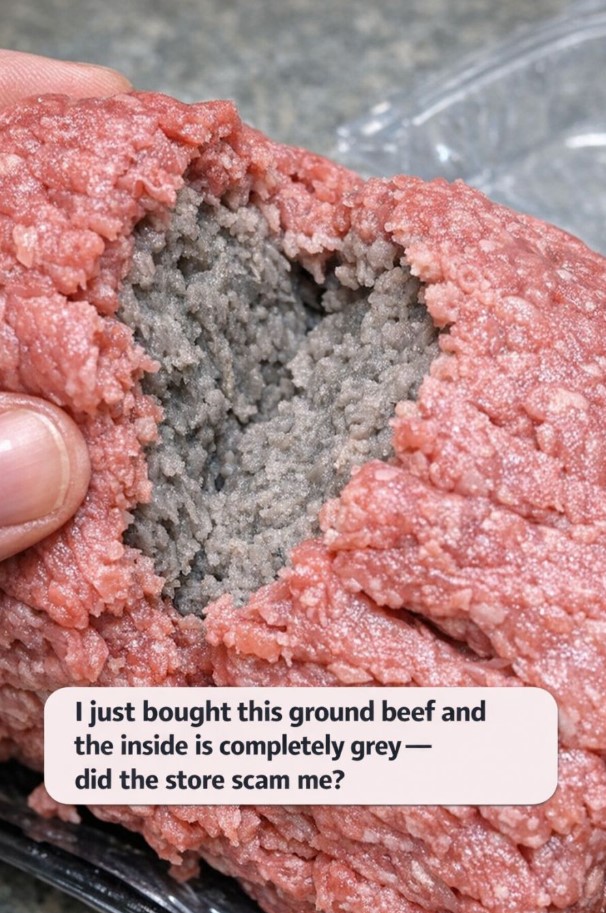
Opening a package of ground beef only to find the inside is completely grey can be surprising and a bit unsettling. Many people expect ground beef to be bright red all the way through, so when the interior looks discolored, it’s easy to wonder whether the meat is spoiled, unsafe, or if something sneaky happened at the store.
The truth is that ground beef can sometimes appear grey or brown inside without any foul play or safety issue. Color in meat is influenced by factors such as exposure to oxygen, storage conditions, and normal changes in muscle pigments. While color can be a helpful visual clue, it’s not the most reliable indicator of whether the meat is safe to eat.
This article explains why ground beef may look grey inside, when that can be normal, and when you should be cautious. By understanding how meat reacts to air and storage conditions, you can make informed decisions in your kitchen.
Why Ground Beef May Look Grey Inside
1. Lack of Exposure to Oxygen
The bright red color most people associate with fresh beef comes from a pigment called oxymyoglobin, which forms when meat is exposed to oxygen. Packaged ground beef is often vacuum packed or tightly wrapped with limited oxygen exposure inside.
- The exterior of the meat (where oxygen reaches first) often turns bright red.
- Inside the package, where oxygen doesn’t reach as easily, the ground beef can appear grey or brown.
This is a normal chemical reaction and does not automatically mean the meat is spoiled.
2. Natural Pigments in the Meat
Meat has several pigments:
- Myoglobin: Gives meat its purplish color before it is exposed to air.
- Oxymyoglobin: Turns bright red when exposed to oxygen.
- Metmyoglobin: Forms when myoglobin is oxidized over time and turns meat brown or grey.
Ground beef that hasn’t been exposed to air for long — especially inside sealed packaging — can contain more metmyoglobin, making it look grey inside.
This change is related to pigment chemistry, not spoilage.
3. Age and Storage Conditions
Ground beef can change color during normal storage because:
- Refrigerators have cool, moist air that slows spoilage but doesn’t prevent pigment changes.
- The interior of the package can stay oxygen-poor, which promotes grey or brown tones.
- Frozen or previously frozen beef may develop color differences that remain after thawing.
Even if the interior appears grey, proper storage can keep the meat safe up until its use-by date.
How to Tell If the Ground Beef Is Still Good
Color alone is not the best way to assess safety. Here are more reliable indicators:
Smell the Meat
Fresh ground beef may have a mild, neutral scent. If you detect:
- A sour, rotten, or tangy smell,
- A strong unpleasant odor,
- A smell that seems unusual or chemical-like,
These scents are strong indicators that the meat may have spoiled and should not be consumed.
Feel the Texture :
Fresh ground beef should feel slightly cool, moist, and somewhat firm. Be cautious if the meat is:
- Sticky or tacky,
- Slimy,
- Slimy and fuzzy,
- Extremely soft in certain areas,
These textural changes often point to bacterial growth or spoilage and are more important than color.
Check the Packaging Date and Condition
Look at the printed dates on the package:
- “Use by” and “sell by” dates indicate when the product is expected to be at its best quality.
- Meat used within the recommended frame and stored properly is more likely to be safe.
Also examine the packaging:
- Leaks, tears, or puffy, bulging packaging can signal compromised meat.
- A swollen package can occur when gases form from bacterial activity.
If the package looks compromised, it’s best to err on the side of caution.
When Grey Color Might Be a Concern
There are situations where brown or grey coloring inside ground beef should raise caution:
If the Surface Turns Grey After Opening
If you open the package and the interior meat — previously dark red — has turned grey and develops an off smell within a short period, your meat may be degrading.
If the Meat Has Been Stored Too Long
Even if the interior is grey but other signs are present, such as strong smell or sliminess, the meat may no longer be safe, especially if it’s significantly past the use-by date.
Safe Handling and Storage Tips
Here are ways to ensure your ground beef stays fresh and safe:
- Refrigerate Promptly: Keep ground beef in the coldest part of the fridge. Only leave it out briefly when preparing it.
- Use Within 1–2 Days: Ground beef spoils faster than whole cuts, so use it soon after purchase.
- Freeze If Needed: If you won’t use it within a couple of days, freeze it in airtight packaging to maintain quality.
- Thaw Safely: Thaw frozen beef in the fridge rather than on the counter.
- Cook Thoroughly: Ground beef should reach an internal temperature of 160°F (71°C) to ensure safety.
These practices help maintain both quality and safety.
Conclusion :
Seeing grey inside ground beef is common and usually not a sign of spoilage on its own. The interior of packaged ground meat can appear grey or brown due to natural pigment changes and limited oxygen exposure. These changes are related to how meat pigments react to air and storage conditions and do not automatically indicate danger.
The more dependable ways to judge whether ground beef is safe include checking for unusual odors, slimy texture, abnormal packaging, and the product’s storage history and date. If the meat smells off, feels slimy, or was stored improperly, it’s best to discard it regardless of color.
By understanding the difference between color changes that are harmless and those accompanied by spoilage signs, you can confidently prepare and enjoy ground beef without unnecessary worry.