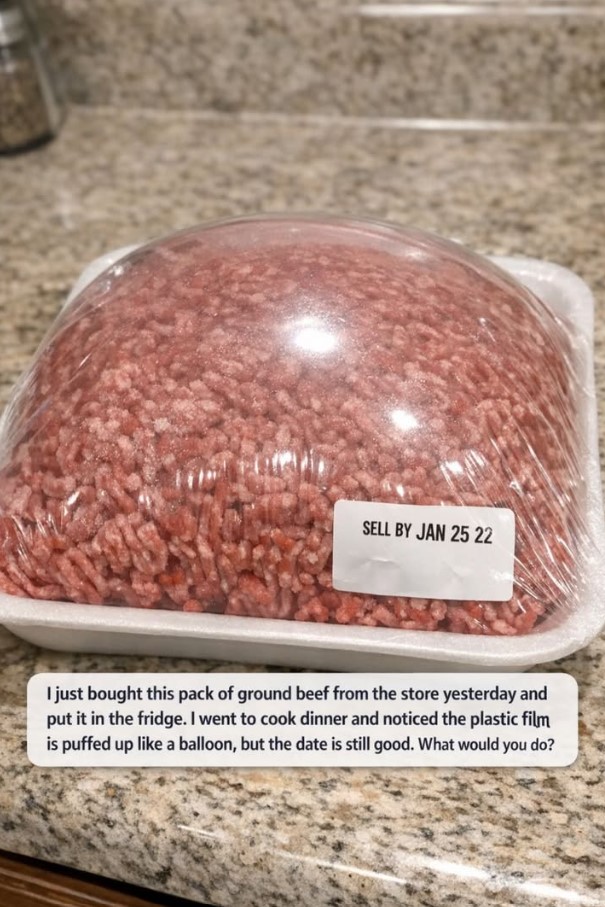
We’ve all bought ground beef from the store, placed it in the fridge with plans to cook dinner, and then noticed something strange: the plastic film around the meat looks puffed up or balloon-like. Even when the expiration date still seems valid, that swollen packaging can make you pause. Is it simply a harmless change, or is it a sign that the meat has started to spoil?
Understanding why ground beef packaging can puff up and how to interpret that change is important for both food safety and peace of mind in the kitchen. Ground beef is particularly perishable because it has more surface area exposed to bacteria than a whole cut of meat. This guide walks through what the swelling might mean, when it’s a concern, and how to check whether the beef inside is still safe to use.
Why Packaging Sometimes Appears Puffy
When you buy ground beef, the way it’s wrapped at the store matters. Many packages are designed to keep air away and slow down spoilage. Some manufacturers use specialized packaging methods that replace oxygen inside the package with inert gases. This can help preserve the meat’s color and freshness for a longer period without changing the taste.
In these cases, a slight puffiness in the film — especially if the meat looked similar at the store — may be part of the packaging design and not an indication of spoilage. The gases are intentionally included to control oxidation and help the meat stay fresh. This can make the plastic appear slightly inflated even before you buy it.
However, not all puffiness has harmless causes. When bacteria grow inside a sealed package of ground meat, they can produce gases as a byproduct of their activity. These gases can accumulate inside the sealed package, causing the film to swell noticeably. This type of bloating is often a sign that microbial activity — including potentially harmful bacteria — has begun inside the package, especially if the swelling develops after purchase.
How to Evaluate the Beef Inside
If you open the package and see obvious swelling or the plastic film was not puffed when you bought it, it’s important to be cautious. Swelling caused by bacteria may not always produce a strong odor, and bacteria that cause spoilage or foodborne illness are not always visible to the naked eye.
Here are steps you can take to assess the condition of the meat:
1. Smell Test:
After opening the package, take a careful sniff. Fresh ground beef typically has little to no noticeable odor. If the meat smells sour, tangy, putrid, or “off” in any way, this is a strong indication of spoilage.
2. Visual Inspection:
Look at the color and surface of the beef. Ground beef can vary in color from bright red to darker tones depending on oxygen exposure, and color changes alone don’t always mean spoilage. However, if you see greenish or gray hues, spots of mold, or an excessively slimy film on the surface, these suggest bacterial growth.
3. Texture Check:
Touch the meat gently. Fresh ground beef should feel moist but firm. If it feels sticky, tacky, or slimy, this is another indicator that bacteria may be present in numbers large enough to make it unsafe.
4. Date Consideration:
Check the “use by” or “best before” date. These labels provide guidance on peak quality and safety. Ground beef should be used within a couple of days of purchase when refrigerated. Even if the date hasn’t passed, rapid bacterial growth can occur if the temperature in the fridge wasn’t cold enough.
When to Err on the Side of Caution
Even if the meat appears to look okay at first glance, bloated packaging should raise concern — especially if the puffiness developed after you bought it. Because harmful pathogens like E. coli and Salmonella can exist without obvious sensory signs, relying solely on look and smell is not foolproof.
If you notice any unusual swelling, strong odor, sliminess, or discoloration, it’s safest to discard the meat. Eating spoiled ground beef can lead to food poisoning, with symptoms such as nausea, vomiting, abdominal cramps, diarrhea, and fever. These illnesses are more serious for young children, older adults, pregnant individuals, and anyone with a weakened immune system.
Proper disposal also matters. Place the questionable package in a sealed bag before throwing it away to prevent cross-contamination with other foods or surfaces. Then clean and sanitize any fridge areas the package touched.
How to Store Ground Beef Safely
To reduce the risk of spoilage:
- Keep the refrigerator at or below 40°F (4°C). A consistent, cold temperature slows bacterial growth.
- Store ground beef on the bottom shelf. This prevents juices from dripping onto other foods and limits cross-contamination.
- Use or freeze within a couple of days. Raw ground beef doesn’t last long in the fridge; if you won’t cook it within two days, freezing it can preserve it for months.
- Check packaging before purchase. Avoid packages that are already swollen or leaky when selecting meat at the store.
Conclusion :
A puffed-up package of ground beef can be surprising, especially when the expiration date still looks good. While slight puffiness from packaging design is possible, significant swelling that develops after purchase is often a warning sign that bacteria inside the sealed meat are producing gas. Because ground beef is highly perishable, this type of swelling — especially when combined with odor, texture changes, or discoloration — suggests spoilage and a heightened risk of foodborne illness.
In these cases, it’s best to discard the meat rather than risk your health. Always inspect meat carefully before use and follow safe storage practices in the refrigerator or freezer. When in doubt, throwing questionable meat away is a small price to pay for avoiding the discomfort and danger of food poisoning.