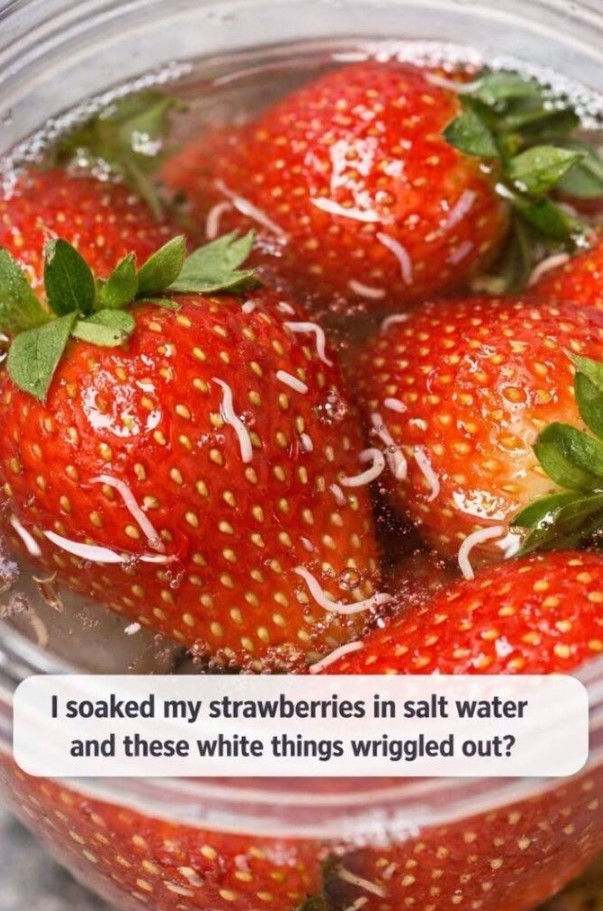
Strawberries are one of the most loved fruits in the world. Their bright color, sweet flavor, and juicy texture make them perfect for desserts, smoothies, salads, and simple snacks. But many people don’t realize that strawberries can carry tiny insects, dirt, and bacteria that are difficult to see with the naked eye.
Recently, a simple kitchen trick has become popular: soaking strawberries in salt water before eating them. This method gained attention online after many people claimed that soaking the berries caused tiny bugs and debris to come out of the fruit.
While the idea might sound surprising at first, the purpose of the salt water soak is actually quite simple. The salt solution helps loosen dirt, remove small pests, and clean the surface of the strawberries before they are eaten. This technique can also help wash away bacteria and residues that might remain after harvesting and transportation.
If you have ever wondered whether this trick really works and how to do it correctly, this guide explains everything you need to know about soaking strawberries in salt water.
Why People Soak Strawberries in Salt Water
Strawberries grow close to the ground, which means they are naturally exposed to soil, insects, and environmental contaminants during the growing process.
Soaking them in a saltwater solution can help remove several unwanted elements, including:
- Dirt and tiny particles stuck to the fruit
- Small insects hiding in the crevices
- Bacteria and microorganisms on the surface
- Some pesticide residues
Salt water creates an environment that helps loosen debris and dislodge tiny pests so they can be rinsed away more easily.
In some cases, tiny larvae or insects may float to the surface during the soaking process. These insects are often extremely small and may have been hiding inside the fruit.
What Happens When Strawberries Are Soaked
When strawberries are submerged in salt water, several things occur at the same time.
First, the salt solution helps loosen dirt and debris that may be stuck on the fruit’s textured surface.
Second, the salt affects tiny organisms and insects by disrupting their environment, which can cause them to detach from the fruit and float in the water.
Finally, the soaking process helps wash away bacteria and contaminants that may remain after harvesting and transportation.
After soaking, a quick rinse with clean water removes the salt and any remaining residue.
How to Soak Strawberries in Salt Water
The process is simple and takes only a few minutes.
Ingredients
- Fresh strawberries
- 1 teaspoon to 1 tablespoon of salt
- 1 cup of water for each teaspoon of salt
Instructions
- Fill a large bowl with cool water.
- Add salt and stir until it dissolves completely.
- Place the strawberries into the salt water.
- Let the berries soak for about 5 to 15 minutes.
- Remove the strawberries and rinse them thoroughly under fresh running water.
- Pat them dry with a clean towel or paper towel.
Most experts recommend keeping the soaking time within this range so the strawberries do not become overly soft.
Things You Might Notice During Soaking
If you try this method, you may observe a few surprising things in the bowl of water.
Tiny Particles Floating
Small bits of dirt, debris, or pollen may appear in the water.
Small Insects
Occasionally, very small insects may float to the surface. These insects are typically harmless and are sometimes present in fresh produce.
Cloudy Water
The water may become cloudy as dirt and residues wash off the strawberries.
Although it may look alarming at first, this process simply shows that the fruit is being cleaned thoroughly.
Benefits of the Salt Water Method
Many people use this method because it offers several advantages.
More Thorough Cleaning
The salt solution helps remove particles that plain water may not fully wash away.
Natural Cleaning Method
Salt is a common kitchen ingredient and provides a simple, chemical-free way to clean fruit.
May Reduce Bacteria
Salt water can help reduce some microorganisms that might be present on the fruit’s surface.
Easy and Affordable
This technique requires only water and salt, making it easy for anyone to try.
Possible Drawbacks
While soaking strawberries in salt water can be helpful, there are also a few things to keep in mind.
Texture Changes
If strawberries soak for too long, they may absorb water and become softer.
Slight Flavor Changes
Excessive soaking can sometimes make the fruit taste slightly salty if it is not rinsed well afterward.
Not Always Necessary
For many strawberries, rinsing under clean running water is usually enough to remove most dirt and contaminants.
Additional Tips for Cleaning Strawberries
To keep strawberries fresh and safe to eat, consider these helpful tips:
- Always rinse strawberries just before eating them.
- Store them unwashed in the refrigerator to prevent mold growth.
- Remove any berries that show signs of mold or damage.
- Dry them well after washing to prevent excess moisture.
These simple habits can help keep your strawberries fresh longer.
Conclusion :
Soaking strawberries in salt water is a simple trick that many people use to clean their fruit more thoroughly. The salt solution helps loosen dirt, remove tiny insects, and wash away debris that might be difficult to see.
While the method is not always necessary, it can provide extra reassurance that the fruit has been cleaned well before eating. When done correctly and followed by a good rinse, it is a quick and easy way to prepare strawberries for snacks, desserts, and recipes.
Whether you choose to rinse your strawberries under running water or try the saltwater soak, taking a few extra minutes to clean fresh produce properly is always a smart and healthy habit.