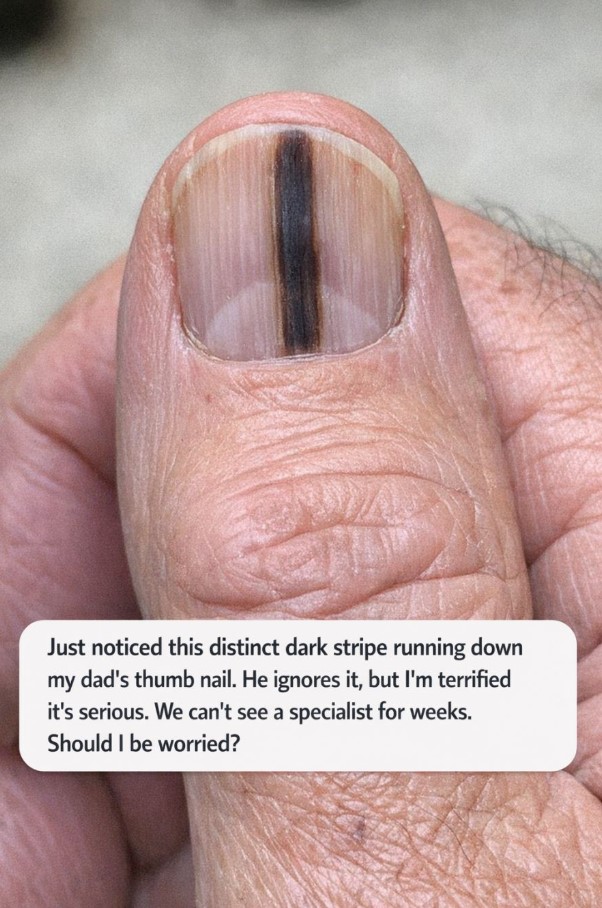
Noticing something unusual on a loved one’s body can be unsettling, especially when the person themselves doesn’t seem concerned. One change that often alarms people is a dark vertical stripe running down a fingernail. At first glance, it might look like a stain, a bruise, or a marker line—but when it doesn’t wash off or fade away, it can quickly raise worries about possible health issues.
Many people who discover this kind of stripe turn to the internet looking for answers. Some sources say it can be harmless, while others mention more serious conditions. This can make the situation even more confusing and frightening.
The truth is that a dark line on a nail can have many possible causes, most of which are harmless. However, in rare cases it may signal a more serious condition that should be evaluated by a medical professional. Understanding what this type of nail change might represent can help you decide whether it’s something to monitor or something that requires medical attention.
What Is a Dark Stripe on the Nail?
A dark vertical stripe running from the base of the nail to the tip is often called longitudinal melanonychia. This condition occurs when pigment (melanin) builds up in the nail plate, creating a brown, gray, or black line that follows the direction of nail growth.
The line may appear:
- Thin or thick
- Light brown, dark brown, or black
- On one nail or several nails
- Gradually darker over time
In many cases, it looks like a stripe drawn with a marker that runs from the cuticle all the way to the tip of the nail.
Common Harmless Causes
Fortunately, many dark nail stripes are caused by benign (non-dangerous) factors. Some of the most common include:
1. Natural Pigmentation
People with darker skin tones are more likely to develop nail pigmentation because their bodies naturally produce more melanin. In these cases, dark nail streaks may appear on multiple fingers and are usually harmless.
2. Nail Injury
A previous injury to the nail—such as slamming a finger in a door, repeated pressure, or even chronic nail-biting—can trigger pigment cells in the nail bed. This may cause a stripe that grows out slowly with the nail.
3. Vitamin or Nutritional Deficiencies
Sometimes nail discoloration can be linked to deficiencies in certain nutrients, such as:
- Vitamin B12
- Vitamin D
- Protein
When the body lacks these nutrients, pigment changes in the nail plate may occur.
4. Certain Medications or Health Conditions
Some medications or infections can also trigger pigment changes in the nails. For example, certain antifungal medications, chemotherapy drugs, or viral infections may lead to nail discoloration.
When a Nail Stripe Could Be More Serious
Although many nail stripes are harmless, doctors pay close attention to certain warning signs because a dark stripe can occasionally indicate a rare form of skin cancer called subungual melanoma.
This type of melanoma develops in the cells that produce pigment beneath the nail.
Signs that may raise concern include:
- The stripe appears suddenly and grows wider over time
- The color becomes very dark or uneven
- The edges of the line are irregular or blurry
- The pigment spreads onto the surrounding skin
- The stripe occurs on only one nail, especially the thumb or big toe
- The nail begins to split, crack, or change shape
Doctors often examine suspicious nail stripes using special tools and may perform a biopsy if necessary to determine the cause.
Why Older Adults Should Pay Attention
Age can also play a role. Certain types of nail melanoma are more commonly diagnosed in people between 50 and 70 years old.
Because of this, any new nail stripe appearing later in life should generally be evaluated by a healthcare professional—especially if it changes in size or color.
This doesn’t mean it’s cancer, but checking it early can rule out serious problems and provide peace of mind.
When to Seek Medical Advice
If you notice a dark stripe on someone’s nail, it’s a good idea to monitor it carefully.
Consider seeing a doctor if:
- The stripe appeared recently
- It is getting wider or darker
- It affects only one nail
- There is pain, bleeding, or nail damage
- The pigment spreads to the skin around the nail
Even when the cause is harmless, a medical exam can confirm the diagnosis and eliminate unnecessary worry.
Dermatologists—doctors who specialize in skin, hair, and nails—are usually the best specialists to evaluate nail changes.
What Doctors Usually Do
When examining a nail stripe, a doctor may:
- Ask about medical history and previous injuries
- Examine the nail under magnification
- Check for color patterns and changes
- Monitor the stripe over time
- In rare cases, perform a nail biopsy
Most cases turn out to be benign pigmentation rather than cancer, but doctors take these symptoms seriously to avoid missing anything important.
The Importance of Not Ignoring Changes
It’s common for people—especially older adults—to dismiss small physical changes. Many think a nail stripe is just a bruise or cosmetic issue and assume it will go away on its own.
While that’s often true, medical professionals recommend not ignoring persistent changes in nails, skin, or moles. Early evaluation is one of the best ways to detect potential health problems before they become serious.
Conclusion :
A dark stripe running down a fingernail can be surprising and sometimes alarming, especially when it appears suddenly. In many cases, the cause is harmless—such as natural pigmentation, minor injury, or nutritional factors.
However, because similar nail changes can occasionally be linked to more serious conditions like nail melanoma, it’s important to pay attention to how the stripe develops over time. Changes in width, color, or shape should be evaluated by a medical professional.
If you notice something unusual on a loved one’s nail and it doesn’t seem to go away, encouraging them to get it checked can provide reassurance and ensure their health is protected.
Sometimes the simplest step—having a doctor take a look—can bring both clarity and peace of mind.