
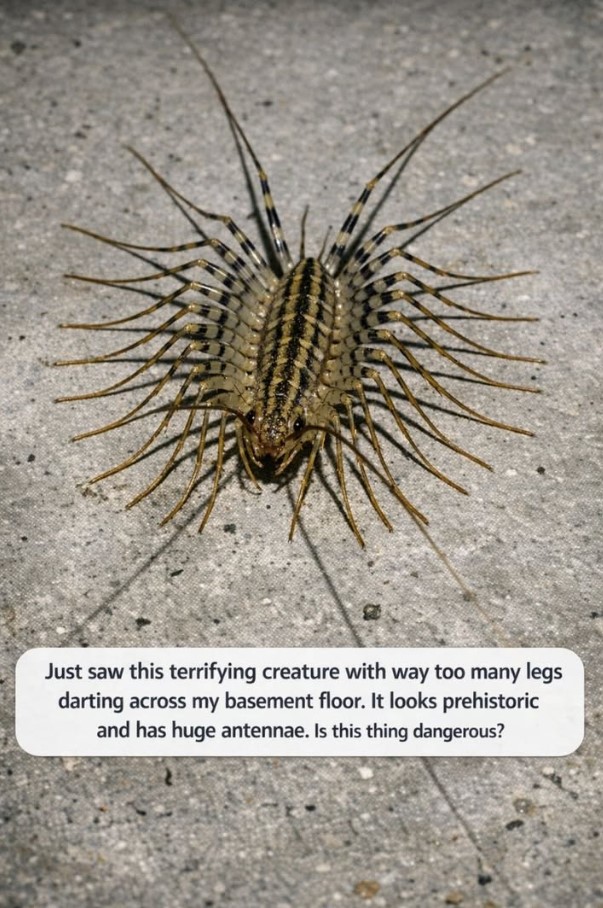
It’s the kind of moment that instantly raises your heart rate—you’re walking through your basement when suddenly, something long, fast, and unsettling darts across the floor. You barely catch a glimpse, but what you saw is enough: a creature with far too many legs, long antennae, and a strange, almost prehistoric appearance.
Your mind races with questions. What was that? Is it dangerous? Should I be worried?
If you’ve had this experience, you’re definitely not alone. Many homeowners encounter this creepy-looking visitor at some point, especially in darker, more humid parts of the house. While it may look like something straight out of a nightmare, the truth behind this creature is far less frightening than it appears.
What Is That Strange Creature?
The insect you saw is most likely a house centipede, a common indoor arthropod known for its unique appearance and incredible speed.
At first glance, it can look alarming due to:
- Its many long, thin legs that spread out from its body
- Its lightning-fast movements
- Its long, sensitive antennae that constantly scan the environment
House centipedes are typically found in basements, bathrooms, and other damp areas, where they can easily hide and hunt.
Why Does It Look So Scary?
There’s no denying it—this creature looks intimidating. In fact, its appearance is one of the main reasons people react so strongly when they see it.
Here’s why it triggers fear:
- Too many legs: The number and length of its legs can make it seem much larger than it actually is
- Speed: It moves incredibly fast, often disappearing in seconds
- Unfamiliar shape: Its body doesn’t resemble the typical bugs we’re used to seeing
All of these factors combine to give it that “prehistoric” or alien-like vibe. But looks can be deceiving.
Is It Dangerous?
This is the big question—and the answer is reassuring:
No, it’s not dangerous.
House centipedes are not harmful to humans in any serious way. While they do have venom to catch their prey, they almost never use it on people.
- Bites are extremely rare
- If a bite happens, it’s usually mild, similar to a small sting
- They do not spread diseases
- They do not damage your home or belongings
So even though they look threatening, they pose very little risk.
Why Is It in Your Basement?
These creatures don’t just show up randomly—they’re there for a reason.
House centipedes are attracted to:
- Moisture and humidity
- Dark, quiet spaces
- Food sources (other insects)
Yes, that’s right—they’re hunters.
They feed on pests like:
- Cockroaches
- Spiders
- Ants
- Silverfish
So if you’re seeing one, it may actually be a sign that other small bugs are present in your home.
A Surprising Benefit
As creepy as they seem, house centipedes can actually be helpful.
They act as natural pest control, reducing the number of other insects in your home without the need for chemicals. In many cases, they help keep more troublesome pests under control.
Instead of causing problems, they’re quietly solving them.
Should You Get Rid of It?
It’s completely understandable if you don’t want to share your space with something that looks like that.
If you’d rather not see them around, you can:
- Reduce moisture with better ventilation or a dehumidifier
- Fix leaks and eliminate damp areas
- Seal cracks and gaps where they might enter
- Reduce other insect populations
By making your home less appealing, you’ll naturally discourage them from sticking around.
Conclusion :
Seeing a fast-moving, many-legged creature in your basement can be a shocking and uncomfortable experience. Its strange, prehistoric appearance and sudden movements make it seem far more dangerous than it really is.
In reality, the house centipede is mostly harmless and can even be beneficial by helping control other pests in your home. While you may not enjoy its presence, it’s not something you need to fear.
So the next time you spot one, you might still feel startled—but now you’ll understand that this “terrifying creature” is more of a misunderstood helper than a real threat.