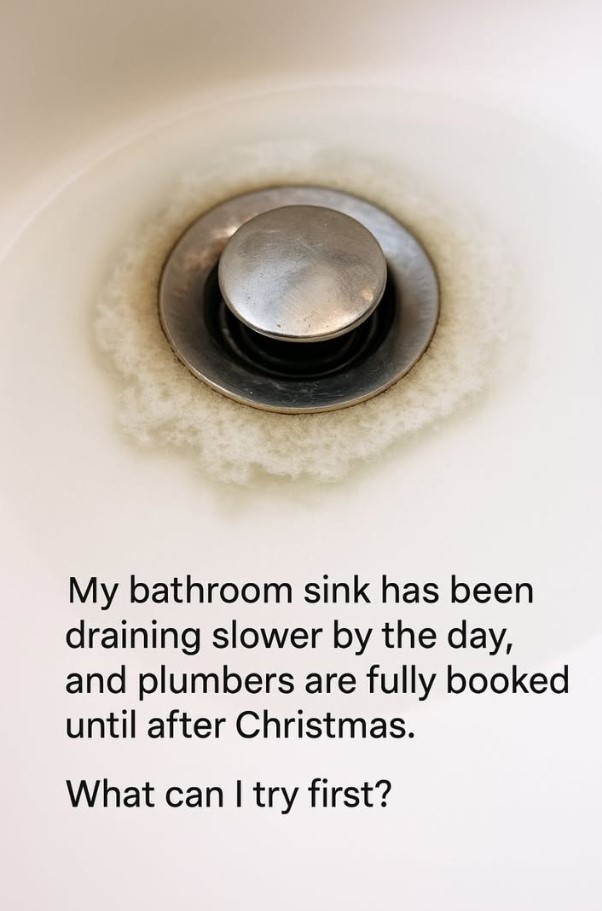
Noticing your bathroom sink taking longer and longer to drain can be frustrating — especially when plumbers are backed up and you can’t get help right away. A slow-draining sink is one of those small household problems that can quietly get worse if left unaddressed, but it’s also something many people can safely improve with a few simple steps while waiting for professional service.
Before we begin, it’s important to remember: these are common, gentle techniques many homeowners use to improve drainage. None of them replace a professional assessment, and if you ever encounter strong odors, gurgling sounds, or backups, it’s a good idea to note those details for your plumber.
Why Bathroom Sinks Start Draining Slowly
A slow drain doesn’t usually come from a single catastrophic event — it’s often the result of a build-up over time. Bathroom sink drains commonly slow down because of:
- Hair and skin oils collecting in the drain
- Soap scum clinging to the pipe walls
- Toothpaste or shaving cream residue
- Small bits of debris that get washed down repeatedly
- Mineral buildup from hard water over time
All of these can create a sticky, slow-moving environment inside the pipe that water has to push through — and the longer it sits, the slower the sink can drain.
Try These Gentle First Steps (Safe for Home Use)
Here’s a sequence of things you can try before calling a plumber. These methods are generally safe when done carefully in a bathroom sink.
1. Remove and Clean the Stopper
Many bathroom sinks have a stopper that can trap hair and debris just below the surface. Removing it and cleaning around it often makes a big difference.
Steps:
- Twist or pull up the stopper, depending on your sink design.
- Use a paper towel or cloth to remove trapped hair or gunk.
- Rinse the stopper and replace it.
This simple step alone can dramatically improve drainage because a lot of buildup happens right where water first enters the pipe.
2. Use a Plunger
A small sink plunger can help dislodge minor clogs in the drain.
How to use it:
- Add a little water to the sink so the plunger head is covered.
- Place the plunger over the drain and pump gently at first, then with firmer strokes.
- After 15–20 good pumps, pull the plunger straight up to see if water starts to move faster.
Be careful not to use a toilet plunger on a bathroom sink (they’re shaped differently), and avoid very forceful plunging in older fixtures.
3. Hot (Not Boiling) Water Flush
A trick many homeowners use is a hot water flush. Boiling water can damage some pipes or soften any sealants, so very hot tap water is safer.
Here’s how:
- Heat water on the stove until it’s very hot but not boiling.
- Slowly pour it down the drain in stages.
- Let it sit for a few minutes between pours to help dissolve and loosen residue.
This won’t melt hair clogs, but it can help loosen soap scum and oils lining the pipes.
4. Baking Soda + Vinegar (Optional & Gentle)
This is a common home method people try for slow drains. Note that it’s not guaranteed to clear a tough clog, but it can help freshen the pipe and break down mild buildup.
Steps:
- Pour about ½ cup of baking soda directly into the drain.
- Follow with ½ cup of white vinegar.
- Let it fizz and sit for 10–15 minutes.
- Rinse with hot water.
This reaction can loosen residue and reduce smells, but avoid using this method in combination with chemical drain cleaners.
5. Check the P-Trap (If You’re Comfortable)
Under the sink there’s usually a curved section of pipe called the P-trap. This trap often collects debris first. If you feel handy:
- Place a bucket underneath the pipe to catch water.
- Unscrew the slip nuts holding the P-trap.
- Remove it and clean out hair and buildup.
- Replace it and secure it snugly.
If you’re unsure how to do this or your pipes look unfamiliar, skip it and call your plumber.
What You Shouldn’t Do
While it might be tempting to pour chemical drain cleaners down the sink, many of those products are harsh and can damage older plumbing, seals, or finishes. Since your plumber visit is coming soon, preserving the condition of your pipes is a good idea.
Signs It’s Time to Call the Plumber Sooner
Even with gentle DIY steps, some situations require professional help:
- Water starts backing up into the sink
- The drain gurgles loudly
- Multiple drains in the house are slow
- You notice foul, persistent odors
- There’s water leakage under the sink
In those cases, documenting what you’ve already tried (plunger, hot water flush, etc.) helps your plumber diagnose the issue faster when they arrive.
Conclusion :
A bathroom sink that slowly drains is one of those common home annoyances that can often be eased with a few simple, safe steps. By clearing hair from the stopper, using a plunger carefully, flushing with hot water, or trying a mild baking soda and vinegar flush, you may be able to improve drainage while you wait for professional help.
Always take care when working around pipes — if at any point you feel uncertain, it’s fine to pause and wait for your plumber. Small, gradual improvements often make daily sink use more comfortable, and documenting your efforts will help the professional diagnose the problem more quickly when they’re able to visit.
With patience and a few gentle techniques, you can usually tide things over until your scheduled appointment — and sometimes even get the sink flowing freely again before the holidays arrive.