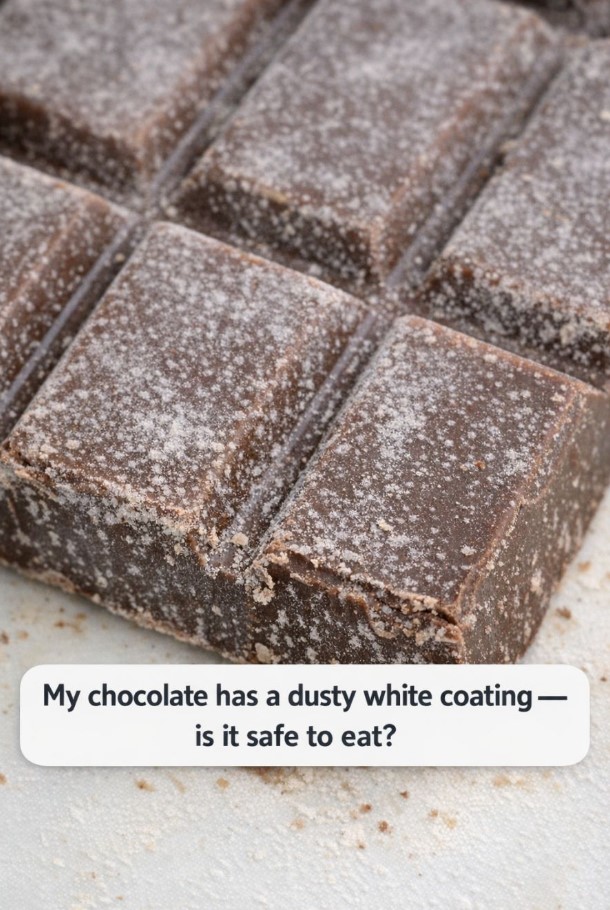
Have you ever opened a bar of chocolate or unwrapped a piece of candy, only to find a dusty white coating on the surface? It can be surprising, and maybe even a little alarming. But the good news is that in most cases, this harmless white film doesn’t mean your chocolate has gone bad. In fact, it’s usually just a natural change that doesn’t affect the safety or taste of the chocolate.
In this article, we’ll explain:
- What causes the dusty white coating on chocolate
- The difference between the common types of coatings
- When it’s safe to eat and when to be cautious
- How to store chocolate properly to avoid this issue
- Fun facts about chocolate’s texture and appearance
By the end, you’ll know exactly what that mysterious white layer is — and whether it’s safe to eat.
What Is That White Coating? Two Main Possibilities
When chocolate develops a dusty or whitish film, it’s usually one of two things:
1. Fat Bloom
Fat bloom is the most common reason for white streaks or a dusty appearance on chocolate.
- It happens when the cocoa butter in the chocolate melts slightly and then re‑crystallizes on the surface.
- This can be caused by changes in temperature, such as going from a warm place to a cool one.
- The result is a chalky or whitish layer on the top of the chocolate.
Fat bloom doesn’t mean the chocolate is spoiled — it just looks different. The flavor and safety are usually unaffected.
2. Sugar Bloom
Sugar bloom is another common cause of a white coating on chocolate.
- It occurs when moisture gets onto the surface of the chocolate (for example, from condensation after refrigeration).
- The water dissolves tiny amounts of sugar, which then recrystallizes as the water evaporates, leaving behind a grainy white film.
Like fat bloom, sugar bloom doesn’t typically make the chocolate unsafe to eat — it mostly affects the texture.
Why Do These Changes Happen? Conditions That Cause White Coating
Your chocolate may develop a dusty white coating for several reasons:
Heat Exposure
Chocolate is sensitive to heat. If it gets too warm (even from being left in a hot room), the fat inside can soften and later reform on the surface.
Quick Temperature Changes
Moving chocolate from a cold spot to a warm one — or vice versa — can cause condensation. This moisture leads to sugar bloom.
Fluctuating Storage Conditions
Frequent cycling between warmer and cooler temperatures can cause repeated softening and hardening of cocoa butter, which encourages fat bloom.
Humidity
High humidity doesn’t cause chocolate to spoil, but it can cause sugar to dissolve and recrystallize — resulting in a chalky white sugar bloom.
Fat Bloom vs. Sugar Bloom — What’s the Difference?
While both fat bloom and sugar bloom create a whitish coating, you can usually tell them apart by texture and context.
| Feature | Fat Bloom | Sugar Bloom |
|---|---|---|
| Texture | Smooth or shiny whitish film | Grainy, powdery coating |
| Cause | Cocoa butter migration | Moisture + sugar recrystallization |
| Trigger | Heat or rapid cooling | Humidity or temperature swings |
| Effect on taste | Usually none | May feel slightly grainy |
Fat Bloom
- Often appears as a glossy or matte white layer.
- The chocolate may still taste smooth and normal.
- Most common in chocolate bars that were exposed to warmth.
Sugar Bloom
- Often feels grainy to the touch.
- The chocolate may melt unevenly in your mouth.
- Usually happens when chocolate has been in a moist environment.
Neither type means your chocolate has gone bad, and both are safe to eat in most cases.
Is It Safe to Eat That Chocolate?
The short answer: Yes — in most cases, chocolate with a dusty white coating is safe to eat.
Here’s why:
- The white coating is usually just cocoa butter or sugar crystals — not mold.
- It doesn’t contain harmful bacteria or toxins.
- It won’t make you sick unless the chocolate has actually spoiled in other ways.
However, you shouldn’t eat chocolate if:
- It smells strange, sour, or off
- It has visible mold (fuzzy spots or unusual colors)
- The packaging was damaged or exposed to pests
- It’s been stored for a very long time past its date and shows other signs of spoilage
If it just has a white film but smells and tastes normal, it’s generally fine to enjoy.
How the Texture and Flavor Might Change
While the white film itself isn’t dangerous, it can affect how the chocolate feels and tastes:
Texture Changes
- Fat bloom: Can make the surface slightly softer or waxy.
- Sugar bloom: Can make the chocolate feel grainy.
Flavor
- The flavor usually remains the same.
- Some people notice a slight difference in mouthfeel, especially with sugar bloom.
How to Store Chocolate to Prevent White Coatings
The best way to keep chocolate looking smooth and glossy is by storing it properly.
Ideal Storage Conditions
- Temperature: Around 60–70°F (15–21°C)
- Humidity: Low — dry environment
- Dark Place: Away from sunlight or bright lights
Avoid Moisture
Moisture leads to sugar bloom. Don’t refrigerate chocolate unless necessary, and if you do, allow it to come to room temperature inside a sealed package to avoid condensation.
Keep It Steady
Avoid large temperature swings — storing chocolate in a temperature‑stable area helps prevent both fat and sugar bloom.
Can You “Fix” the White Coating?
You can’t completely reverse fat or sugar bloom once it’s formed, but you can improve the texture and appearance:
Gently Remelt and Temper
- If you’re familiar with melting chocolate, you can remelt it and re‑temper it to restore a glossy surface.
- Tempering re‑crystallizes the cocoa butter in a stable form, giving it a smooth finish.
However, this requires careful temperature control — too hot or too cool, and the chocolate won’t set properly.
Use It in Recipes
Even if the coating bothers you aesthetically, the chocolate works perfectly in:
- Baking (cookies, brownies, cakes)
- Hot chocolate
- Ganache or frostings
- Melted chocolate dips
In recipes, the white film doesn’t affect performance or flavor.
Why This Happens More Often Than You Think
Chocolate is a complex blend of cocoa solids, cocoa butter, sugar, and sometimes milk fats and emulsifiers. The structure that makes it delicious also makes it sensitive to temperature and humidity. Because cocoa butter has a relatively low melting point compared to many other fats, even small changes in storage conditions can make it migrate to the surface.
Sugar crystals are also tiny and water‑soluble. When moisture gets into the chocolate surface, sugar dissolves and then reforms as tiny crystals — just like how a sugar cube left in a damp kitchen might look grainy.
Fun Facts About Chocolate’s Appearance
- A shiny, glossy chocolate means it’s been well‑tempered — a process that aligns cocoa butter crystals.
- Professional chocolatiers temper chocolate carefully so it sets with a smooth, glossy finish without bloom.
- Bloom doesn’t affect melting point significantly — the chocolate still melts in the mouth.
- Some chocolate packaging warns about bloom because it’s a common cosmetic issue.
Conclusion :
A dusty white coating on chocolate can seem strange, but it’s usually harmless and nothing to worry about. Most often, it’s caused by cocoa butter or sugar migrating to the surface due to temperature changes or moisture exposure. Neither of these changes makes the chocolate unsafe to eat, and the flavor remains enjoyable.
Understanding why the white film appears helps you store and handle chocolate better in the future. When chocolate is kept in a cool, stable, dry place, it’s less likely to develop this appearance. And even when it does, the chocolate is still a delicious ingredient for eating as is or using in recipes.
If the chocolate smells fine and has no visible mold, you can safely enjoy it. And now that you know what that mysterious white coating really is, you can approach your next chocolate treat with confidence!