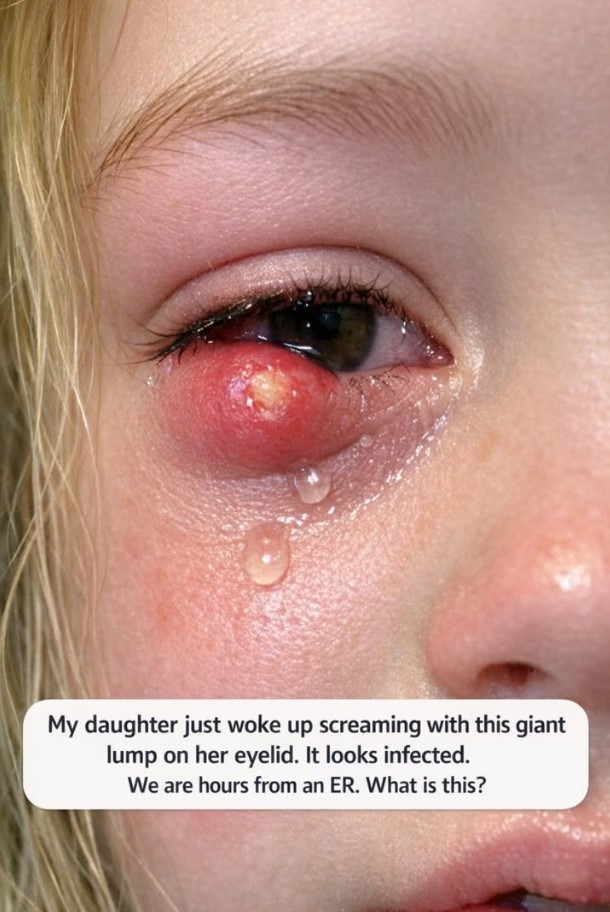
Waking up to find a painful, swollen lump on your child’s eyelid can be alarming—especially when it appears suddenly and looks red or infected. When medical help isn’t immediately available, the uncertainty can make the situation even more stressful.
The good news is that most eyelid lumps in children are caused by common, manageable conditions that are rarely serious. While they can look dramatic and uncomfortable, they often respond well to simple care at home.
Understanding what might be causing the swelling—and knowing what steps you can safely take—can help you stay calm and handle the situation effectively until you’re able to see a healthcare professional.
What It Could Be
1. A Stye (Most Common Cause)
A stye is one of the most likely explanations for a sudden, painful lump on the eyelid.
It occurs when an oil gland becomes blocked and infected, usually by bacteria. This leads to:
- A red, swollen bump
- Pain or tenderness
- Sometimes a small amount of pus
Styes often develop quickly and can look worse than they actually are, especially in the early stages.
2. A Chalazion
A chalazion is similar to a stye but usually less painful.
It happens when an oil gland becomes blocked without infection, leading to:
- A firm lump on the eyelid
- Mild swelling
- Little or no pain
Chalazia tend to develop more slowly but can sometimes follow a stye.
3. Allergic Reaction or Irritation
In some cases, the lump may be related to irritation or an allergic reaction.
Possible triggers include:
- Dust or pollen
- New skincare or hygiene products
- Rubbing the eyes
This type of swelling may come with itching and redness.
4. Insect Bite
Although less common, a bug bite near the eyelid can cause sudden swelling and redness.
This may appear as:
- A raised bump
- Mild pain or itching
- Localized swelling
What You Can Do Right Now
If you’re unable to get medical care immediately, these steps can help:
1. Apply a Warm Compress
This is the most effective first step.
- Use a clean cloth soaked in warm (not hot) water
- Place it gently on the eyelid for 10–15 minutes
- Repeat 3–4 times a day
Warm compresses help open blocked glands and reduce swelling.
2. Keep the Area Clean
- Gently clean the eyelid with warm water
- Avoid harsh soaps or rubbing
Cleanliness helps prevent further irritation or infection.
3. Avoid Touching or Squeezing
It may be tempting, but do not squeeze the lump.
- This can worsen the infection
- It may spread bacteria
- It can delay healing
4. Encourage Good Hygiene
Make sure hands are clean and avoid rubbing the eyes.
This reduces the risk of introducing more bacteria.
When to Seek Urgent Care
Even though most eyelid lumps are harmless, you should seek medical attention as soon as possible if you notice:
- Rapid increase in swelling
- Severe pain
- Fever
- Vision problems
- Swelling spreading beyond the eyelid
These could indicate a more serious issue that needs prompt treatment.
What to Expect
In many cases:
- A stye will improve within a few days
- It may drain on its own
- Swelling gradually decreases with care
If it doesn’t improve, a doctor may prescribe medication or recommend further treatment.
Conclusion :
Seeing a sudden lump on your child’s eyelid can be frightening, especially when it appears quickly and looks painful or infected. However, in most cases, these types of swellings are caused by common conditions like styes or blocked glands, which are generally not dangerous and can often be managed with simple care at home.
The most important thing is to stay calm and focus on gentle, supportive treatment. Applying warm compresses, keeping the area clean, and avoiding unnecessary touching can go a long way in helping the eye heal naturally. While the lump may look concerning at first, these conditions often improve steadily over time.
It’s also important to recognize that not every situation requires immediate emergency care. Knowing the difference between common symptoms and warning signs can help you respond appropriately without unnecessary panic. At the same time, staying alert to any worsening symptoms ensures that you can seek medical help if needed.
This experience also highlights how the body sometimes reacts quickly to minor issues, creating symptoms that appear more serious than they actually are. With patience and proper care, most of these cases resolve without complications.
In the end, while the situation may feel urgent in the moment, it is usually manageable. With the right steps and a bit of time, your child will likely recover comfortably—and you’ll feel more confident handling similar situations in the future.