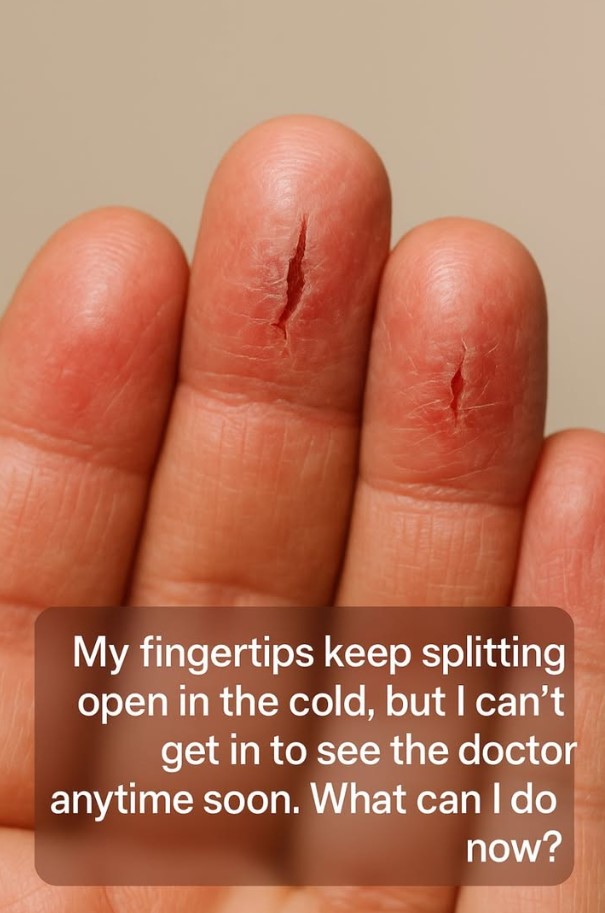
When the weather turns cold, many people notice that their skin becomes dry, tight, and more prone to cracking — especially on the hands and fingertips. Fingertips are especially vulnerable because the skin there is thin and used constantly throughout the day. If your fingertips keep splitting, it can be painful, annoying, and make everyday tasks harder.
If you can’t get an appointment with a doctor right away, there are safe, evidence-based steps you can take now to protect your skin, ease discomfort, and help prevent cracks from worsening. This article walks through likely causes, what helps at home, and when you should consider medical care sooner.
Why Fingertips Split in Cold Weather
In cold weather, a few things happen that make the skin more likely to crack:
1. Dry Air Removes Moisture
Cold air outdoors and dry heated air indoors both pull moisture from your skin. Without enough natural oils, your skin becomes dry and brittle.
2. Less Oil Production
Cold weather can slow your skin’s production of natural oils. These oils normally help lock in moisture and protect against cracking.
3. Frequent Handwashing
In winter, people often wash hands more to stay healthy. Frequent washing — especially with hot water and harsh soaps — can strip away the skin’s protective oils.
4. Friction and Use
Your fingertips touch many surfaces throughout the day — tools, phones, cold metal, paper, etc. Repeated use without enough moisture can lead to tiny splits or cracks.
What Splitting Fingertips Can Feel Like
When fingertips crack, you may notice:
- Pain or stinging, especially when using your fingers
- Tiny splits in the skin, often near the fingertips or around the nails
- Peeling or flaking skin
- Rough, dry patches that feel tight
- Slight bleeding from deeper cracks
The discomfort can range from mild to pretty painful, especially if the cracks are deep.
Safe Things You Can Try at Home
Here are steps you can take at home to reduce cracking and help your skin heal:
1. Moisturize Often
Use a thick, fragrance-free moisturizer or ointment throughout the day:
- Immediately after washing hands
- Before going outside
- Before bed
Products with ingredients like petroleum jelly, ceramides, glycerin, or shea butter are especially good at locking in moisture.
How to apply:
Rub a generous layer onto each fingertip and surrounding skin. For deeper hydration while you sleep, apply a thick layer at night and cover with cotton gloves.
2. Wash Gently
Switch to a mild, fragrance-free hand soap. Avoid very hot water — warm water is gentler on skin.
After washing, pat your hands dry rather than rubbing them.
3. Protect Hands From the Cold
When you’re outside or cleaning:
- Wear warm gloves outdoors
- Wear rubber gloves for washing dishes or cleaning
This helps reduce direct exposure to cold, dry air and harsh water or cleaning products.
4. Use a Humidifier
Heated indoor air during winter becomes very dry. A humidifier added to your bedroom or other living spaces can help keep the air moist and prevent your skin from drying out as quickly.
5. Barrier Creams at Night
Before bed, apply a generous amount of a heavy cream or ointment to your hands and cover with cotton gloves so the product can absorb overnight.
This can help deeply nourish cracked skin.
Nutrition and Hydration
While skin care products help externally, what you eat and drink also matters:
- Stay hydrated by drinking water regularly.
- Eat foods rich in healthy fats (like nuts, seeds, and fish) which support skin health.
- Foods with vitamins A, C, and E help skin repair and protect itself.
When to Be Cautious or Seek Medical Care Sooner
Splitting fingertips in cold weather and dryness is common, but certain signs mean you should seek medical evaluation earlier rather than later:
Seek care more urgently if you notice:
- Deep cracks that bleed a lot
- Signs of infection — increasing redness, warmth, pus, or a bad smell
- Fever accompanied by painful skin cracks
- Cracks that aren’t improving after consistent self-care for several days
These symptoms could mean your skin is more than just dry — there could be infection, dermatitis, eczema, or another skin condition that needs targeted treatment.
If you develop severe pain, spreading redness, or any signs of infection, it’s safer to contact a medical professional earlier.
What a Clinician Might Recommend When You Do Get Seen
When you eventually see a healthcare provider, they might recommend:
- Prescription-strength moisturizers or ointments
- Topical anti-inflammatory creams if eczema or dermatitis is suspected
- Barrier repair treatments such as ceramide-rich formulas
- Antibiotic ointment if there are signs of infection
- Guidance on skin care tailored to your daily activities and environment
Getting a professional assessment helps target the right treatment for your specific situation.
Tips to Prevent Cracks From Coming Back
Once your fingertips start to heal, the goal becomes prevention:
✔ Moisturize multiple times a day
✔ Use gloves outdoors and while washing
✔ Replace harsh soaps with gentle cleansers
✔ Avoid very hot water when washing
✔ Use a humidifier in dry indoor spaces
✔ Apply barrier cream at night
These habits help rebuild the skin’s protective layer and keep cracking from returning.
Conclusion :
Fingertips that crack and split in cold weather are a common and often painful issue — especially when the air is dry and you’re washing your hands frequently. While you wait for a medical appointment, applying thick moisturizers, protecting your hands from cold and water exposure, using gentle soaps, and adding humidity to your home can make a meaningful difference.
Pay attention to signs of infection or severe pain, and if those occur, it’s best to seek medical care sooner. For ongoing issues or deeper cracks, a clinician can offer targeted treatments to support healing and prevent further discomfort.
With consistent care and protection, you can keep your fingertips comfortable and resilient even through the coldest months.