Seeing hard bumps forming on finger joints—especially close to the nails—can feel alarming at first. Many people worry it could be something serious or unusual, especially when the bumps seem to grow or spread over time.
In reality, these bumps are quite common, especially as people get older. In most cases, they are linked to changes in the joints rather than infections or dangerous growths. While they can look concerning, understanding what they are and why they appear can bring a lot of reassurance.
Your hands go through constant use every day, and over time, wear and tear can affect the joints. These visible changes are often your body’s way of adapting to that stress.
What Are These Hard Bumps?
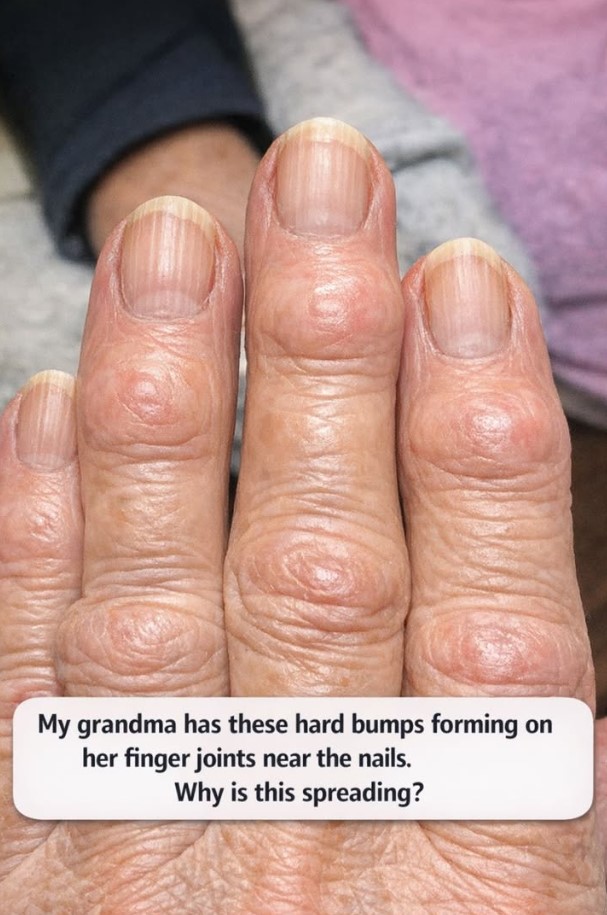
The bumps that appear near the nails are most commonly known as Heberden’s nodes.
These are hard, bony growths that develop on the finger joints closest to the fingertips . They are a well-known sign of osteoarthritis, a condition where the protective cartilage in the joints gradually wears down.
As the cartilage breaks down, the body responds by forming extra bone in the joint area. This extra bone creates the visible bump.
These nodes are:
- Firm or hard to the touch
- Located near the nail (end joint of the finger)
- Often permanent once formed
Why Do They Appear?
1. Osteoarthritis (The Main Cause)
The most common reason for these bumps is osteoarthritis.
This condition develops when the cartilage that cushions your joints slowly wears away. Without that smooth layer, bones begin to rub against each other. Over time, this leads to:
- Joint damage
- Stiffness
- Swelling
- Formation of bony growths (nodes)
The bumps are essentially the result of your body trying to repair or stabilize the damaged joint.
2. Aging and Wear and Tear
These bumps are more common in middle-aged and older adults. Years of repeated use—typing, gripping, lifting—can contribute to joint changes over time.
That’s why they often appear gradually rather than suddenly.
3. Genetics
There is also a genetic component. If other family members have similar bumps or arthritis in their hands, you may be more likely to develop them as well.
4. Previous Joint Injury
In some cases, past injuries to the fingers can increase the likelihood of developing these nodes later on. Even small, repeated injuries can affect how the joint heals over time.
Why Are They “Spreading”?
One of the most concerning things for many people is that these bumps don’t always stay in one place—they can appear on multiple fingers over time.
This happens because osteoarthritis doesn’t affect just one joint. It’s a progressive condition, meaning it can gradually involve several joints in the hands.
So if one finger develops a node, others may follow over time.
What Do They Feel Like?
Heberden’s nodes can feel different depending on the stage:
Early Stage
- Swelling
- Redness
- Tenderness or pain
- Stiffness
Later Stage
- Hard, painless bumps
- Reduced flexibility
- Slight finger deformity or bending
In many cases, the pain decreases once the bump fully forms, but the stiffness may remain.
Are They Dangerous?
In most cases, these bumps are not dangerous.
However, they can:
- Make finger movement more difficult
- Affect grip strength
- Change the appearance of the hands
While they are not life-threatening, they can impact daily activities like buttoning clothes or opening jars.
When Should You Be Concerned?
Even though these bumps are usually harmless, you should pay attention if you notice:
- Sudden severe pain
- Rapid swelling
- Redness or warmth in the joint
- Difficulty using your fingers
- Signs of infection (rare but possible)
If symptoms are severe or worsening, it’s a good idea to consult a healthcare professional for proper evaluation.
Can They Be Treated?
There’s no way to completely reverse these bony bumps once they form, but symptoms can be managed.
Common approaches include:
- Pain relief medications
- Anti-inflammatory treatments
- Hand exercises and therapy
- Warm compresses for stiffness
In more severe cases, medical treatments or procedures may be considered, but most people manage well with simple care.
Simple Ways to Support Joint Health
While you can’t always prevent these changes, you can help protect your joints:
- Avoid excessive strain on your hands
- Take breaks during repetitive tasks
- Keep joints warm in cold weather
- Maintain a healthy diet
- Stay physically active
Small habits can make a big difference over time.
Why These Bumps Are So Common
Many people are surprised to learn how common these bumps actually are. They’re a natural part of aging for some individuals, especially those with a genetic tendency toward joint changes.
Because they develop slowly, people often don’t notice them until they become more visible.
Conclusion :
Hard bumps forming on finger joints near the nails are most often Heberden’s nodes, a common sign of osteoarthritis. While they may look unusual or concerning, they are typically harmless and develop as a result of normal wear and tear on the joints.
Although they can spread over time and affect multiple fingers, they are not dangerous. The key is understanding what they are, monitoring any changes, and managing symptoms if needed.
In the end, these bumps are simply your body’s way of adapting to years of movement and use. With the right care and awareness, you can continue to use your hands comfortably and confidently every day.