
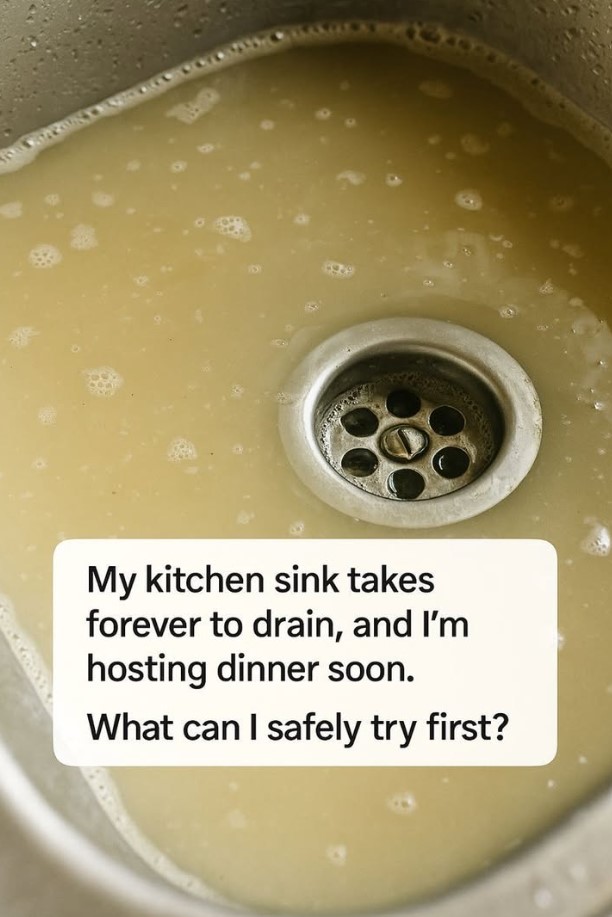
There’s nothing more frustrating than getting ready to host dinner — the oven is on, appetizers are prepped, and guests will arrive any minute — only to find your kitchen sink draining slowly. A slow drain can put a real damper on your cooking flow, but before panic sets in, there are a number of simple, safe, and effective steps you can take to try to fix it yourself.
In most cases, a slow-draining sink is caused by a partial clog somewhere in the pipes — usually from food scraps, grease buildup, soap residue, or small objects that accidentally go down the drain. The good news is that many of these problems can be resolved with a few household tools and common items you may already have in your kitchen.
This guide will walk you through easy, safe first-aid fixes for a slow kitchen sink — without resorting to harsh chemicals or risky tools. These steps are meant to be used before dinner guests arrive so you can get the water flowing freely again and enjoy your evening stress-free.
1. Start With Hot (Not Boiling) Water
The simplest thing to try is hot water, and it’s surprising how often this helps:
How to do it
- Heat water on the stove until it’s very hot (but not boiling — boiling water can damage PVC pipes).
- Carefully pour the hot water slowly down the drain in stages.
- Allow each pour to sit for a minute to give it time to work.
Why it works
Hot water helps melt and flush away grease and soap residue that may have solidified in the pipes. This method is gentle and safe for most sinks.
2. Use a Plunger
A sink plunger — the one with a flat bottom (not a toilet plunger) — can be a very effective first fix.
How to use a sink plunger
- Clear out any standing water so the plunger can make a seal.
- Place the plunger over the drain opening and make sure it’s sealed completely.
- Push down and pull up in firm, rhythmic motions for 10–15 seconds.
- Pull up sharply to break the clog.
- Run hot water to flush any loosened debris.
Tip
Make sure the plunger covers the entire drain opening so you get maximum suction.
3. Try a Homemade Baking Soda + Vinegar Treatment
This classic combo is safe and natural and can help break up minor clogs.
Steps
- Pour about ½ cup of baking soda directly into the drain.
- Follow with ½ cup of white vinegar.
- Let the mixture fizz and work for 15–20 minutes.
- Run hot water to rinse away loosened debris.
Why it helps
The bubbling reaction can help dislodge gunk and clear minor blockages — all without harsh chemicals.
4. Check and Clean the Sink Strainer or Stopper
Sometimes the clog isn’t deep in the pipes at all — it may be right at the opening.
What to check
- Remove the sink strainer or stopper.
- Clear away any trapped food particles, hair, or debris.
- Rinse thoroughly and replace.
Why this works
Food scraps, coffee grounds, and grease often collect right at the top of the drain before they work their way deeper. Removing that buildup can instantly improve drain flow.
5. Use a Drain Snake or Zip-It Tool
If the clog is just below the surface, a drain snake (also called a drain auger) or a simple plastic “zip-it” tool can reach and remove debris.
How to use
- Insert the tool slowly down the drain.
- Twist and push gently until you feel resistance.
- Pull the tool back out — debris will come with it.
- Run hot water to check the flow.
When to use it
This method is ideal if the clog feels too stubborn for hot water or baking soda/vinegar, but you still haven’t tried any heavy-duty methods.
6. Check the P-Trap Under the Sink
If the drain is still slow, the problem might be in the P-trap — the curved section of pipe beneath the sink.
How to safely check it
- Place a bucket under the P-trap to catch water.
- Use pliers or a wrench to loosen the slip nuts on both ends.
- Remove the P-trap and empty the contents into the bucket.
- Clean out any buildup inside the pipe.
- Reassemble and test the drain.
Important Safety Notes
- Only do this if you feel comfortable with basic tools.
- Be careful of sharp edges inside the pipe.
- Tighten the connections snugly when putting it back together.
7. When to Avoid Chemical Drain Cleaners
You might be tempted to grab a chemical drain cleaner from the store, especially when dinner is approaching. However:
Why it’s not recommended
- Harsh chemicals can damage PVC and metal pipes over time.
- They can produce toxic fumes.
- They often don’t fix the root issue and may create bigger problems.
Because of this, it’s best to reserve chemical cleaners as a last resort and focus first on physical, safer methods.
8. When to Call a Professional Plumber
If you’ve tried these safe steps and the drain is still slow or completely blocked, it may be time to call a professional.
Signs it’s more serious
- Water drains very slowly even after multiple attempts.
- You hear gurgling sounds when water is running.
- There’s a foul smell coming from the drain.
- Water backs up into other drains when you run the sink.
A plumber has tools and expertise that go beyond DIY methods and can handle deeper or more stubborn clogs safely.
How to Prevent Slow Drains in the Future
Once your sink is flowing again, you’ll want to keep it that way. Here are some easy habits that help:
Daily Habits
- Avoid pouring grease down the drain — let it cool and wipe it into the trash.
- Use a strainer to catch food scraps and empty it often.
- Run hot water after doing dishes to flush residue.
Weekly Maintenance
- Hot water flush: Run hot water for 30 seconds at the end of the day.
- Baking soda + vinegar: Monthly treatments keep buildup from forming.
Conclusion :
A slow kitchen sink can feel like a crisis when you’re hosting dinner or trying to cook, but most slow drains are caused by common buildup and can be safely fixed with basic tools and simple methods. Start with gentle solutions like hot water, plunging, or a baking soda/vinegar treatment. If those don’t work, check the sink strainer or use a small drain snake to reach deeper clogs. Taking a look at the P-trap under the sink can also help resolve stubborn blockages.
These approaches are all safe to try at home without harsh chemicals or expensive tools. With a little patience and care, you can often restore proper flow quickly and be ready to enjoy dinner with your guests. If all else fails, a professional plumber will have the tools and expertise to clear even tougher clogs.
By making a few small changes to how you use and care for your sink, you can prevent future slowdowns and keep your kitchen running smoothly — even when hosting your busiest evenings.