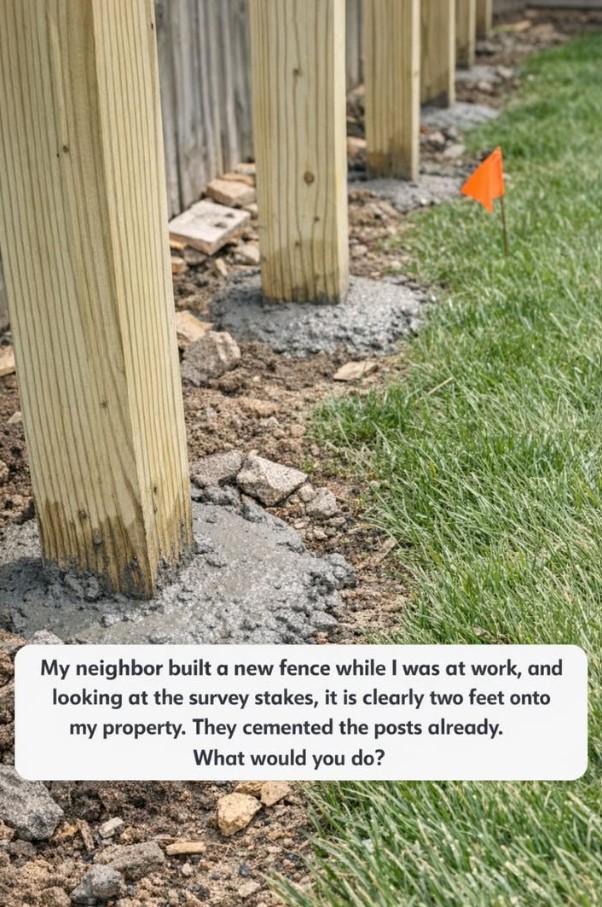
Property boundaries can sometimes become a source of tension between neighbors, especially when construction projects are involved. Imagine coming home after a long day of work only to discover that your neighbor has built a brand-new fence—and according to the survey stakes marking the property line, it appears to be several feet inside your land.
Situations like this are more common than many people realize. Fence disputes often arise because of misunderstandings about property lines, contractor mistakes, or assumptions based on old structures. When the posts are already cemented into the ground, the problem can feel even more frustrating because the fence now appears permanent.
However, discovering that a fence may be built on your property does not mean you have lost that part of your land. In many cases, there are clear steps you can take to resolve the situation calmly and protect your property rights. Understanding your options can help you address the issue effectively while avoiding unnecessary conflict.
Confirm the Property Line First
Before taking any action, it is essential to confirm that the fence truly crosses onto your property. Even when survey stakes are visible, it is best to rely on a professional land survey to establish the exact boundary. Property lines are not always where people assume they are, and small errors can lead to major disagreements.
A licensed surveyor can mark the precise boundaries of your property and provide documentation that shows where the fence sits relative to those lines. This information becomes very important if the situation later requires mediation or legal action.
Start With a Calm Conversation
Once you are confident about the property line, the next step is usually the simplest: talk to your neighbor.
In many cases, neighbors may not realize the fence was placed incorrectly. Contractors sometimes rely on visual estimates rather than exact measurements, which can lead to mistakes. A respectful conversation explaining what the survey shows may lead to an easy solution.
Approaching the situation calmly can prevent a small issue from turning into a long-term neighborhood conflict.
Possible Solutions You Can Consider
If the fence truly extends onto your property, several options may be available depending on the situation and how cooperative both parties are.
Moving the Fence
The most direct solution is asking the neighbor to relocate the fence so it sits entirely within their property line. This is often the simplest resolution when the fence is newly built.
Creating a Boundary Agreement
In some cases, neighbors agree to document the boundary formally and acknowledge the encroachment without moving the fence. This type of agreement can prevent future disputes while keeping the fence where it is.
Granting Permission for Temporary Use
Another possibility is allowing the fence to remain temporarily with written permission. This makes it clear that your neighbor is not gaining ownership of that portion of land.
Selling or Leasing the Small Strip of Land
Occasionally, homeowners agree to sell or lease the small portion of land affected by the fence. This solution can be convenient when the area is small and both parties want to avoid construction changes.
When the Neighbor Refuses to Cooperate
If a friendly conversation does not resolve the problem, the next step may involve more formal actions.
Written Request
A written request explaining the issue and asking that the fence be moved can help clarify the situation. Written communication creates documentation that shows you addressed the problem.
Mediation
Community mediation services can sometimes help neighbors reach an agreement without going to court. A neutral third party can help both sides discuss the issue calmly.
Legal Action
If all other options fail, legal action may become necessary. Courts can determine property boundaries and may order the removal or relocation of structures built on another person’s land. However, legal disputes can be expensive and time-consuming, so they are usually considered a last resort.
Why Acting Quickly Matters
One important reason to address the issue sooner rather than later is a legal concept known as adverse possession.
In some places, if a structure remains on someone else’s property for a long period without objection, the person using the land may eventually claim legal rights to it. While the time period varies depending on local laws, ignoring the problem for many years can complicate future property disputes.
Taking action early helps ensure that your property rights remain protected.
Avoid Taking Matters Into Your Own Hands
Even if the fence appears to be on your land, it is usually not wise to remove it yourself without legal guidance. Doing so could escalate the conflict or even lead to legal consequences if the situation is disputed.
Instead, documenting the issue, confirming the boundary, and following proper steps will provide stronger protection for your position.
Conclusion :
Discovering that a neighbor’s new fence might extend onto your property can be frustrating, especially when the construction already appears permanent. However, this situation does not mean you have lost control of your land.
The most effective approach begins with confirming the property line through a professional survey, followed by a calm conversation with your neighbor. In many cases, simple communication can resolve the issue quickly. If not, written agreements, mediation, or legal action can help ensure the boundary is respected.
Property disputes can be stressful, but addressing them thoughtfully and promptly can protect your rights while maintaining the possibility of a peaceful relationship with your neighbor.