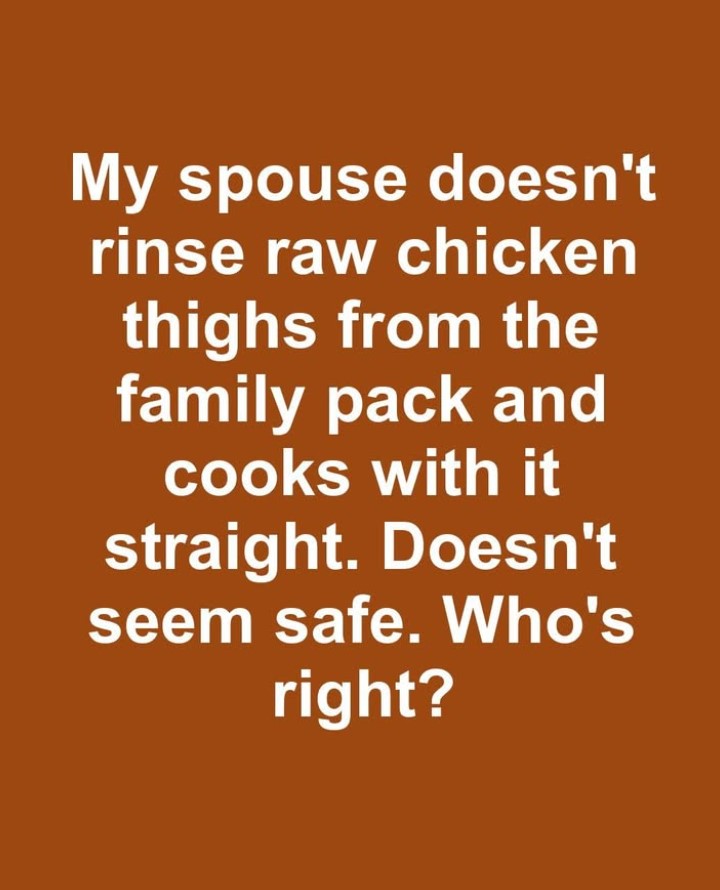
Cooking for a family often involves teamwork, and sometimes you and your partner don’t see eye-to-eye on kitchen habits. Maybe you were taught to rinse raw chicken before cooking, but your spouse skips that step and cooks it straight from the package. You might wonder: Is that safe? Which approach is better?
In this article, we’ll talk about what rinsing raw chicken really does, whether it’s necessary, what food safety experts recommend, and how you and your partner can feel confident about preparing chicken safely. Most importantly, I’ll explain this in a clear, conversational way — no confusing technical language, just good guidance you can use at home.
Why people rinse raw chicken in the first place
For many people, rinsing chicken under running water feels like common sense. The idea comes from thoughts like:
- “I want to wash off bacteria.”
- “It feels cleaner if I rinse it.”
- “That’s what my parents always did.”
Culturally and habitually, rinsing chicken is something lots of home cooks grew up doing. It feels like it should remove dirt or germs before cooking.
But here’s the big question:
Does rinsing raw chicken actually make it safer?
What’s really on raw chicken
When raw chicken comes out of the package, it naturally carries moisture and tiny amounts of bacteria like Salmonella or Campylobacter. These bacteria are common in raw poultry — but they aren’t things you can wash off with water.
Here’s why:
- Bacteria on raw chicken are mostly microscopic and cling tightly to the meat’s surface.
- Running water simply moves the bacteria around rather than removing it completely.
So even if you rinse chicken under the faucet, most bacteria stay on the meat.
The hidden safety risk: Splashing bacteria
The main concern with rinsing chicken isn’t that it cleans the meat — it’s that water can splash bacteria onto nearby surfaces.
When water hits raw chicken in the sink:
- It can spray tiny droplets onto countertops
- It can land on utensils, cutting boards, or nearby foods
- It can get on your hands or clothing
Even if you wipe your sink later, those microscopic droplets can land far from the chicken itself.
This is called cross-contamination, and it’s one of the main ways foodborne bacteria spread in home kitchens.
So rinsing actually increases the risk of spreading bacteria if you’re not extremely careful.
What food safety experts recommend
Most food safety authorities (including national food safety agencies and public health departments) recommend not rinsing raw poultry. Instead, they advise:
1. Handle it carefully
Keep raw chicken contained — don’t let its juices touch other foods or surfaces.
2. Trim or pat dry if needed
If you want to remove excess moisture, gently pat the chicken dry with paper towels — and then throw the towels straight into the trash.
3. Cook to the right temperature
The most reliable way to make chicken safe is to cook it to the proper internal temperature. For chicken, that’s 165°F (74°C) in the thickest part of the meat. A simple meat thermometer takes the guesswork out of this.
4. Wash hands and surfaces
After handling raw chicken, wash your hands with soap and warm water, and sanitize any surfaces the chicken touched.
These steps reduce bacteria safely without risking splash contamination.
So is rinsing raw chicken “unsafe”?
Here’s the honest answer:
- Rinsing raw chicken won’t make it safer.
- It can actually spread bacteria around your kitchen if water splashes.
- It doesn’t reduce the chance of foodborne illness — cooking to the right temperature does.
That doesn’t mean anyone in your household is doing something dangerous on purpose — it’s just that kitchen traditions don’t always match modern food safety insights.
Why some cooks still rinse chicken
Even though experts discourage it, many people still rinse raw poultry because:
- It’s what they learned from family
- They feel it looks cleaner afterward
- They think it removes smells or residues
These beliefs are understandable — they come from experience and habit. But science and food safety research show that rinsing doesn’t actually reduce bacteria or make the meat safer to eat.
The safest way to prepare chicken is to minimize contamination and cook it properly, not rinse it under running water.
How to prepare chicken safely step by step
Here’s a simple routine you can follow at home:
- Take the chicken out of the package
Place it on a plate or tray — don’t let juices drip on other foods. - Pat it dry (if you want)
Use paper towels, then toss them immediately. - Trim or prep your chicken
Do this on a separate cutting board if possible. - Wash your hands
Soap and warm water for at least 20 seconds. - Cook to the proper temperature
Make sure the thickest part reaches 165°F (74°C). - Clean up afterward
Wash cutting boards, utensils, and surfaces that touched raw chicken.
This simple process keeps germs contained and your food safe.
Good communication helps in the kitchen
It’s totally normal for people who weren’t taught this approach to feel unsure at first. You and your spouse can approach this topic as a team:
- Share what you’ve learned about food safety
- Try the safe routine together once
- See how easy it feels in practice
Most disagreements in the kitchen come from different habits, not harmful intentions.
Conclusion :
The bottom line is this:
Rinsing raw chicken before cooking doesn’t make it safer — and it can spread bacteria around your kitchen. The most reliable way to make chicken safe to eat is to handle it carefully and cook it thoroughly to the correct internal temperature.
Your spouse isn’t doing something completely reckless by skipping the rinse — they’re following a practice that many people learned long ago. At the same time, modern food safety research suggests that avoiding rinsing and focusing on proper cooking and clean handling is the best approach.
The key steps that really keep your family safe are:
- Preventing cross-contamination
- Cooking chicken to at least 165°F (74°C)
- Washing hands and surfaces after handling raw poultry
If you and your partner try these methods together, you’ll not only keep your kitchen cleaner — you’ll also eat safely without unnecessary worry.