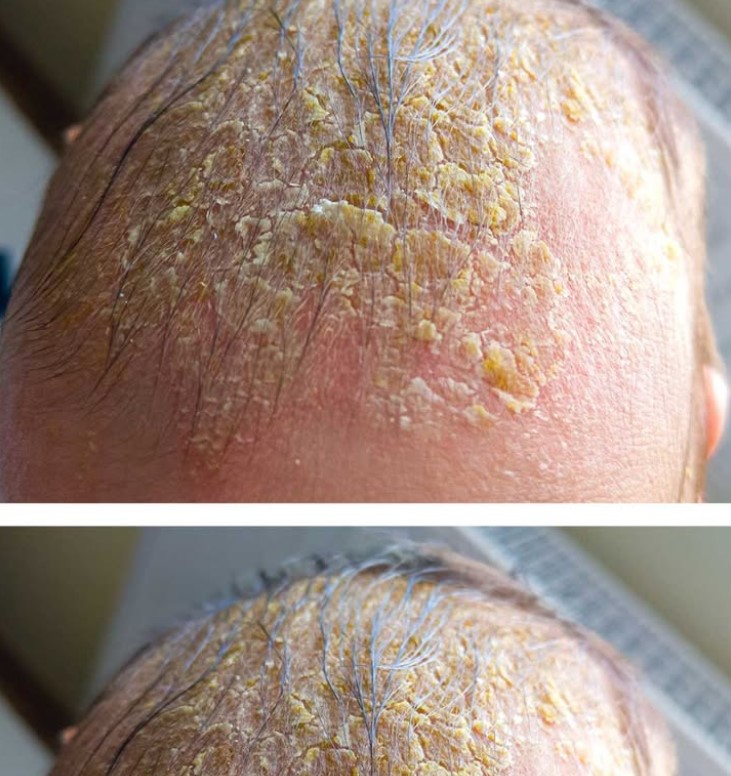
Noticing an oozing, yellowish crust on your scalp can be unsettling, especially if it hasn’t healed and you’re stuck on a long waiting list to see a clinician. While the situation can be uncomfortable, there are several common causes — and many of them can be managed safely until you can get professional care.
This article explains:
- What the yellow crust might be
- Common causes
- How doctors diagnose these conditions
- Safe steps you can take at home
- When to seek urgent care
- Tips for scalp care while waiting
Let’s break it down in a way that’s easy to understand.
What the Yellow Crust Might Actually Be
When the scalp has a yellow, crusty, or oozing area that doesn’t heal quickly, it can come from several different skin conditions. Here are the most common:
1. Seborrheic Dermatitis
This is a very common scalp condition often referred to as dandruff when mild, but it can be more severe.
- What it looks like: Yellowish, greasy-looking scales or crusts.
- Symptoms: Itching, flaking, redness.
- Cause: Overgrowth of skin yeast (a type of fungus) and increased oil production.
Seborrheic dermatitis tends to be chronic and can flare up when stressed, during weather changes, or if the scalp becomes oily.
2. Scalp Psoriasis
Psoriasis is a chronic immune-related skin condition.
- What it looks like: Thick, silvery or yellowish plaques that can crack or ooze if irritated.
- Symptoms: Itching, discomfort, sometimes soreness.
- Cause: Rapid skin cell turnover leading to buildup and inflammation.
This often affects other areas too (knees, elbows), but it can appear only on the scalp.
3. Impetigo
This is a bacterial skin infection that can cause yellow crusting.
- What it looks like: Patches that ooze a sticky yellow fluid then form crusts.
- Symptoms: Can be itchy, tender, or warm to the touch.
- Cause: Bacteria such as Staphylococcus or Streptococcus.
This type of crusting bursts and oozes before forming a honey-colored crust.
4. Folliculitis
A mild inflammation or infection of hair follicles.
- What it looks like: Small red bumps that may develop a yellowish head or crust.
- Symptoms: Tenderness, itch, irritation near hair follicles.
- Cause: Bacteria, yeast, friction, or blockage of hair follicles.
How Doctors Figure Out What It Is
When you do see a clinician, they’ll likely:
- Ask about your symptoms (itching, pain, how long it’s been there)
- Look at your scalp closely
- Ask about other areas of your skin
- Ask about hair care products you use
- Sometimes take a small skin scraping or swab
This helps them separate conditions like scalp psoriasis from infections or dermatitis, which may require different treatments.
Safe Things You Can Do at Home
While waiting to be seen, there are gentle steps you can take that are safe and supportive:
1. Keep Your Scalp Clean and Gentle
Wash your hair with a mild shampoo designed for sensitive skin. Avoid harsh scrubbing — use your fingertips, not nails.
2. Avoid Irritating Products
Steer clear of strong fragrances, alcohol-based toners, and heavy styling products that can trap oil and debris.
3. Warm Compresses (Only if Not Painful)
A clean, warm (not hot) compress applied gently to the area can soothe irritation temporarily. Don’t use this if the area feels very painful, hot, or shows signs of infection.
4. Don’t Pick or Scratch
It may be tempting, but picking can cause irritation or secondary infection. Try to keep hands away from the area.
5. Use a Soft Brush
A gentle brush can help remove loose flakes without irritating the skin.
When to Seek Fast Medical Care
Certain signs mean you shouldn’t wait for a regular appointment:
🚨 Spreading redness or warmth
🚨 Increasing pain or tenderness
🚨 Pus, strong odor, or spreading oozing
🚨 Fever or feeling unwell
🚨 Vision changes or swelling near the eyes
If any of these happen, seek urgent care or go to a clinic earlier — especially if an infection is suspected.
What Your Healthcare Provider Might Suggest
Once you get an appointment, treatment will depend on the likely cause:
For Seborrheic Dermatitis
- Medicated shampoos (e.g., with zinc pyrithione, ketoconazole, or salicylic acid)
- Anti-itch scalp treatments
- Sometimes mild topical steroids
For Psoriasis
- Medicated shampoos
- Topical corticosteroids
- Light therapy in some cases
For Bacterial Infection (Impetigo or Folliculitis)
- Antibiotic ointment or oral antibiotics
- Gentle cleansing
Each condition has a tailored approach, so correct diagnosis matters.
Tips to Support Scalp Health Long-Term
Here are habits that help your scalp stay healthy and reduce irritation:
✔ Wash your hair regularly with a gentle shampoo
✔ Avoid overwashing (can dry out the scalp)
✔ Use fragrance-free hair products
✔ Stay hydrated and eat a balanced diet
✔ Manage stress (stress can worsen flareups)
✔ Avoid scratching or picking at the scalp
Myths and Misunderstandings
❌ “Yellow crust always means serious infection.”
Not always — it can be a harmless scale from dermatitis.
❌ “If it’s not painful, it’s nothing to worry about.”
Even painless conditions can persist and benefit from treatment.
❌ “All dandruff shampoos cure it.”
Standard anti-dandruff shampoos help some scalp issues, but not all, and some conditions need medicated treatment.
Conclusion :
An oozing yellow crust on the scalp can be uncomfortable and frustrating, especially when you’re stuck on a long waitlist for medical care. In many cases, the cause is a common skin condition like seborrheic dermatitis, psoriasis, or mild folliculitis — not a dangerous illness. These conditions often respond well to gentle cleansing, mindful hair care, and, when indicated, medicated shampoos or topical treatments.
If the area becomes increasingly painful, spreads, or you develop fever or other concerning symptoms, seek medical attention sooner rather than later. Until you can see a clinician, keeping the area clean, avoiding harsh products, and refraining from scratching or picking can help reduce irritation.
Your scalp is sensitive, but with proper care and patience, many conditions improve significantly. And once you’re able to talk to a healthcare provider, you’ll be in a better position to get targeted help and relief.