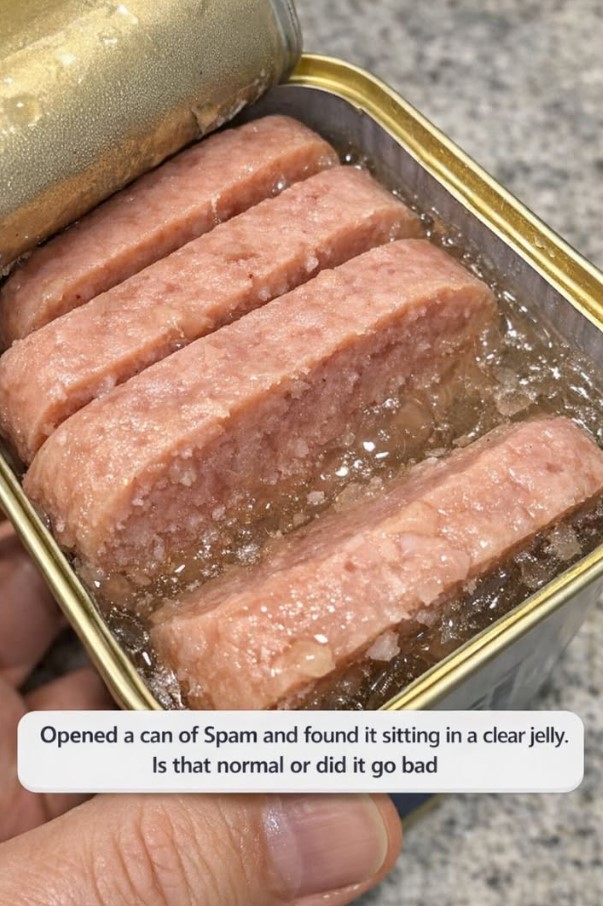
Opening a can of food should be simple and predictable. But sometimes, what you see inside can be surprising. That’s exactly what happens to many people when they open a can of Spam and discover the meat sitting in a clear, jelly-like substance.
For someone unfamiliar with canned meats, the sight can raise immediate concerns. Is this normal? Did the product spoil? Should it be thrown away?
The good news is that this unusual appearance is usually completely normal. In fact, the jelly is actually a natural part of the production process for many canned meats, including Spam. Understanding what this jelly is—and how to tell if the food is still safe to eat—can help you avoid unnecessary worry.
Let’s take a closer look at why this jelly forms, what it means, and how to determine whether your canned meat is still good.
What Is the Clear Jelly in Spam?
The clear jelly surrounding Spam is natural gelatin formed during the cooking and canning process.
Spam is made from pork and ham. During production, the meat mixture is cooked at high temperatures inside sealed cans. When the meat cooks, collagen, a protein found in connective tissue, breaks down and turns into gelatin.
While the product is hot, the gelatin remains liquid. But once the can cools, the liquid gelatin solidifies into a clear or slightly amber jelly that surrounds the meat.
This process happens naturally and does not mean that anything has been added or that the product is spoiled.
Why the Jelly Forms
The jelly actually plays an important role in the product.
1. It Helps Preserve the Meat
The gelatin helps seal moisture inside the can and creates a protective environment that contributes to Spam’s long shelf life.
2. It Keeps the Meat Moist
Without the gelatin, the meat might dry out over time. The jelly helps maintain the texture and flavor of the Spam during storage.
3. It Happens Naturally During Cooking
This is the same reason homemade broth turns into gel when cooled in the refrigerator. The collagen in meat converts to gelatin when heated, then solidifies as it cools.
So while the jelly may look unusual, it’s actually a sign that the cooking and canning process worked as intended.
Is the Jelly Safe to Eat?
Yes, the jelly is safe to eat.
It’s simply gelatin derived from the meat juices and proteins. Many people eat it along with the Spam, while others prefer to rinse it off before cooking.
When heated, the jelly melts and blends into the dish, adding moisture and flavor.
If the texture bothers you, you can easily remove it by rinsing the Spam briefly under warm water or wiping it away with a paper towel.
When You Should Be Concerned
Although the jelly itself is normal, there are situations where you should avoid eating canned meat.
Watch for these warning signs:
1. The Can Is Damaged
If the can is bulging, leaking, rusted, or severely dented, it may be contaminated and should be discarded.
2. The Jelly Looks Strange
Normal jelly should be clear or slightly amber and smooth. If it appears:
- Green
- Dark brown
- Cloudy
- Slimy
it could indicate spoilage.
3. The Smell Is Bad
Fresh Spam should have a mild, slightly salty aroma. If you notice a sour or rancid smell, it’s best to throw it away.
4. The Meat Looks Discolored
Spam should have a consistent pink color. Gray or dark spots could signal spoilage.
When in doubt, it’s safer to discard the product rather than risk foodborne illness.
What Happens to the Jelly When You Cook Spam?
One interesting thing about Spam jelly is that it disappears when heated.
If you fry Spam in a pan, the gelatin melts and mixes with the cooking juices. This can actually help create a flavorful base for cooking. Some people even use it to enhance sauces or broths.
So while it may look strange when you first open the can, it usually becomes unnoticeable once the meat is cooked.
Why It Surprises Many People
Many people are caught off guard by Spam jelly simply because they aren’t used to seeing gelatin in canned meat.
However, this phenomenon isn’t unique to Spam. Similar jelly often appears in other canned products such as:
- Canned ham
- Corned beef
- Canned chicken
This happens for the same reason: natural gelatin from cooked meat solidifies as it cools.
Conclusion :
If you open a can of Spam and see the meat surrounded by clear jelly, there’s usually no reason to worry. The jelly is simply natural gelatin formed from meat proteins during the cooking and canning process, and it helps keep the meat moist and preserved.
While it may look unusual at first, it’s perfectly safe to eat and will melt away when the Spam is cooked.
As long as the can isn’t damaged, the meat smells normal, and the jelly appears clear and fresh, your Spam is most likely safe to enjoy.
Sometimes the strangest things in the kitchen turn out to have the simplest explanations.