Few dishes combine simplicity, comfort, and versatility like a perfectly baked potato. Whether you’re serving it as a hearty side at dinner, a base for loaded toppings, or a cozy meal all on its own, mastering the baked potato is a basic cooking skill with big rewards. A great baked potato should have a crisp, flavorful skin and an interior that’s light, soft, and fluffy — a perfect blank canvas for butter, sour cream, cheese, chives, bacon bits, or any topping you love.
This guide breaks down the essentials you need to know before you heat your oven, from selecting the right potatoes to trimming your toppings, so that every time you bake them, you get spectacular results without guesswork or fuss.
Choosing the Right Potatoes
The first step toward great baked potatoes is picking the appropriate type. For baking, starchy potatoes like russet or Idaho varieties are ideal because their high starch and lower moisture content help create a creamy interior while the skin crisps up beautifully during baking. These potatoes tend to be larger and slightly oblong in shape, making them easy to season and bake evenly. Smaller waxy varieties, like red potatoes, don’t produce the same texture when baked whole, though they shine in other preparations.
Once you’ve chosen your potatoes, inspect the skins for firmness and even shape. Avoid ones with soft spots, green patches, or visible sprouts.
Preparing Your Potatoes
Step 1: Clean and Dry
Begin by rinsing the potatoes under cool running water and scrubbing them with a vegetable brush or clean cloth to remove any residual dirt. Thorough cleaning ensures that seasoning adheres to the skin.
After washing, pat the potatoes completely dry. Moisture on the surface can prevent crisping — and one of the goals of a perfectly baked potato is that satisfying crunch on the outside.
Step 2: Pierce the Skin
Using a fork, gently poke several holes all around each potato. This creates tiny steam vents that prevent pressure from building up inside during baking — if steam has no escape route, your potato could burst or develop uneven texture inside. Steaming pockets can also make the skin soggy instead of crisp.
Pricking the skin is an easy precaution that helps ensure even cooking throughout.
Step 3: Season the Skin
Rub the outside of each potato with a bit of oil. Olive oil works well, but neutral‑flavored oils like avocado or grapeseed can also deliver great results. The oil helps the skin crisp and brown as it bakes.
After oiling, sprinkle the potatoes generously with salt. The salt draws out moisture from the surface and helps create that desirable golden crust while also seasoning the skin.
Optionally, you can add a little black pepper or even garlic powder for extra flavor at this stage.
Baking the Potatoes
Oven Setup
Preheat your oven to around 400°F (200°C). Position an oven rack in the center so heat can circulate evenly around each potato.
You can place the seasoned potatoes directly on the oven rack for best air circulation and uniform crisping. To catch any small drips, set a baking sheet on the rack below. Alternatively, you can use a wire rack set inside a rimmed baking sheet.
Bake Time
Baking time varies depending on the size of your potatoes. Medium to large russets typically take 45 to 65 minutes to become tender and fully cooked through. Larger potatoes may require a bit more time. You can test doneness by inserting a fork or paring knife — it should slide in easily with little resistance when the potato is fully baked.
Some cooks prefer an internal temperature of around 205–210°F (96–99°C) to ensure the center is completely light and fluffy.
Tip: For even crispier skin, you can raise the oven temperature slightly for the last 10–15 minutes of baking.
What Happens During Baking
While the potatoes bake, several key reactions occur:
- The skin firms and dries out slightly, forming a crisp layer.
- Moisture inside turns into steam, puffing and softening the interior.
- Starches gelatinize and absorb heat, turning the center into a pillow‑like texture that’s perfect for fluffing.
Cooking without foil allows excess moisture to escape and promotes that distinctive contrast between crunchy skin and soft flesh.
How to Open and Serve the Potatoes
Once your baking time is up and the interior feels tender, remove the potatoes from the oven. Let them cool for a few minutes — this resting time allows steam to redistribute and finishes the cooking process gently.
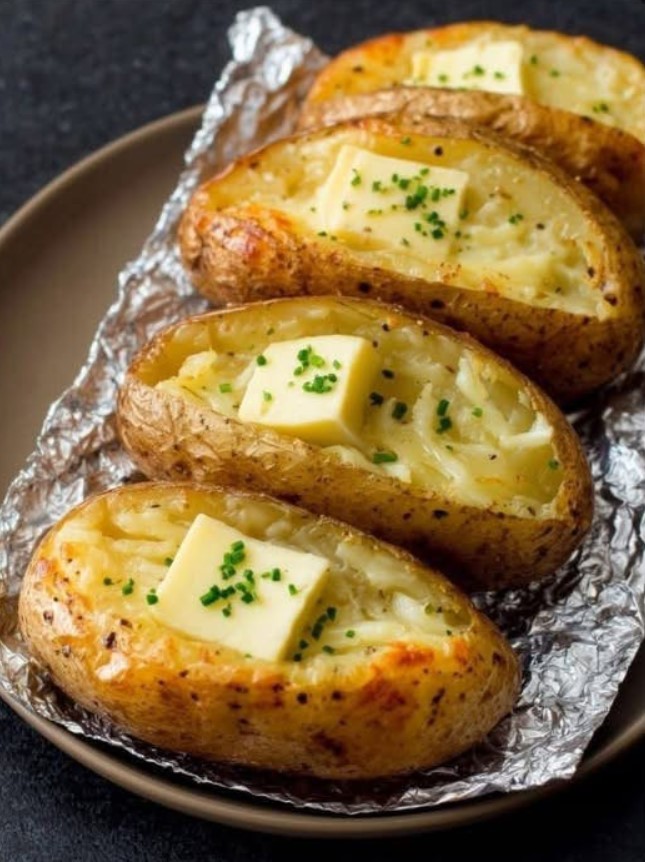
To serve, make a lengthwise slit across the top of each potato. You can simply slice through with a knife and then press the ends toward each other to open the potato and expose the fluffy interior.
At this point, add your favorite toppings. The classic combination includes a pat of butter that melts into the soft center, a dollop of sour cream for richness, a sprinkle of salt and pepper, and perhaps a shower of shredded cheese that melts over the warm flesh. Chives or green onions add brightness, and bacon bits provide savory crunch.
This simple base also invites creative toppings: sautéed mushrooms, chili, crumbled bacon, smoked trout, herbed goat cheese, or even a spoonful of cooled Greek yogurt can elevate your baked potato into a satisfying meal.
Tips for Perfect Results
- Do not wrap the potatoes in foil while baking. Wrapping traps steam and can lead to soggy skins rather than the crisp exterior most people prefer.
- Choose potatoes that are similar in size if you’re baking more than one, so they cook at the same rate.
- Season generously. The potato skin benefits from seasoning as much as the interior does.
- Rest briefly before serving. Allowing a few minutes to cool after baking improves texture and makes the potato easier to handle.
Variations and Flavor Ideas
Baked potatoes are versatile and pair well with many cuisines:
- Mexican style: Top with black beans, salsa, avocado, cilantro, and a squeeze of lime.
- Italian‑inspired: Use olive oil, roasted garlic, parmesan, and basil.
- Loaded supper: Add chili, sour cream, shredded cheese, and scallions for a hearty feast.
- Breakfast twist: Pile on scrambled eggs, sauteed spinach, and a drizzle of hot sauce.
The potato’s neutral but rich interior welcomes bold flavors and varied textures.
Conclusion :
Perfectly baked potatoes are a timeless comfort food that require simple ingredients and technique, yet deliver satisfying results that feel much more special than their humble origins. With crispy skin, a fluffy interior, and the flexibility to support a wide range of toppings, baked potatoes work as a side dish or a main course depending on what you pair them with.
By selecting the right type of potato, preparing them properly, seasoning thoughtfully, and baking them evenly, you can consistently achieve delicious results at home. Tailor your toppings to your tastes — from classic butter and sour cream to gourmet combinations — and enjoy this reliable, cozy dish whenever you please.
Every kitchen should have a perfect baked potato method in its repertoire — it’s comfort food at its simplest and its best.