Spending time on your porch should be relaxing—not a constant battle with buzzing insects. Yet as soon as the weather warms up, wasps, mosquitoes, and other flying pests seem to take over outdoor spaces. Many people turn to chemical sprays, but these can be harsh, expensive, and not always safe around kids or pets.
Fortunately, there are simple, natural alternatives that can help reduce insect activity without relying on strong chemicals. One popular method involves using common household items to create a scent barrier that pests dislike. While it may sound surprising, certain smells—especially from soap and essential oils—can make your porch far less inviting to insects.
Let’s break down how this method works, why it may help, and how to use it effectively.
Why This Method Works
Insects like wasps and mosquitoes rely heavily on scent to find food, nesting spots, and even each other. Strong fragrances can interfere with these signals, essentially confusing or repelling them.
- Wasps are known to avoid strong scents like peppermint, clove, and citrus-based oils
- Mosquitoes are repelled by citronella and similar plant-based aromas
- Dish soap can disrupt insects physically by breaking surface tension or coating their bodies
By combining these elements, you create an environment that insects prefer to avoid.
The “Soap on the Porch” Method
One of the simplest versions of this trick involves placing scented soap bars around your porch area.
What You Need
- Bars of strongly scented soap (especially citrus or deodorizing types)
- Optional: citronella or peppermint essential oil
- Mesh bags or small breathable fabric pouches
How to Set It Up
- Place each bar of soap into a mesh bag.
- Add a few drops of citronella or peppermint oil if you want a stronger effect.
- Hang or place the bags around your porch—near railings, seating areas, and entry points.
- Replace or refresh every couple of weeks as the scent fades.
This method works by releasing a continuous scent that insects find unpleasant, helping to keep them away from your space.
A More Powerful Upgrade: DIY Repellent Spray
If you want something stronger, you can pair the soap trick with a homemade spray.
Ingredients
- 1–2 cups of water
- A few drops of dish soap
- 10–15 drops peppermint or lemongrass oil
- Optional: a splash of vinegar
Instructions :
- Mix everything in a spray bottle.
- Shake well before use.
- Spray around porch edges, ceilings, and areas where insects gather.
This type of mixture is widely recommended because strong essential oil scents—like peppermint and clove—are particularly effective at deterring wasps.
Extra Tricks to Boost Effectiveness
To get the best results, combine multiple natural methods:
1. Remove Attractions
- Clean up food and sugary spills quickly
- Keep trash bins sealed
- Avoid leaving drinks uncovered
Wasps are especially attracted to sweet foods and leftovers.
2. Use Decoy Nests
Wasps are territorial. Hanging a fake nest can make them think another colony already lives there—so they stay away.
3. Place Traps Away from Seating Areas
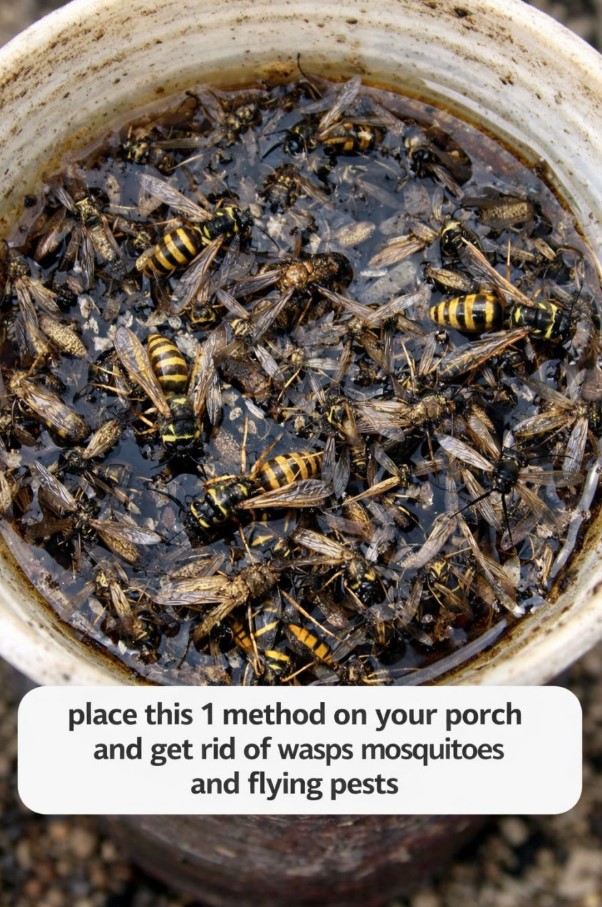
A vinegar and sugar trap can lure insects away from where you sit, reducing annoyance without drawing them closer.
Important Limitations
While this method can help reduce pests, it’s important to be realistic:
- It won’t eliminate all insects completely
- It works best for prevention, not infestations
- Stronger measures may be needed for nests or large swarms
Also, always be cautious around wasps—they can become aggressive if disturbed.
Conclusion :
Keeping your porch free from wasps, mosquitoes, and other flying pests doesn’t have to involve harsh chemicals or expensive solutions. Simple methods—like placing scented soap around your space and using natural sprays—can create a barrier that makes your porch far less attractive to insects.
The key is consistency. Refresh scents regularly, keep your space clean, and combine a few strategies for the best results.
In the end, small changes can make a big difference—turning your porch back into a peaceful place where you can relax, unwind, and enjoy the outdoors without constant buzzing interruptions