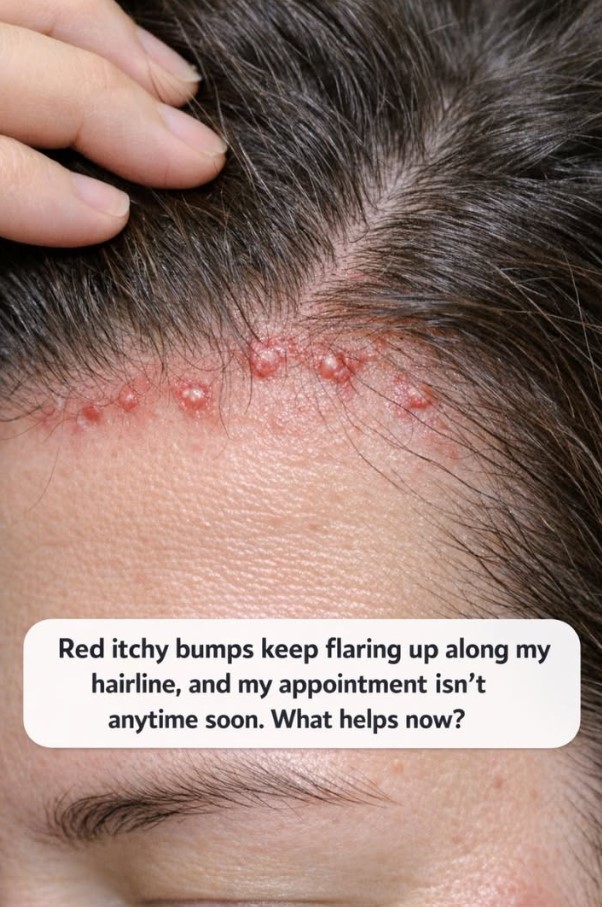
Dealing with red, itchy bumps along your hairline can be incredibly frustrating—especially when your doctor’s appointment is still days or weeks away. The discomfort, constant itching, and uncertainty about what’s causing it can make things feel even worse.
The truth is, bumps along the hairline are more common than people think, and they can be triggered by several different skin conditions. While some causes are mild and easy to manage at home, others may require medical treatment to fully resolve.
Understanding what might be behind these flare-ups can help you take the right steps now to ease the irritation and avoid making things worse while you wait for professional care.
Common Causes of Red, Itchy Hairline Bumps
1. Seborrheic Dermatitis (Very Common)
One of the most frequent causes of red, itchy patches along the hairline is seborrheic dermatitis. This condition is linked to excess oil production and an overgrowth of a natural yeast on the skin.
It often appears as:
- Red or pink patches
- Flaky or greasy scales
- Persistent itching
It usually affects oily areas like the scalp, hairline, eyebrows, and sides of the nose.
2. Folliculitis (Inflamed Hair Follicles)
Folliculitis happens when hair follicles become inflamed, often due to bacteria, irritation, or friction.
It can cause:
- Small red bumps or pimples
- Itching or tenderness
- Sometimes pus-filled spots
This condition often shows up right along the hairline where sweat, oils, or products build up.
3. Contact Dermatitis (Reaction to Products)
If you’ve recently changed shampoo, conditioner, or styling products, your skin may be reacting.
Common triggers include:
- Hair dyes
- Fragrances
- New skincare or hair products
This type of irritation can cause red, itchy bumps or rash-like patches along the hairline.
4. Fungal or Scalp Conditions
Fungal infections or conditions like dandruff can also lead to redness, flaking, and itching.
These conditions often:
- Come and go in flare-ups
- Get worse with stress or weather changes
- Affect the scalp and edges of the hairline
Can Apple Cider Vinegar Help?
Apple cider vinegar (ACV) is often mentioned as a home remedy because of its antifungal and antibacterial properties.
Some people use it to:
- Reduce itching
- Break down flakes
- Balance scalp pH
However, there are important things to know:
- Scientific evidence is limited
- It may irritate sensitive skin
- It should always be diluted
In some cases, studies have shown it can even worsen irritation rather than improve it.
What You Can Do Right Now
While waiting for your appointment, here are safe and practical steps you can take:
1. Keep the Area Clean and Gentle
Use a mild shampoo and avoid harsh scrubbing. Overwashing or aggressive cleaning can make irritation worse.
2. Avoid New Products
Stick to products you already know your skin tolerates. This helps rule out allergic reactions.
3. Try Anti-Dandruff Shampoo
Shampoos with ingredients like zinc or antifungal agents can help reduce yeast-related irritation.
4. Don’t Scratch
Scratching can worsen inflammation and lead to infection or scabbing.
5. Use Simple Soothing Options
Look for gentle, fragrance-free moisturizers or scalp treatments designed for sensitive skin.
When to Be Careful
While most cases are mild, you should be cautious if you notice:
- Rapid spreading of bumps
- Pain or pus-filled lesions
- Bleeding or open sores
- No improvement after several days
These signs may require quicker medical attention.
Conclusion :
Red, itchy bumps along the hairline can feel alarming, but in many cases, they are linked to common and manageable skin conditions like seborrheic dermatitis, irritation from products, or mild infections. While the exact cause may not always be obvious right away, understanding the possibilities helps you respond more calmly and effectively.
What’s important to remember is that your skin is reacting to something—whether it’s excess oil, yeast imbalance, irritation, or inflammation. Instead of trying multiple harsh remedies at once, a gentle and consistent approach is often the best way to prevent further irritation while your skin settles.
Home remedies like apple cider vinegar may sound appealing, but they are not always reliable and can sometimes make symptoms worse, especially if used too frequently or without proper dilution. This highlights the importance of being cautious with trends and focusing on what is known to be safe.
The good news is that most of these conditions improve with the right care and treatment. Once you’re able to see a healthcare professional, they can provide a clear diagnosis and targeted solution—whether that’s medicated shampoos, creams, or other treatments.
In the meantime, think of this phase as a temporary period of management, not a permanent problem. With patience, gentle care, and the right guidance, your skin can return to a healthier, more comfortable state.