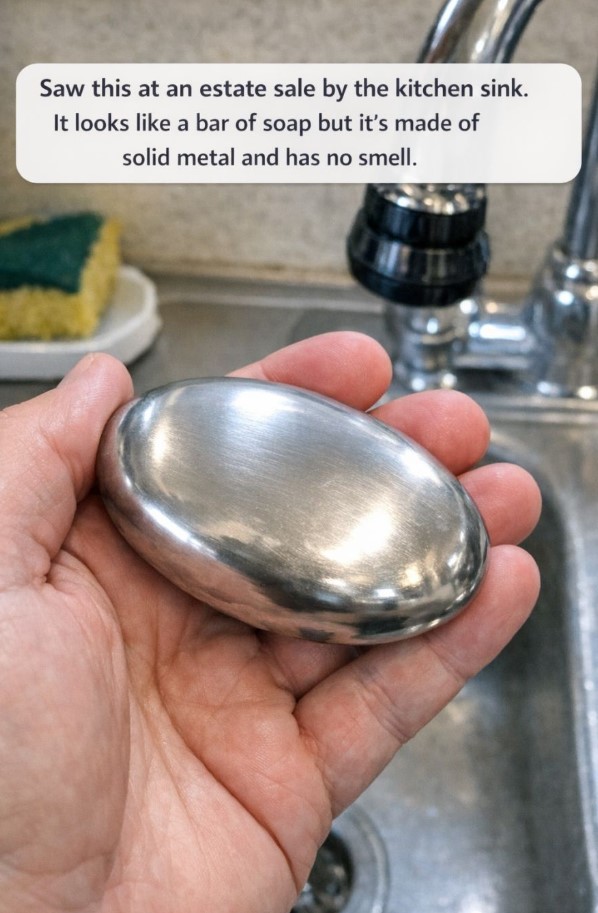
Estate sales often bring out some fascinating and unexpected finds. Things that once belonged to someone’s everyday life suddenly become curious objects to a new set of eyes. One strange item that occasionally turns up in kitchens — especially near sinks or cabinets — is a solid metal bar that might look, at first glance, like a bar of soap. It can be puzzling, especially when it has no scent and feels unremarkable on the surface.
If you’ve ever come across something like this — a metal bar that seems out of place, unmarked, and mysterious — you’re not alone. Before you dismiss it as kitchen clutter or a random antique, it helps to know what it might be, and why someone might have placed it there in the first place.
What Is That Metal Bar? A Common Explanation
The most likely explanation for a solid metal bar found near a kitchen sink is that it’s a magnetic soap bar or detergent bar substitute.
Many people — especially in past decades — used or kept small metal bars labeled (or intended) as “soap” replacements. These bars are often:
- Made of solid metal or alloy
- Smell-free
- Non-corroding
- Housed near sinks or cleaning areas
The idea behind these bars was not to clean hands the way soap does, but rather to help reduce unpleasant odors (like onion, garlic, or fish) on the skin after food preparation.
How Do These Metal Bars Work?
If the metal bar is a type of odor-removal bar, here’s how it works:
1. The Science Behind It
While it might seem strange, certain metals — especially stainless steel — can help reduce or neutralize food odors from your skin. The process isn’t fully chemical in the traditional sense, but rather a physical interaction:
- When you rub your hands on the surface of the metal bar under running water, certain odor-causing molecules (like sulfur compounds from onions or garlic) can bind with the metal surface.
- The metal surface helps transfer odor molecules away from your hands, reducing the lingering smell.
This doesn’t produce the sudsy effect of soap, but many people find it effective for removing strong food odors.
2. Why They Have No Smell
These bars don’t contain fragrances or detergents. Their purpose is not to cleanse like soap, but rather to offer a surface that helps reduce persistent smells from cookware or food handling.
That’s why they may feel ordinary and have no scent of their own.
Where You Often See These Metal Bars
You’ll commonly find them:
- Near kitchen sinks
- Next to cutting boards
- Where vegetables or fish are prepared
- In cleaning supply cupboards
Though they’re less common today with modern scented soaps and dish detergents, they were more popular in homes decades ago when strong food odors were harder to eliminate otherwise.
Are These Bars Dangerous?
In most cases, no. Bars made of stainless steel or non-toxic metal are safe to touch and handle. They don’t contain chemicals or residues that are harmful to skin.
However, a few things to consider:
1. Check for Rust or Corrosion
If the metal shows signs of rust or pitting, it might have deteriorated over time. Rust itself isn’t ideal for contact with skin, though small rust particles rarely cause harm.
2. Avoid Ingestion
As with any non-food object, it should not be used in cooking or near food preparation that could lead to accidental ingestion.
3. Wash Before Use
If you plan to use it for odor removal, give it a quick wash with a gentle cleaning solution first — especially if you found it in an old drawer or cabinet.
Other Possible Explanations
While odor-neutralizing metal bars are common, there are other objects that might resemble a solid metal bar:
1. Vintage Tally Weights or Calibration Weights
These were used in old balancing scales and can look similar to a plain metal bar.
2. Decorative or Souvenir Bar
Sometimes metal bars are ornamental or commemorative rather than functional.
3. Industrial or Hardware Component
If it was near a maintenance area, it could be a weight, spacer, or part from a larger piece of equipment.
In these cases, markings, stamps, or differences in shape usually provide clues.
How to Confirm What You Found
If you want to be absolutely sure what the object is, here are a few easy steps:
1. Inspect Closely
Look for stamps, engravings, numbers, or symbols that might indicate weight, metal type, or manufacturer.
2. Test in Water
Washing or rinsing the bar under running water while rubbing your hands over it can give you a sense if it helps with lingering food odors.
3. Ask an Expert
If you’re still unsure, a local antique dealer, metalworker, or hardware shop might recognize the bar’s use or origin.
Tips for Using a Metal Odor Bar
If you choose to use it for reducing kitchen odors, keep these suggestions in mind:
- Use it after cutting onions, garlic, fish, or other strong-smelling foods.
- Rub it between your hands under cold running water.
- Clean it occasionally with gentle soap to remove any buildup.
- Store it near the sink or cutting board for easy access.
This can be a simple, low-cost way to reduce stubborn odors without strong soaps or scrubbing.
Conclusion :
Finding a small, solid metal bar near a kitchen sink during a remodel or estate sale can feel mysterious at first — especially if it looks like nothing you recognize. Most often, however, these bars were placed there with a purpose: to help reduce strong food odors from hands without harsh detergents or fragrances. Their sealed, scentless nature doesn’t make them surprising in that role — it simply reflects how they work.
While they’re less common in modern kitchens, they provide an interesting glimpse into how everyday tasks were handled in the past, and how kitchen tools evolved over time. Whether you decide to use it for odor removal or simply keep it as an intriguing find from a renovation, knowing what it likely is — and how it works — makes it easier to appreciate the little surprises found in old homes.
If you ever encounter other unusual objects during renovations, feel free to ask about them — sometimes the story behind an item is as interesting as the item itself.