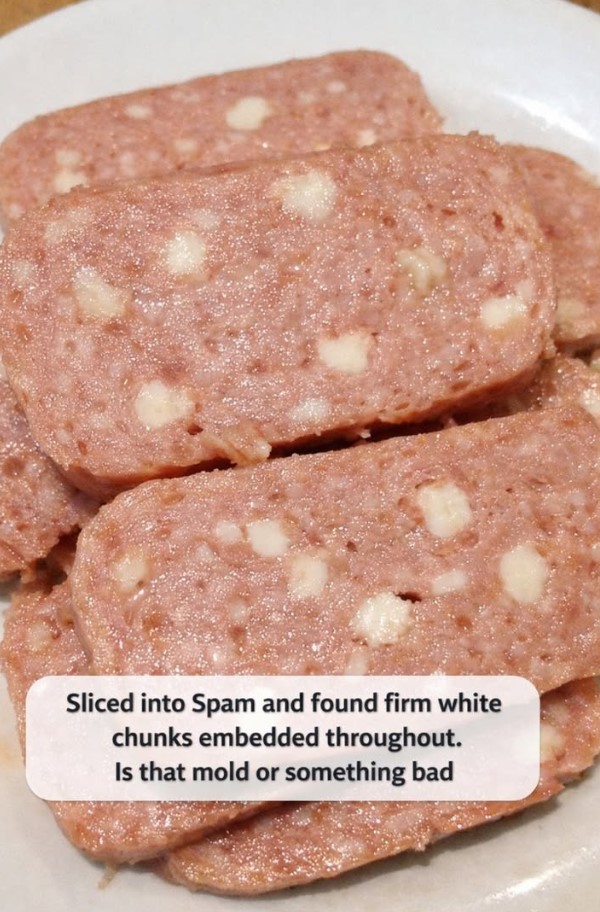
If you’ve ever sliced into a can of Spam (or similar canned meat product) and found firm white chunks embedded throughout, your first reaction might be shock or concern. Seeing something unexpected in food — especially something that looks unusual — can make you wonder whether it’s mold, spoilage, contamination, or something dangerous.
The good news is that in most cases, these firm white pieces are not mold or a sign of spoilage. They are usually harmless components that can appear in processed meats due to how they’re made. However, it’s still important to understand what those white chunks are, why they appear, and when you should be cautious.
This article explains what causes these white pieces, what they are composed of, how to tell if the meat is safe to eat, and when to discard it.
What Those Firm White Chunks Usually Are
1. Fat Deposits and Connective Tissue
One of the most common explanations for solid white pieces in Spam is small chunks of fat or connective tissue that did not fully break down during the manufacturing process. Processed meats like Spam are made from ground pork and ham, mixed with salt, water, and preservatives, then cooked and canned under heat. Even though the meat is ground, some portions of visible fat or connective tissue — which are firm and pale in appearance — can remain intact.
These pieces are not harmful. They tend to be fairly firm, pale or white, and don’t have a fuzzy or powdery appearance like mold does.
2. Protein Aggregates from Cooking
During the heating and canning process, proteins can change their structure and clump together. This denaturation — a change in shape caused by heat — can create firm, opaque pieces that might look different from the surrounding meat. These protein aggregates are not mold and don’t indicate spoilage.
They are simply a physical result of how the meat proteins respond to heat and pressure inside the can.
3. Gelatinized Collagen
Some processed meats contain naturally occurring collagen — the protein that helps give meat structure. When collagen is heated with moisture over time, it can turn into gelatin and then firm up as it cools. In canned meats, this can form white or pale chunks or flecks.
This is a normal part of the way meat proteins and connective tissues behave when subjected to heat and pressure.
How to Tell If the Meat Is Safe
Finding firm white chunks on their own doesn’t necessarily mean the Spam is unsafe. Here are a few things to check to help confirm whether the product is still good to eat:
Look at the Color and Texture
- Normal: Pale to pinkish ground meat with firm white chunks of fat or protein, no sliminess.
- Concerning: Greenish, gray patches that look slimy or fuzzy, which may signal spoilage.
White pieces caused by fat, collagen, or protein usually appear firm or slightly rubbery, not fuzzy or soft like mold.
Smell the Meat
Fresh Spam and similar canned meats have a mild, salty aroma. If the product has developed a sour, rotten, or strange smell, that’s a sign it may be spoiled and should not be eaten.
Check the Can Condition
Before opening, examine the can itself:
- Safe indicators: Intact can with no dents, bulges, or rust.
- Warning signs: Bulging, leaking, deep dents, or unusual smells when opened.
If the can is compromised or bulging, discard the contents even if it looks normal.
Observe the Expiration Date
Processed meats don’t spoil instantly, but they do have a “best by” or “use by” date. If the product is far past that date, it’s safer to discard it rather than risk eating spoiled food.
When It Might Be Dangerous
Firm white pieces in Spam are usually harmless, but you should not eat the product if any of the following are true:
- The can was bulging before you opened it
- There is a strong, sour, rotten, or chemical smell
- There are fuzzy, powdery, or greenish spots on the meat surface
- The texture of the meat is sticky, slimy, or unusually soft
- You see signs that insects or foreign materials contaminated the contents
In these cases, dump the contents directly into a sealed bag and dispose of them — and wash your hands thoroughly afterward.
Why Processed Meats Can Look Different Inside
Processed and canned meats like Spam are made using manufactured blends of ground pork and ham, salt, water, preservatives, and often sugar or spices. The mixture is cooked under heat and pressure in the can to sterilize and preserve it.
During this process:
- Fat doesn’t always break down completely
- Collagen may gelatinize and then firm
- Proteins may clump into solid pieces
These changes are physical and chemical reactions, not indications of spoilage.
Conclusion :
Seeing firm white chunks inside sliced Spam or another canned meat product can be surprising, but in most cases, these pieces are simply harmless fat, collagen, or protein aggregates created during the cooking and canning process. They are not mold or a sign that the food is dangerous.
To determine whether the product is safe to eat:
- Check the color and texture of the meat
- Smell it for any sour or off odors
- Inspect the can for damage or bulging
- Confirm the product is not far past its expiration date
If everything looks and smells normal, and there are no signs of spoilage, those firm white pieces are simply a normal part of the product’s composition. If you encounter unusual smells, slimy texture, fuzzy spots, or evidence of a compromised can, it’s wiser to discard the meat for safety.
Understanding how processed meats behave under heat and pressure helps ease worry when you see something unfamiliar inside your food. Those firm white chunks may look odd, but they’re usually nothing more than part of how the meat proteins and fats settle and solidify during processing.