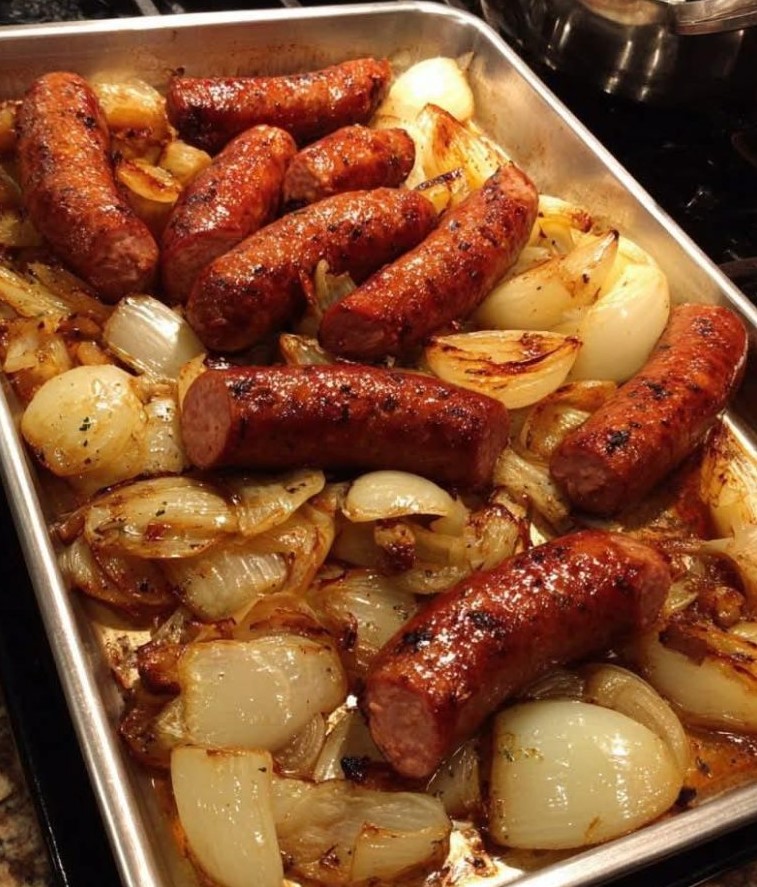
Smoky glazed sausage with fried onions is a savory, satisfying dish that brings rich flavors and caramelized textures together in a simple but memorable meal. The combination of well‑seasoned sausages with sweet, golden‑brown onions creates a balance of salty, smoky, and slightly sweet notes that makes this recipe versatile enough to serve as a main course, a hearty sandwich filling, or a flavor‑packed topping for rice and potatoes.
This dish stands out because of the way the glaze — often a blend of smoky, sweet, and tangy elements — melds with the natural juices of the sausage. As the onions cook slowly, they release their sugars and develop deep caramelization that enriches the entire pan. When paired with smoked or seasoned sausages, the once simple onion transforms into a deeply flavored complement rather than just a side.
Whether prepared for a weeknight dinner, a weekend lunch, or a casual gathering, this recipe delivers impressive taste with straightforward technique. In the sections below, you will find an expanded ingredients list with explanations, step‑by‑step directions to ensure the best possible results, and tips to customize the dish to your preference.
Ingredients :
Sausage and Onions
- 1 ½ to 2 pounds smoked sausage links – Choose your favorite type, such as smoked pork, chicken, or beef. Smoked sausages impart rich, savory flavor that pairs beautifully with the sweetness of the onions.
- 3–4 large onions – Thinly sliced. Yellow, white, or sweet onions work well because they caramelize evenly and add body to the glaze.
- 2–3 tablespoons cooking oil – Vegetable oil, canola oil, or another neutral oil for frying. Oil helps prevent sticking and aids in even browning.
Glaze and Seasonings
- 2–3 tablespoons brown sugar or honey – Adds sweetness that helps the onions caramelize and gives the glaze its characteristic color and balance.
- 2 tablespoons soy sauce – Provides salty depth and contributes to the glaze’s rich umami flavor.
- 1 tablespoon balsamic vinegar or apple cider vinegar – Adds a subtle tang that balances the sweetness and intensifies the overall flavor.
- 1 teaspoon smoked paprika – Reinforces the smoky notes from the sausage and adds a warm color.
- Salt and black pepper – To taste, added as needed throughout cooking.
Optional Add‑Ins and Garnishes
- Minced garlic – 1–2 cloves added during cooking can enhance aromatic richness.
- Fresh herbs – Chopped parsley, thyme, or chives sprinkled at the end add brightness and color.
- Red pepper flakes – For a touch of heat if desired.
Directions :
1. Prepare the Ingredients
- Slice the sausages into bite‑sized pieces or rounds, about ½–¾ inch thick. Cutting the sausages allows more surface area to brown and absorb the glaze.
- Peel and slice the onions into thin, even slices. Uniform thickness ensures they cook at the same rate.
2. Brown the Sausage
- Heat a large skillet or frying pan over medium heat.
- Add the cooking oil to the hot pan.
- Place the sausage pieces in a single layer, taking care not to crowd the pan.
- Cook for about 5–7 minutes, turning occasionally until the sausages develop a rich brown color on all sides.
- Once browned, remove the sausage from the pan and set aside.
Browning the sausages first develops deeper flavor and creates fond (browned bits) in the pan that will enrich the glaze.
3. Cook the Onions
- In the same pan, add the sliced onions. If necessary, add a little more oil to coat the bottom.
- Cook the onions over medium‑low heat, stirring occasionally, until they soften and begin to turn a golden color. This may take 10–12 minutes.
- Season with a light sprinkle of salt to help draw out moisture and speed up caramelization.
Slow‑cooked onions develop a natural sweetness that forms the base of the rich glaze.
4. Build the Glaze
- Once the onions are soft and starting to brown, add the brown sugar or honey, soy sauce, vinegar, and smoked paprika.
- Stir thoroughly to combine, scraping up any browned bits from the bottom of the pan.
- Return the browned sausage to the pan, nestling it into the onion mixture.
The combination of sweet and savory ingredients creates a thick, flavorful glaze that coats both sausage and onions.
5. Simmer Until Glazed
- Lower the heat to medium‑low and let the mixture simmer gently for 8–10 minutes, stirring occasionally.
- As the sauce reduces, it will become glossy and begin to coat the ingredients.
- Taste and adjust seasoning with salt, pepper, or additional vinegar for brightness if needed.
Simmering allows the glaze to thicken and permeate the sausage and onions with balanced flavor.
6. Serve
- Remove the pan from heat once the glaze reaches your desired consistency.
- If using, sprinkle minced garlic in during the last minute of cooking, or finish with fresh herbs for color.
- Serve hot as a main dish or over a base such as:
- Steamed rice
- Buttered noodles
- Mashed potatoes
- Warm bread or rolls
This dish is versatile and pairs well with starchy or fresh sides.
Tips and Variations
- Add vegetables: Bell peppers, mushrooms, or zucchini can be added with the onions for extra color and nutrition.
- Spice it up: A pinch of chili powder or red pepper flakes can introduce a smoky heat that complements the glaze.
- Make it lighter: Choose chicken or turkey sausage and reduce brown sugar for a lighter version.
- Add acidity at the end: A little squeeze of lemon or lime juice just before serving lifts the glaze and balances richness.
These options let you customize the recipe to suit your taste or the ingredients you have on hand.
Conclusion :
Smoky glazed sausage with fried onions is a flavorful dish that elevates everyday ingredients into a satisfying meal. By browning the sausage first, slowly cooking the onions, and building a balanced sweet‑savory glaze, this recipe creates rich depth of flavor and pleasing texture in every bite. Whether served over rice, noodles, potatoes, or bread, the combination of smoky sausage and caramelized onions delivers comfort and bold taste.
Easy to prepare yet deeply satisfying, this dish fits perfectly into weeknight dinners, casual gatherings, or any meal when you want both simplicity and richness. With room for customization and optional add‑ins, it becomes a go‑to recipe that is as adaptable as it is delicious.