Have you ever stumbled across an old kitchen tool and wondered what on earth it was used for? Maybe it looked unfamiliar, a bit strange, or even slightly intimidating. Kitchens—especially those belonging to grandparents—are often filled with mysterious gadgets that seem to come from another era.
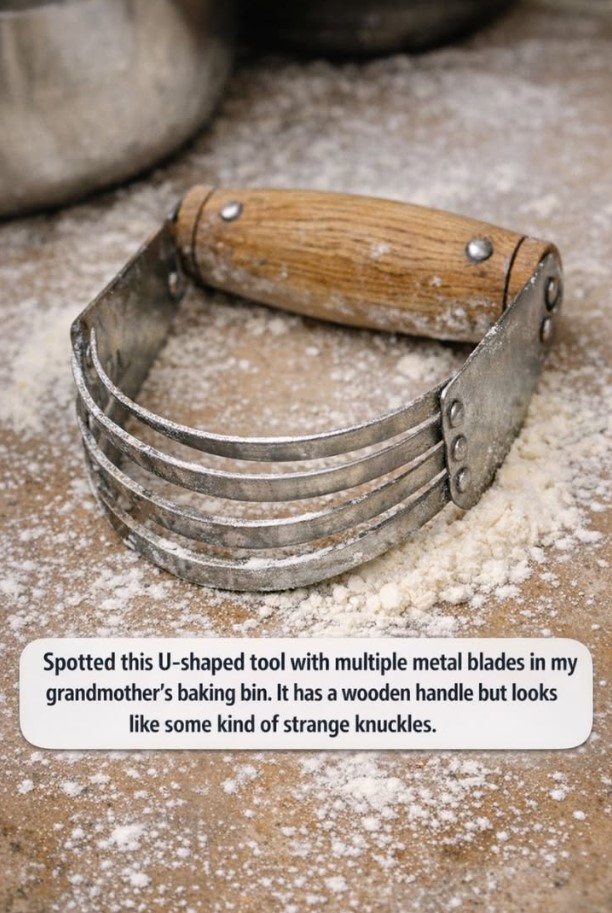
One such tool that frequently sparks curiosity is a U-shaped utensil with multiple metal blades and a wooden handle. At first glance, it might resemble something unusual—almost like a set of metal knuckles or a strange handheld device. But despite its odd appearance, this tool is actually a classic and incredibly useful piece of baking equipment.
In fact, it has been quietly helping bakers create perfect pastries for generations. Let’s uncover what this tool really is, how it works, and why it deserves a place in every kitchen.
The Mystery Tool Revealed
The tool you’re looking at is called a pastry blender, also known as a pastry cutter or dough blender.
It’s specifically designed to help mix fat—like butter or shortening—into dry ingredients such as flour. This process is essential in baking, especially when making items like pie crusts, biscuits, and scones.
Why It Looks So Unusual
The design of a pastry blender is simple but clever:
- A sturdy handle (often wood, plastic, or metal)
- Several curved metal blades or wires attached in a U-shape
These blades are arranged to press down into ingredients, cutting through butter and blending it evenly into flour.
Its unusual shape is actually what makes it so effective. Instead of stirring or smashing ingredients, it cuts and blends at the same time, creating the perfect texture for dough.
What Does a Pastry Blender Do?
The main job of a pastry blender is to “cut in” fat—a key technique in baking.
When you make pastry dough, you don’t want the butter to fully melt or mix smoothly. Instead, you want small pieces of butter distributed throughout the flour. When baked, those little bits of fat melt and create steam, forming flaky, tender layers.
That’s exactly what this tool helps achieve.
Without it, bakers often use forks, knives, or even their hands—but these methods can be slower and less consistent.
Why Grandma Had One
Back in the day, tools like pastry blenders were essential in every kitchen. Baking from scratch was far more common, and having the right tool made a big difference.
Your grandmother likely used it for:
- Pie crusts
- Biscuits
- Scones
- Homemade dough recipes
Unlike modern electric mixers, this tool gave bakers full control without warming the ingredients—something that’s crucial for good pastry.
Why It’s Still Useful Today
Even with all the modern kitchen gadgets available, the pastry blender remains popular—and for good reason.
1. It Keeps Ingredients Cold
Using your hands can warm the butter too quickly, ruining the texture. This tool avoids that problem.
2. It’s Simple and Reliable
No electricity, no complicated parts—just a straightforward, effective design.
3. It Gives Better Texture
It creates evenly sized pieces of fat, which leads to flakier and more consistent results.
4. It’s Affordable
Most pastry blenders are inexpensive but incredibly useful.
Other Creative Uses
While it’s mainly used for baking, many people find other creative ways to use it in the kitchen:
- Mashing potatoes
- Mixing guacamole
- Breaking up ground meat
- Blending crumb toppings
It’s one of those tools that turns out to be more versatile than it looks.
Can You Replace It?
If you don’t have a pastry blender, you can still get the job done using:
- Two knives
- A fork
- Your fingers
However, these methods often take more time and may not produce the same consistent texture. That’s why many bakers still prefer the original tool.
Why It Confuses People
It’s easy to see why this tool confuses so many people:
- It doesn’t look like modern kitchen gadgets
- It has a unique, almost odd design
- It’s not used in everyday cooking
But once you understand its purpose, it suddenly makes perfect sense.
In fact, it’s a brilliant example of how simple tools can solve specific problems in the kitchen.
A Small Tool with a Big Impact
The pastry blender might not be flashy, but it plays an important role in baking. The texture of a pie crust or biscuit can depend entirely on how well the butter is incorporated into the flour.
This small tool helps create:
- Flaky pie crusts
- Soft, layered biscuits
- Tender baked goods
Without it, achieving those results becomes much harder.
Conclusion :
What once seemed like a strange, mysterious object turns out to be a clever and essential baking tool. The pastry blender is a reminder that some of the best kitchen inventions are also the simplest.
Passed down through generations, it represents a time when cooking was more hands-on and tools were built to last. And even today, it continues to prove its value in both traditional and modern kitchens.
So the next time you come across that unusual U-shaped tool in a drawer, you’ll know exactly what it is—and maybe even feel inspired to use it.
Because sometimes, the most unexpected tools are the ones that make the biggest difference.