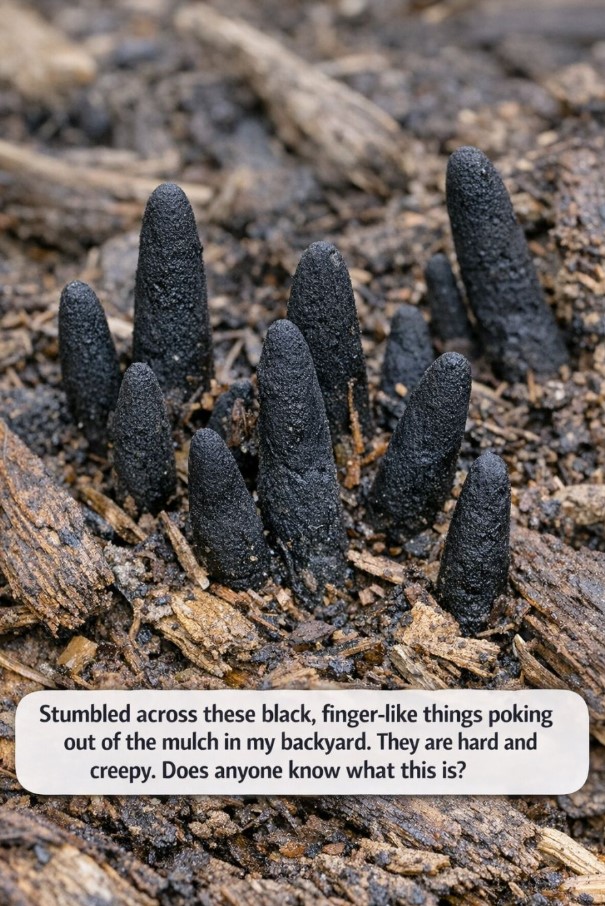
Finding strange growths in your backyard mulch — especially objects that look like black fingers poking out of the ground — can feel eerie and confusing. When these protrusions are hard, rigid, and unlike ordinary plants or debris, many people wonder whether they’re pests, fungi, insects, or even something dangerous. Before you let your imagination run wild, it helps to understand what kinds of natural materials or organisms create unusual shapes in mulch and soil.
Backyards are full of life and activity below the surface, much of it hidden until changes in weather, moisture, or light bring it into view. What may seem creepy at first often has a simple explanation rooted in nature’s cycles of growth and decay. The following information explains the most common causes of dark, stem-like protrusions in mulch, how to tell what you’re seeing, and what — if any — action you should take.
Likely Explanations for Black, Finger-Like Objects in Mulch
1. Fungus or Fungal Growth
One of the most common explanations is a type of fungus emerging from damp mulch. Certain fungi produce upright, elongated structures that can resemble fingers or black sticks. These often appear after wetter weather and may range from thin and delicate to thick and rigid in texture.
These can include:
- Stinkhorn fungi — Some species produce dark, elongated fruiting bodies that resemble fingers or stalks. While they can look unusual, they are typically harmless.
- Dead Man’s Fingers — A common name for fungi with black, club-like structures that protrude from wood or mulch.
- Other soil fungi that produce elongated sporocarps (fruiting bodies).
Fungal growth in mulch is a natural occurrence. Mulch provides a rich, moist environment where fungi thrive as they break down organic matter.
How to Identify Whether It’s Fungal Growth
1. Texture and Feel
Fungal structures tend to:
- Be somewhat firm but can be brittle or spongy
- Break easily if bent
- Vary in thickness (from a few millimeters to about an inch or more)
They often have surfaces that look smooth, slightly shiny, or irregularly textured.
2. Location and Season
Fungi in mulch are more likely to appear:
- After rainy or humid periods
- In shaded areas of the yard
- In beds with fresh or decomposing mulch
They may emerge suddenly and sometimes in clusters.
3. Appearance Over Time
Fungal fruiting bodies can:
- Grow quickly over a day or two
- Change shape as they age
- Slowly collapse or fade after emerging
If these black structures appear and then disappear within a week, this behavior is typical of fungal growth.
Other Possible Explanations (Less Likely)
While fungi are the most common cause, there are other possibilities:
1. Plant Shoots or Seedlings
Some plants and weeds sprout in unusual ways, though they usually show green leaves or stems rather than hard black stalks. Black stems with no leaves are less likely to be plant growth.
2. Insect Tubes or Biopatterns
Certain insects build structures in soil or mulch, but these are typically not rigid black rods. Termite tubes or mud tunnels on walls or foundations look different and are usually composed of soil and debris.
Are These Dangerous or Harmful?
In most backyard settings, black, fungus-like growths are not dangerous to humans, pets, or plants.
Fungi in Mulch Are Normal
Fungi play a role in breaking down organic matter. They help transform mulch into richer soil and are part of a healthy outdoor ecosystem.
Not Typically Toxic
While some fungi are toxic if ingested — and you should never eat unknown mushrooms — they generally don’t pose a danger to people or pets just because they appear in the yard.
No Structural Risk
Fungal growth in mulch does not harm your lawn, structures, or foundation. It is usually confined to the mulch layer itself.
When to Take Action
In most cases you don’t need to remove them, but if you prefer your yard to look tidy:
Simple Removal
- Use gloves and pull up the fungal structures at the base.
- Dispose of them in yard waste or trash.
Mulch Maintenance
If fungi are extremely abundant and you want fewer of them:
- Turn or rake the mulch occasionally to dry it out a bit.
- Avoid over-watering the mulch area.
- Replace old, overly decomposed mulch with fresh material.
These steps reduce moisture accumulation that encourages fungal fruiting.
What You Should Not Do
- Do not touch them with bare hands if you’re unsure of their nature. While most fungi are harmless, some irritate skin. Use gloves.
- Do not ingest anything that grows in your yard. Many fungi are toxic if eaten — and it’s impossible to identify them for safety without a mycology guide or expert.
- Do not panic. These growths are common and usually not a sign of danger or infestation.
Conclusion :
Seeing black, finger-like growths poking out of mulch can feel eerie at first, but most often they are just fungi — organisms that thrive in moist, organic environments. Mulch provides the ideal conditions for fungal structures to emerge, especially in spring, fall, or after rainy weather.
While they may look unusual, these growths are generally harmless and part of a normal outdoor ecosystem. If you prefer a cleaner look, you can remove them manually or adjust moisture and mulch maintenance. However, there’s usually no cause for concern.
Nature often reveals fascinating and strange-looking forms that seem mysterious until we understand what’s really behind them. Next time you encounter something odd in your yard, a little observation and curiosity — not fear — will help you make sense of it.