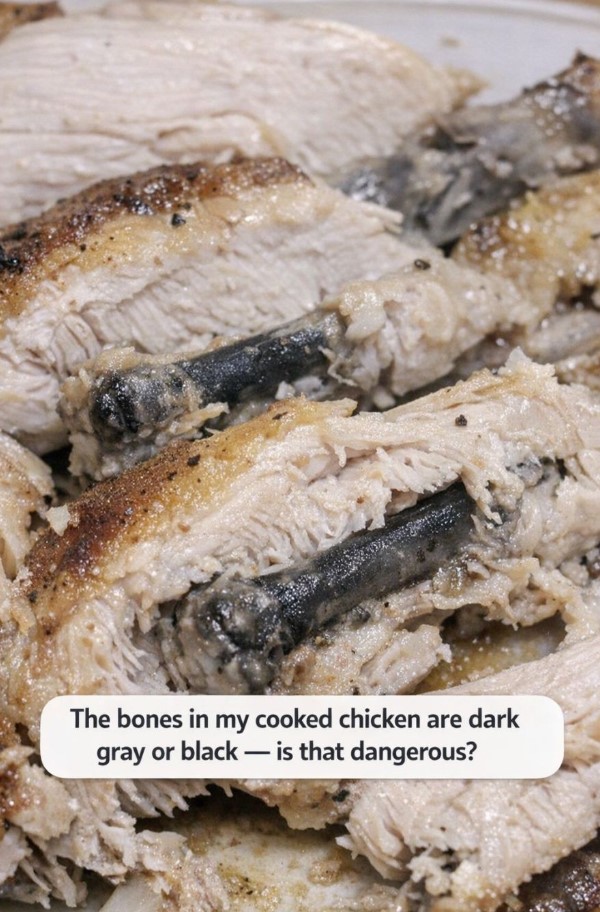
Noticing that the bones in your cooked chicken look dark gray, black, or discolored can be surprising and even unsettling. When the interior of cooked food doesn’t look the way you expect, it’s normal to wonder if it’s safe to eat. With chicken, concerns about food safety are especially common because of the risk of harmful bacteria when meat is undercooked or mishandled.
In most cases, dark coloring in the bones of cooked chicken is not a sign of danger or spoilage. Instead, this phenomenon usually reflects natural changes in the bone itself — especially when the chicken was cooked slowly, roasted, or came from older birds. That said, it’s important to understand what causes these color changes, how to tell if the meat is safe, and what to look for to avoid unsafe food in general.
This article explains why chicken bones can look dark after cooking, whether it means the meat is safe, and when it’s important to be cautious.
Why Chicken Bones Can Look Dark After Cooking
1. Natural Pigment Changes in the Bone
Chicken bones contain minerals and marrow that can change color when exposed to heat. When chicken is cooked, especially at higher temperatures or for long periods, the marrow and pigments inside the bone can change from a pale white or cream to gray, dark gray, or even black. This is a chemical reaction caused by heat breaking down the natural components inside the bone.
This darkening is most common in:
- Older or more mature birds
- Chicken thighs or drumsticks (which have more marrow and connective tissue)
- Slow‑roasted or long‑cooked poultry
The color change does not indicate spoilage or danger — it is a normal part of how bones and marrow react to heat.
2. Exposure to High Heat or Longer Cooking Time
When the interior of the bone is exposed to sustained heat, compounds within the bone can break down and darken. This is similar to how certain proteins and fats brown on the surface of meat when seared.
If you’ve cooked chicken at high oven temperatures, in a smoker, or braised it for an extended period, darker bones are more likely. The darker appearance comes from the breakdown and oxidation of compounds within the bone and marrow.
This change happens inside the bone, not in the muscle tissue, which is why the meat itself can still be perfectly cooked and safe even if the bone looks dark.
3. Older or Free‑Range Birds
Chicken raised to older ages or on pasture may naturally have different bone characteristics than young broiler chickens. Older bone tissue tends to have:
- More developed marrow
- Darker pigment
- Stronger mineral deposits
These characteristics can lead to darker internal bone color when the chicken is cooked.
This is not a safety concern — it simply reflects the age and development of the bird.
When Dark Bones Are Not a Safety Issue
If your chicken meat is cooked properly and reaches the recommended safe internal temperature, dark or gray bones on their own are not dangerous or a sign of spoilage. Poultry is considered safe to eat when:
- The internal temperature of the thickest part of the meat (not the bone) reaches at least 165°F (74°C)
- The juices run clear when the meat is pierced
- The meat has lost its raw pink color and is opaque throughout
When these conditions are met, the darkening of bones is simply cosmetic and does not affect the safety or taste of the chicken.
When Discoloration Could Be a Concern
There are a few situations where unusual appearance should be taken seriously:
1. Meat Looks Uncooked or Raw
If the chicken meat itself is still pink, slimy, or looks raw near the bone or in the thickest parts, it may not be fully cooked. In that case:
- Continue cooking until the internal temperature reaches 165°F (74°C)
- Avoid eating it until fully cooked
Dark bones alone without undercooked meat are not a concern — undercooked meat is.
2. Bad Odor or Slimy Texture
Unpleasant smell, sliminess, or sticky surfaces can be signs the chicken was spoiled before cooking. Spoiled meat should not be eaten, regardless of how it was cooked.
If you notice:
- A sour or foul smell
- Slimy or tacky texture
- Discoloration of the meat itself (not just the bones)
It’s best to discard the chicken.
Dark bones without these signs are usually fine.
3. Mold or Strange Growths Before Cooking
If the raw chicken showed mold or unusual discoloration before cooking, it should not be consumed — even if cooking reaches the correct temperature.
Bone discoloration that appears after cooking does not indicate this problem.
Why Bones Darken Without Affecting Flavor
The pigments and minerals that change color inside bone during cooking are different from the proteins and fats that give meat its flavor. When heat alters compounds in bone marrow and connective tissue, the result may be a darker appearance, but it doesn’t mean the meat has become unsafe or that off‑flavors will result.
Most people notice that:
- Meat near the bone may have a slightly deeper color
- Bone marrow may appear darker or more cooked but tastes normal if the meat is properly cooked
- The flavor of the surrounding meat remains rich and savory
Darkened bones are visually surprising, but they don’t make the chicken taste bad or harmful.
Conclusion :
Seeing dark gray or black coloring in the bones of cooked chicken can be surprising, but in most cases it is not dangerous and does not mean the chicken is unsafe. This discoloration is usually caused by natural reactions within the bone and marrow to heat, especially in older birds or when cooked over longer periods.
As long as the chicken meat has reached a safe internal temperature, appears fully cooked, and shows no signs of spoilage (such as a foul smell or slimy texture), dark bones alone are not a cause for concern. They are simply an aesthetic change that happens inside the bone and do not affect safety or taste.
Checking for proper cooking using a thermometer and observing the texture and color of the meat itself are the best ways to ensure your chicken is safe to eat. Bone color is secondary to those indicators and usually doesn’t reflect spoilage or risk.