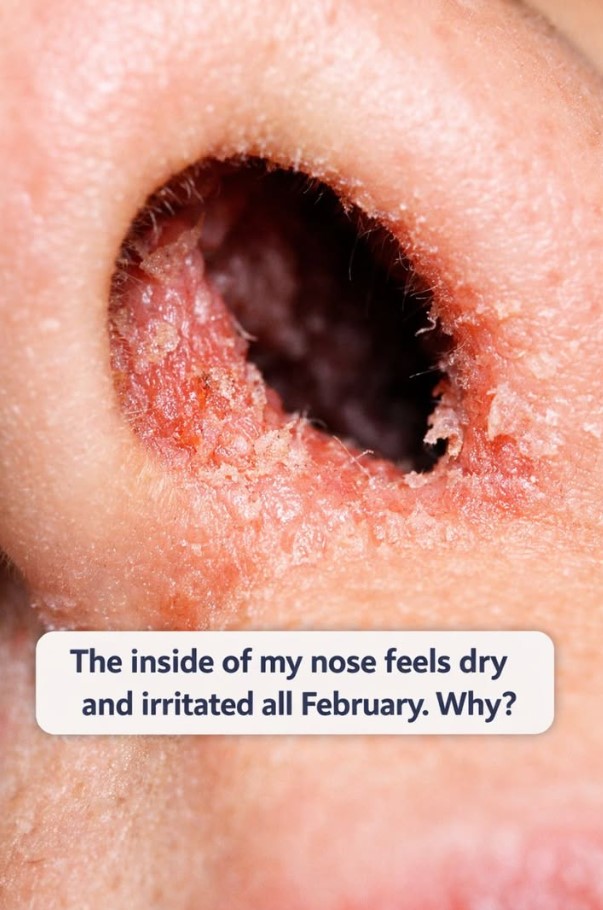
Many people notice a strange pattern during the colder months of the year: their nose suddenly feels dry, irritated, or even slightly painful. The inside of the nose may feel tight, itchy, or crusty, and sometimes there may even be small nosebleeds. If this happens to you every February or during the winter season, you’re definitely not alone.
Our noses play an important role in protecting our respiratory system. They warm, filter, and moisturize the air we breathe before it reaches our lungs. However, certain environmental conditions can interfere with this process. When the air becomes too dry or cold, the delicate lining inside the nose can lose moisture and become irritated.
Winter months—especially late winter like February—create the perfect conditions for nasal dryness. The combination of cold outdoor air and dry indoor heating can leave nasal tissues dehydrated and sensitive. Understanding why this happens can help you manage the problem and keep your nose comfortable throughout the season.
Why Nasal Dryness Is Common in Winter
One of the main reasons your nose feels dry in February is low humidity in the air. During winter, outdoor air naturally contains less moisture. When you breathe this cold, dry air, your nasal passages have to work harder to warm and humidify it before it reaches your lungs.
At the same time, indoor heating systems—such as central heating or space heaters—remove even more moisture from the air. This combination of cold outdoor air and heated indoor air can leave your nasal passages extremely dry.
When the lining of your nose becomes too dry, it can crack or become inflamed, leading to irritation, soreness, and sometimes nosebleeds.
Seasonal Allergies Can Also Play a Role
Although many people associate allergies with spring, winter and late winter can still trigger allergic reactions.
Seasonal allergies—also known as allergic rhinitis—can cause inflammation in the nasal passages. This inflammation may lead to dryness, irritation, and thick mucus that makes your nose feel uncomfortable.
Common winter allergy triggers include:
- Dust mites
- Indoor mold
- Pet dander
- Household chemicals or fragrances
Because people spend more time indoors during winter months, exposure to these allergens often increases.
Indoor Air and Irritants
Another factor that can worsen nasal dryness is exposure to environmental irritants.
Examples include:
- Cigarette smoke
- Strong cleaning chemicals
- Perfumes or air fresheners
- Dust from heating systems
These irritants can inflame the nasal lining and make dryness worse.
Poor indoor ventilation during winter can allow these particles to build up in the air, leading to ongoing irritation inside the nose.
Dehydration During Winter
Many people drink less water during the colder months because they don’t feel as thirsty. Unfortunately, this can contribute to dryness throughout the body, including inside the nose.
When the body is slightly dehydrated, mucus production may decrease. Since mucus helps keep the nasal passages moist and protected, a reduction in mucus can lead to dryness and irritation.
Frequent Colds and Winter Illnesses
Winter is also the season when respiratory infections such as colds and the flu spread more easily. Viral infections can inflame the nasal lining and disrupt the normal production of mucus.
When mucus becomes thicker or reduced, the nose may feel dry, blocked, or irritated.
Repeated nose blowing during a cold can also damage the delicate tissues inside the nose, worsening dryness and irritation.
Medications That Cause Nasal Dryness
Certain medications may contribute to the problem as well. These include:
- Antihistamines
- Decongestants
- Some blood pressure medications
- Overuse of nasal sprays
These drugs can reduce mucus production, which may leave the nasal passages feeling dry and uncomfortable.
Less Common Medical Causes
In rare cases, chronic nasal dryness may be related to medical conditions such as atrophic rhinitis, where the nasal tissues become thinner and less able to produce moisture.
However, most people experiencing dryness during winter simply have a reaction to environmental factors rather than a serious health condition.
How to Reduce Nasal Dryness
Fortunately, there are several simple ways to relieve nasal dryness during winter months.
Use a Humidifier
Adding moisture to the air with a humidifier can help restore humidity levels in your home and prevent the nasal lining from drying out.
Stay Hydrated
Drinking enough water helps your body maintain normal mucus production.
Use Saline Nasal Sprays
Saline sprays can help moisturize the nasal passages and remove irritants.
Avoid Irritants
Limiting exposure to smoke, strong chemicals, and heavy fragrances can reduce nasal irritation.
Protect Your Nose Outdoors
Covering your nose with a scarf or mask in cold weather helps warm and humidify the air you breathe.
When to See a Doctor
Occasional nasal dryness is usually harmless. However, you should consider seeing a healthcare professional if you experience:
- Frequent or severe nosebleeds
- Persistent pain inside the nose
- Thick crusting or foul odor
- Symptoms lasting several weeks
These signs could indicate a more serious nasal condition that requires treatment.
Conclusion :
If your nose feels dry and irritated every February, the most likely explanation is the combination of cold winter air, indoor heating, and low humidity. These environmental factors can dry out the delicate tissues inside your nose, leading to discomfort, irritation, and sometimes minor nosebleeds.
Seasonal allergies, indoor irritants, dehydration, and winter illnesses can also contribute to the problem. Fortunately, simple solutions such as using a humidifier, staying hydrated, and protecting your nose from cold air can make a big difference.
Understanding what causes nasal dryness can help you manage the symptoms and keep your nose comfortable during the coldest months of the year.