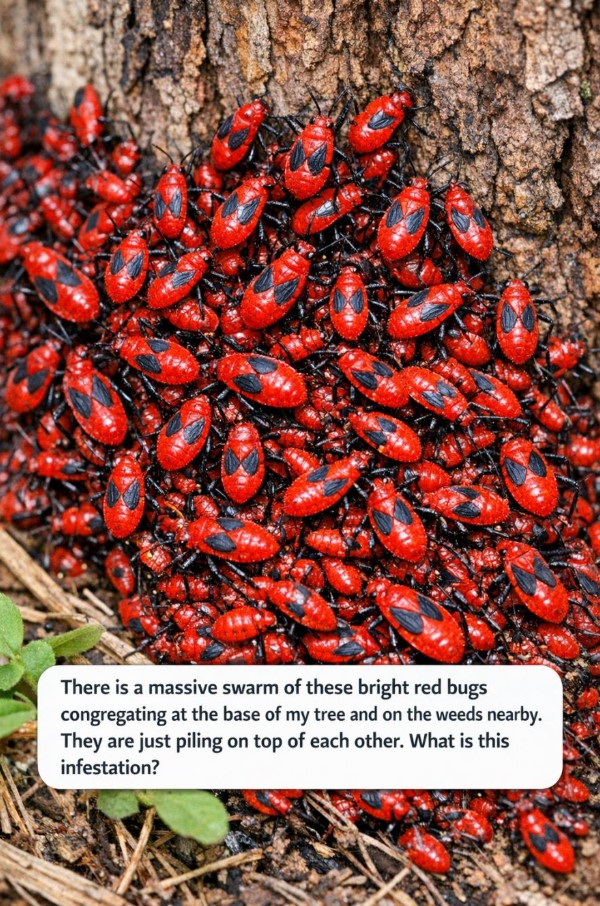
Discovering a large group of bright red bugs gathered around the base of a tree or clustered on nearby weeds can be alarming. When dozens—or even hundreds—of insects pile on top of each other, it’s easy to worry that your tree is being attacked or that your yard has suddenly become home to a dangerous infestation.
However, in many cases, these striking red insects are actually quite common and usually harmless. Certain species of plant bugs naturally gather in large groups around trees, especially when they are feeding, warming themselves in the sun, or going through important stages of their life cycle.
Understanding what these insects are and why they appear in such large numbers can help you decide whether you need to take action or simply let nature run its course. Let’s take a closer look at what these bright red bugs could be and why they might be congregating around your tree.
What Are These Bright Red Bugs?
One of the most common explanations for bright red insects clustering at the base of trees is boxelder bug nymphs or other similar plant bugs.
Young boxelder bugs often appear completely bright red during their early stages of development. As they mature, their bodies gradually darken and develop the black and red markings seen in adults.
These insects are frequently found around:
- Maple trees
- Boxelder trees
- Ash trees
- Various weeds and garden plants
They tend to gather in large numbers on tree trunks, rocks, walls, or sunny areas where they can stay warm and feed.
Why Are They Gathering in Huge Groups?
Seeing insects stacked on top of one another may look strange, but this behavior is actually very common among certain species of bugs.
There are several reasons they may cluster together:
1. Warmth and Sunlight
Many insects rely on warmth to remain active. By gathering in large groups on sunny surfaces or at the base of trees, they can absorb heat more efficiently.
Clusters of insects often appear on:
- Tree trunks
- Rocks
- Fences
- Walls facing the sun
This behavior is especially common in cooler seasons.
2. Feeding Opportunities
Some of these red insects feed on seeds, sap, or plant juices. Trees and surrounding weeds can provide a steady food source.
Boxelder bugs, for example, use piercing mouthparts to feed on plant material, particularly seeds from certain trees.
If the tree or surrounding plants are producing seeds or sap, it can attract large groups of these bugs.
3. Reproduction
Large gatherings sometimes occur during mating season. Insects may gather in the same place where food is abundant and conditions are ideal for reproduction.
You may see bugs:
- Paired together
- Crawling over one another
- Forming dense clusters
This behavior helps them reproduce efficiently.
Could They Be Firebugs?
In some regions, especially in parts of Europe and Asia, the insects might be firebugs, a species known for its striking red and black color.
Firebugs are famous for forming large groups—sometimes dozens or even hundreds—around the base of trees or on warm surfaces.
They typically feed on seeds from certain plants and are generally harmless to humans.
Are These Bugs Dangerous?
The good news is that most of these bright red bugs are not dangerous.
They generally:
- Do not bite people
- Do not sting
- Do not cause major damage to healthy trees
However, they can still be a nuisance because they:
- Appear in large numbers
- Produce an unpleasant smell if crushed
- Sometimes wander into homes while searching for shelter
Fortunately, serious infestations are rare.
Should You Get Rid of Them?
In many situations, it’s not necessary to eliminate these insects. They are part of the natural ecosystem and usually disappear on their own after a short period.
However, if the number becomes overwhelming, there are some simple solutions.
Natural Ways to Reduce Their Numbers
You can try:
- Spraying them with a mixture of water and mild dish soap
- Removing weeds near the tree
- Cleaning fallen seeds or debris around the area
- Sealing cracks around doors and windows to prevent them from entering your home
These methods are usually enough to control their presence without harming your yard.
When Should You Be Concerned?
Although most of these insects are harmless, you may want to monitor the situation if:
- The tree shows signs of damage
- The bugs are entering your home in large numbers
- The infestation spreads rapidly to other areas of the yard
If that happens, contacting a local pest control expert or agricultural extension office can help identify the species more precisely.
Conclusion :
Finding a massive swarm of bright red bugs at the base of your tree can look alarming, but in most cases, it’s simply a natural gathering of common plant insects. Species like boxelder bugs or firebugs often cluster together for warmth, feeding, or reproduction, creating the appearance of a sudden infestation.
Fortunately, these insects are typically harmless to people and rarely cause serious damage to trees or gardens. In many situations, the best approach is simply to observe and allow nature to take its course.
If their numbers become bothersome, simple home remedies—like soap and water sprays or removing nearby debris—can help manage the population.
So while the sight of hundreds of red bugs might be surprising, it’s often just another example of the fascinating and sometimes unusual behaviors found in the natural world.