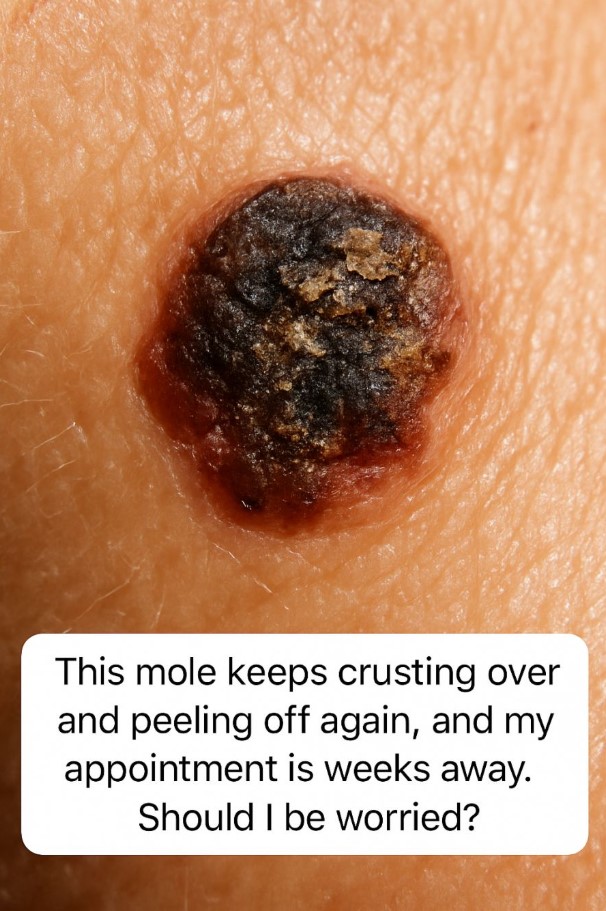
Noticing a spot or mole on your skin that repeatedly crusts over, flakes, and peels away can be unsettling. At first glance, it may seem like nothing more than dry skin, irritation, or a slow-healing scab. But when this pattern keeps repeating, it naturally raises concern—especially if your dermatology appointment is still weeks away and you’re left wondering what it might mean.
Skin changes often come with uncertainty, and not knowing whether something is harmless or potentially serious can cause unnecessary stress. Understanding what recurring crusting could indicate, which warning signs matter most, and how to care for your skin in the meantime can help you feel more in control. This guide explains common reasons a crusty or peeling mole may appear, what features deserve closer attention, and what steps you can safely take while waiting for professional evaluation.
When a Repeatedly Crusting Spot Is More Than Dry Skin
Occasional flaking or scabbing can happen due to dryness, minor cuts, or irritation from clothing or shaving. These issues typically resolve on their own within a week or two. However, a spot that repeatedly crusts, peels, and never fully heals may point to something more than simple skin dryness.
Lesions that persist, return after healing, or slowly change over time deserve attention. Skin that feels rough, thickened, or scaly and doesn’t return to normal may be reacting to deeper cellular damage rather than surface irritation. Monitoring these changes is an important first step.
Understanding Actinic Keratosis and Why It Matters
One condition commonly associated with crusty, scaly skin changes is actinic keratosis. This condition develops due to long-term exposure to ultraviolet (UV) radiation and often appears on sun-exposed areas such as the face, scalp, ears, forearms, hands, and chest.
Actinic keratosis is considered precancerous, meaning it has the potential to progress into a type of skin cancer if left untreated. While not every lesion becomes dangerous, medical professionals take it seriously because early treatment significantly lowers future risk.
Telling the Difference Between a Healing Scab and a Concerning Spot
A normal scab usually forms after injury and gradually falls off as new skin forms underneath. Once healed, it does not return in the same spot without another injury.
A potentially concerning lesion may:
- Feel rough or sandpaper-like
- Persist for weeks or months
- Peel, crust, or bleed repeatedly
- Appear pink, red, brown, or flesh-colored
- Feel tender, itchy, or slightly painful
If a spot doesn’t follow a typical healing pattern, it’s worth mentioning to a healthcare professional.
Warning Signs That Shouldn’t Be Ignored
Certain changes signal the need for closer evaluation, including:
- A spot that won’t heal
- Repeated crusting or bleeding
- Changes in size, color, or shape
- New itching, burning, or tenderness
- Surface breakdown or oozing
Keeping track of these signs helps ensure nothing important is overlooked when your appointment arrives.
Who Faces Higher Risk for Precancerous Skin Changes
Some individuals are more likely to develop sun-related skin damage, including:
- People with fair or light skin
- Those with light-colored eyes or hair
- Individuals with frequent sun exposure or past sunburns
- Adults over 40
- People with weakened immune systems
Long-term sun exposure accumulates over time, meaning damage may show up years after the exposure occurred.
Why Waiting Too Long Isn’t Ideal
While it’s understandable to wait for a scheduled appointment, lesions that may be precancerous are best evaluated sooner rather than later. Early assessment allows for easier treatment and better outcomes.
If a spot worsens rapidly or begins bleeding frequently, it’s reasonable to contact your provider to ask whether an earlier evaluation is appropriate.
Caring for Your Skin While You Wait
While waiting for professional care, focus on protecting the area:
- Avoid direct sun exposure
- Use broad-spectrum sunscreen daily
- Wear protective clothing and hats
- Keep the area clean and lightly moisturized
- Avoid picking, scratching, or scrubbing
Taking photos every few days can help document changes clearly.
Skin-Care Trends and DIY Remedies to Avoid
Social media often promotes home remedies for skin spots, but many can cause harm. Avoid applying harsh substances such as acids, vinegar, baking soda, or essential oils to suspicious areas. These can irritate the skin, worsen inflammation, and delay proper diagnosis.
It’s best to avoid self-treatment until a medical professional evaluates the lesion.
Gentle At-Home Care: What’s Safe and What’s Not
Safe steps include:
- Using fragrance-free cleansers
- Applying gentle moisturizers
- Protecting skin from UV exposure
Avoid:
- Over-the-counter wart or lesion removers
- Scraping or freezing the area yourself
- Applying medicated creams not prescribed for that lesion
When Immediate Medical Attention Is Needed
Most skin changes can wait for a dermatology visit, but seek urgent care if you notice:
- Heavy or uncontrolled bleeding
- Signs of infection such as spreading redness, warmth, or pus
- Severe pain or sudden rapid changes
These symptoms may require prompt evaluation.
How Dermatologists Evaluate Suspicious Skin Lesions
Dermatologists examine the lesion’s color, texture, borders, and pattern. If needed, they may perform a biopsy, a quick procedure where a small sample is taken for examination. This helps confirm whether a lesion is benign, precancerous, or something else entirely.
Common Treatment Options
Treatment depends on the diagnosis and may include:
- Freezing the lesion
- Prescription topical creams
- Light-based therapies
- Minor surgical removal
Early treatment is usually simple and highly effective.
Tracking Changes Before Your Appointment
To prepare for your visit:
- Take clear photos in good lighting
- Note dates and changes
- Record symptoms such as itching or bleeding
- List any personal or family skin history
This information helps your provider make an accurate assessment.
Conclusion :
A mole or spot that repeatedly crusts and peels deserves attention, but it doesn’t automatically mean something serious. Many skin changes are treatable, especially when identified early. Understanding the warning signs, protecting your skin, and avoiding harmful home remedies can make a meaningful difference while you wait for professional care.
If something doesn’t feel right or continues to change, trusting your instincts and seeking medical evaluation is always the safest approach. Staying informed empowers you to protect your skin and your long-term health—one careful step at a time.