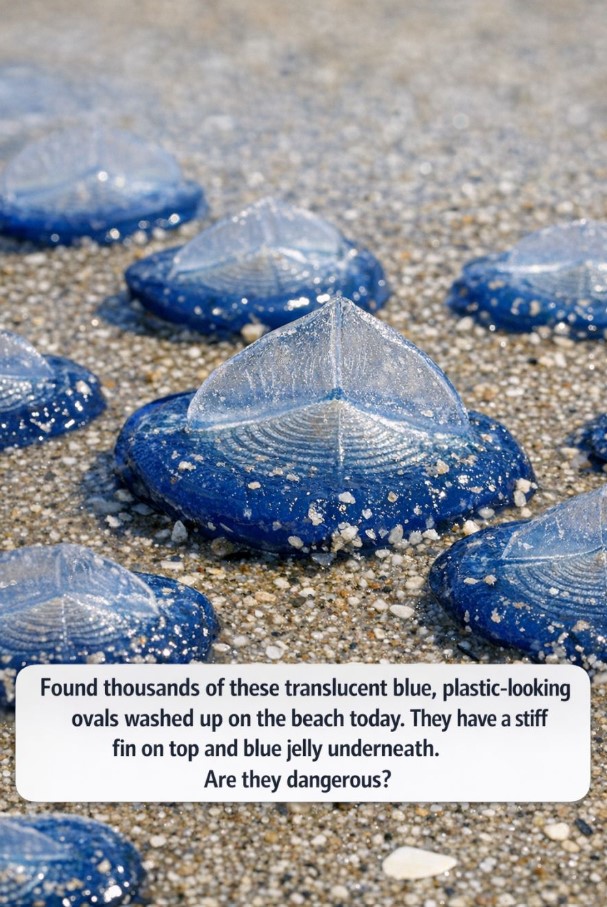
Walking along the shore and seeing thousands of strange translucent blue “plastic-like” ovals with stiff fins and jelly underneath can be both fascinating and worrying. It’s natural to ask: What are these? Are they alive? Could they be dangerous?
When unusual objects wash up on beaches, especially in large numbers, it often means ocean currents, tides, or recent weather events have brought them in. Some of these objects are harmless debris, while others are living marine organisms or parts of them. Understanding what you found helps you stay safe, protect the environment, and appreciate the incredible diversity of life in the ocean.
In this article, we’ll explain the most likely explanation for these blue ovals, how they end up on the shore, whether they pose any risk to people or animals, and what you should do if you encounter them again.
What Those Blue Translucent Ovals Probably Are
Based on your description — translucent, blue-colored, oval-shaped with what looks like a stiff fin on top and jelly underneath — the most likely explanation is that you’re seeing the remains of a marine animal known as a blue button or related organism, which are part of a group of floating marine animals that can wash up in large numbers.
1. Blue Button (Porpita porpita)
Blue buttons are small, round, blue marine animals that float on the surface of the ocean. They are related to jellyfish and have a disc-shaped float with small tentacle-like structures underneath. The “stiff fin” you noticed could be part of the float or specialized structures that help them stay upright in the water.
They are not individual animals like fish but colonial organisms — meaning many tiny organisms live together in one structure. Each “blue button” consists of many tiny units working together.
Blue buttons often wash up on shore in large amounts when winds and tides push them toward the beach. During some times of year or after storms, it’s common to see thousands of them scattered along the sand.
Why They Wash Up on the Beach
Marine animals like blue buttons don’t swim strongly like fish. Instead, they rely on winds, waves, and ocean currents to move. When winds blow from offshore to the shore, it can push these floating organisms toward land. Strong tides, storms, and changes in currents can all lead to large numbers ending up on beaches.
This process is similar to how leaves or debris get carried by wind — the animals themselves aren’t actively trying to reach the shore, but the water and wind patterns carry them there.
Are They Dangerous?
The good news is that most of the organisms that look like “translucent blue plastic ovals with jelly underneath” — such as blue buttons — are generally not dangerous to humans. They don’t have strong stings like some jellyfish, and many people can touch them without pain.
However, it’s still important to follow these safety tips:
1. Avoid Direct Contact with Skin
Some floating marine organisms have very tiny, nearly invisible stinging cells. Even if they don’t cause pain, they can cause mild irritation in sensitive individuals. If you want to handle them, use a glove or a stick.
2. Wash Hands Afterward
If you do touch them, wash your hands or rinse with fresh water to be safe. This is especially important before touching your face, eyes, or food.
3. Keep Pets and Children Safe
Young children and curious pets might be tempted to pick up unusual objects. It’s safest to keep them from handling these organisms without adult supervision.
4. If You Feel a Reaction
Mild redness or itching is uncommon but possible in sensitive people. Rinse the area with salt water or fresh water and avoid scratching. If you experience significant pain, swelling, or a widespread reaction, seek local medical advice.
Why They Don’t Look Like Real Fish or Jellyfish
It’s easy to assume something floating in the ocean with blue translucent bodies might be a baby fish, jellyfish, or plastic debris. But there are key differences:
- Plastic debris doesn’t have internal jelly-like substance or organized structures beneath a “fin.”
- Fish eggs or larvae are usually tiny and don’t have stiff fins.
- Jellyfish have a bell shape and usually tentacles. These blue ovals are flat, round, and often have unique patterns on top.
What you’re most likely seeing are ocean-dwelling colonial organisms or parts of them that naturally float near the surface.
What to Do If You See Them Again
If you encounter these translucent blue ovals on other beaches or different parts of the same beach, here are some respectful and helpful things you can do:
1. Observe Without Touching
Take photos and notice patterns. How many are there? Are they spread out or piled together? These observations can help identify seasonal patterns.
2. Protect the Environment
Avoid picking up or moving them into the water, as they are part of the ocean ecosystem.
3. Alert Local Beach Authorities (Optional)
If you find them in very large numbers or notice something unusual — such as dead animals nearby — you can let local park, conservation, or wildlife authorities know. They may track these occurrences as part of seasonal marine life cycles.
4. Keep Distance if Unsure
If it’s your first time seeing something like this and you’re unsure what it is, give it space and avoid direct contact until confirmed safe.
Interesting Facts About Marine Floaters
These organisms, including blue buttons and similar floaters, are fascinating parts of ocean ecosystems:
- They often host tiny symbiotic creatures underneath them.
- They float near the surface thanks to air-filled or gel-filled structures that act like tiny sails.
- Many drifting marine species play roles in the food web, providing food for birds, fish, or other ocean life.
Seeing them in large numbers is often linked to natural ocean conditions, such as wind patterns, currents, and seasonal changes in water temperature or nutrient levels.
Conclusion :
Finding thousands of translucent blue ovals washed up on the beach with stiff “fins” and jelly underneath can be surprising — but in most cases, these are harmless marine organisms like blue buttons or similar floaters. They aren’t plastic debris, and they aren’t typically dangerous to people.
While they may look unusual, their presence is usually a natural ocean event caused by currents and tides pushing them ashore. Treat them with respect, avoid touching them directly, and enjoy the opportunity to observe a tiny piece of the ocean’s complex and fascinating ecosystem.
If you’re ever in doubt or notice unusual reactions after contact, it’s always sensible to check with a local beach authority or healthcare provider. Otherwise, these blue visitors are just another reminder of how diverse and vibrant ocean life can be.