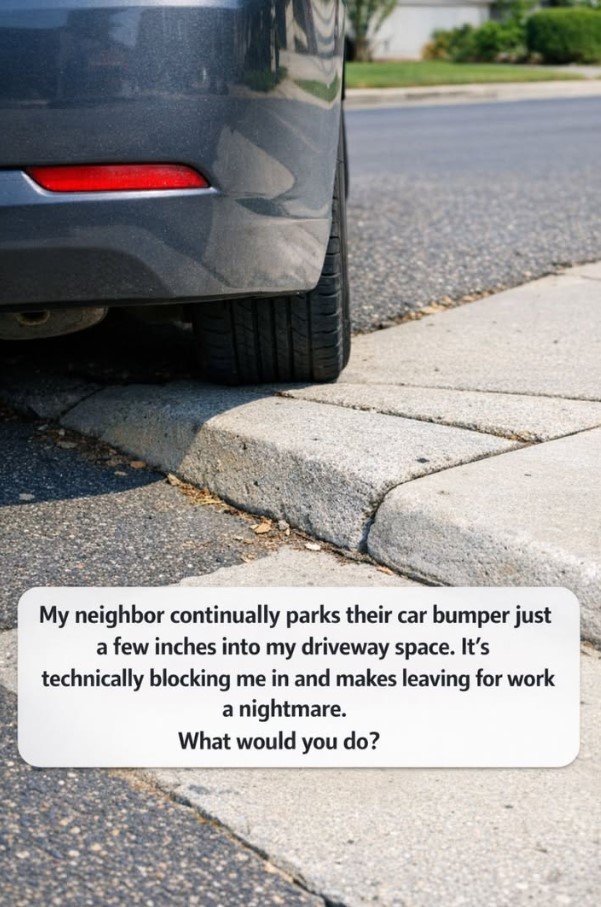
You step outside ready to leave for work, only to find your neighbor’s car sticking just a few inches into your driveway. It doesn’t seem like much — but if it’s enough to block your bumper and make leaving a nightmare, it’s not just irritating, it’s impacting your daily life.
Situations like this can be surprisingly stressful. They involve not only logistics and inconvenience, but also relationships with the people next door — people you likely see often. The goal isn’t just to make your driveway usable again, but to handle the problem calmly, respectfully, and effectively so that both your commute and your peace of mind improve.
Whether this has happened once or repeatedly, this guide will walk you through practical steps, communication tips, and solutions that help you reclaim your space without escalating conflict.
Why This Happens More Often Than You’d Think
First, it’s worth acknowledging that parking issues are one of the most common sources of neighbor disputes. People may inadvertently park too far forward because:
- They’re trying to avoid sticking out into the street
- They misjudge their bumper distance
- They assume that a few inches aren’t a big deal
- They’re in a rush and don’t notice
- They’re oblivious to how it affects you
In many cases, it’s not intentional, but that doesn’t change the fact that your schedule and comfort are being affected every time you try to leave.
Step 1: Pause and Assess
Before reacting, take a moment to evaluate the situation:
📌 Has this happened more than once?
If it’s a one-off occurrence, it could simply be an honest mistake.
📌 Is the car actually blocking your car, or just close?
Understanding the degree of impact helps you decide how assertive you need to be.
📌 How often does this happen?
Daily? Occasionally? Only on weekdays? Patterns matter.
This initial assessment helps you address the issue in a measured, calm way instead of impulsively.
Step 2: Choose the Right Time to Talk
Immediately confronting someone while frustrated often leads to defensive responses. Instead:
🕐 Wait for a calm moment
Catch your neighbor when neither of you is rushed — perhaps in the afternoon or early evening.
🗣 Use a neutral tone
Avoid accusatory language like “You always…” or “You never…” Start with “I’ve noticed…” or “I wanted to check in about…”
Step 3: Offer a Clear, Specific Request
Vague complaints often get vague responses. Instead of “Please stop blocking my driveway,” try something specific, like:
- “Could you park just behind this line?”
- “If your bumper could stay at least X inches from my space, that would help.”
- “I need clear access between 7–9 AM for work.”
Concrete requests help neighbors understand exactly what you need without guessing.
Step 4: Listen to Their Side
Conflict resolution involves two perspectives. After you explain your situation:
✅ Give them a chance to respond
✅ Listen without interrupting
✅ Acknowledge their point of view
Maybe they didn’t realize their car extended so far. Maybe they have limited parking options. Understanding their constraints helps you find a solution together.
Step 5: Suggest Practical Solutions
Once the problem is on the table, propose reasonable fixes. For example:
📍 Use a parking marker
A small cone or line can show where their bumper should stop.
📍 Adjust parking angles
Perhaps they can pull in slightly from the side instead of straight forward.
📍 Reassign spaces
If others in your building or neighborhood have flexible parking, a swap might help.
📍 Ask for a heads-up
If mornings are the only issue, perhaps your neighbor can park slightly differently until you leave.
Practical suggestions make resolution proactive rather than reactive.
Step 6: Put It in Writing (If Needed)
If talking in person doesn’t help, a friendly written note can do wonders. Keep it polite and simple:
Written communication gives your neighbor a chance to reconsider without pressure.
Step 7: Involve a Mediator (Before It Escalates)
If attempts at direct communication don’t work, consider involving someone impartial:
📍 A building manager or HOA representative
Many properties have guidelines about shared spaces.
📍 A neutral neighbor
Someone both of you respect might help relay your concerns.
📍 Community mediation services
Many towns offer free or low-cost mediation to resolve neighbor disputes.
The idea isn’t to “call the cops” — it’s to seek support in communicating the issue.
Step 8: Know Your Rights (But Use Them Wisely)
If your neighbor continues blocking your driveway and it interferes with your daily life, you may need to understand your legal rights. In most places:
🔹 Driveway access is considered private property
🔹 Blocking access can be considered a nuisance
🔹 Repeated obstruction may qualify as an actionable issue
Before taking legal steps, however, consider:
✔ Gathering photos or timestamps
✔ Keeping a record of conversations
✔ Consulting a local attorney or tenant’s rights group
Legal routes can be effective — but they also escalate conflict, so they’re usually best saved for situations where communication has failed and your mobility is genuinely impacted.
What Not to Do
🚫 Don’t block their car in retaliation
🚫 Don’t damage property
🚫 Don’t post complaints publicly or on social media
🚫 Don’t raise your voice or threaten
These responses may feel satisfying in the moment, but they often make the situation worse.
When It’s Really a Problem
Here are signs the issue is beyond an occasional inconvenience:
📍 You can’t leave your home at all
📍 You’re late to work repeatedly
📍 You’ve expressed your concern calmly and clearly
📍 The neighbor refuses to discuss or acknowledge the issue
When multiple attempts to resolve the situation fail, it’s reasonable to seek support from management, mediation, or legal counsel.
Tips for Peaceful Coexistence
Even when neighbors frustrate us, most of us want peaceful living situations. Here are ways to keep harmony:
✨ Compliment good behavior when it happens
✨ Express gratitude when they cooperate
✨ Keep communication calm, not confrontational
✨ Offer small gestures of kindness when appropriate
People are more likely to respond positively when they feel respected rather than attacked.
Conclusion:
A neighbor who consistently blocks your driveway can make mornings stressful and disrupt your routine — but it doesn’t have to lead to ongoing conflict.
Start with understanding, communicate clearly and respectfully, and offer practical solutions. If those steps don’t work, written communication or mediation can help bridge the gap. Legal options are available, but they’re usually best explored only after all peaceful approaches have been exhausted.
At the end of the day, what matters most is being able to leave your home with ease and maintaining a functional, respectful relationship with the people next door.
With the right approach, you can solve the problem without losing peace in the neighborhood — and make your driveway (and your mornings) stress-free again.