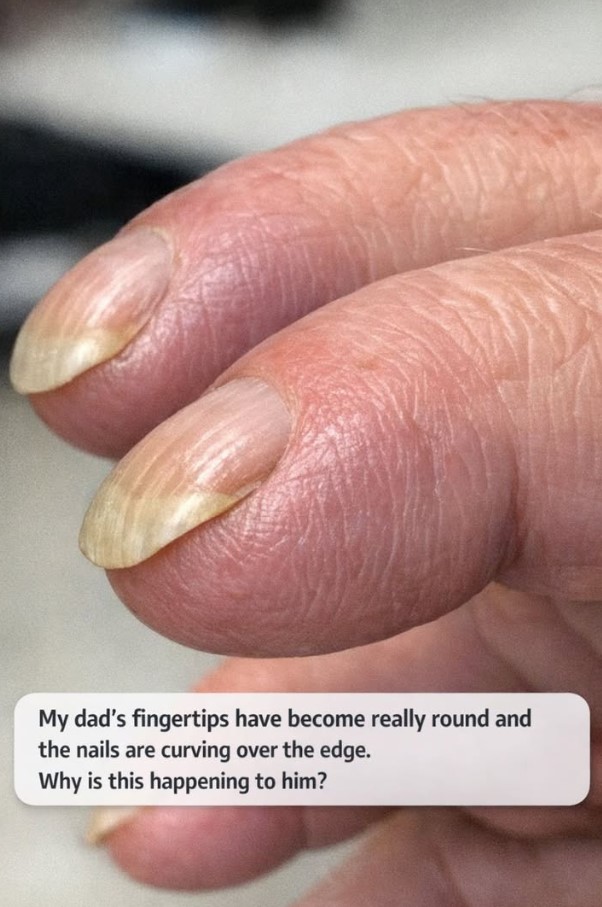
Noticing changes in a loved one’s body can be surprising — especially when it affects something as everyday as fingers or nails. When the fingertips become more rounded and the nails curve downward and over the tips, this pattern is often described as clubbing. It can look like the ends of the fingers are wider or more bulbous than before, and the nails almost wrap around the finger tips.
Seeing this happen can be worrying, but it’s important to understand that it doesn’t happen randomly. These changes are usually a sign that the body has been responding to something over time.
This guide explains what’s behind these shape changes, what causes are most common, and when it’s important to talk to a healthcare professional. Nothing here is a diagnosis — it’s general information to help you understand what might be going on.
What Does It Mean When Fingertips Look Rounded and Nails Curve Down?
When the flesh at the tips of fingers becomes thicker and more “rounded,” and the nails curve over the edge, that’s medically referred to as digital clubbing. The nails may also look shiny or have a larger “angle” where the nail meets the skin.
This doesn’t usually happen overnight. It develops gradually and is often noticed because the fingertips look different compared to other people’s.
What Causes These Changes?
Clubbing can happen for a variety of reasons. Some common causes include:
1. Low Oxygen Levels in the Blood
When the body doesn’t get enough oxygen over a long period, the small blood vessels in the fingers can change, leading to clubbing. Conditions that can lower oxygen levels include:
- Certain lung diseases (like chronic bronchitis, emphysema, or pulmonary fibrosis)
- Long‑term infections
- Conditions that affect how oxygen gets into the bloodstream
2. Heart‑Related Conditions
Some heart conditions — especially ones that affect how blood circulates — can also be associated with clubbing. If the heart isn’t pumping oxygen‑rich blood efficiently, the body may adapt in ways that cause changes in the fingertips and nails.
3. Gastrointestinal or Liver Conditions
Some digestive or liver disorders (for example, certain inflammatory bowel diseases or liver cirrhosis) can be linked to clubbing. The connection isn’t always direct, but long‑standing inflammation or changes in protein levels can show up in the nails.
4. Other Causes
Less frequently, clubbing can be related to thyroid disease or certain cancers. These are rare causes compared with lung or heart‑related reasons.
Important: Clubbing itself isn’t a disease — it’s a sign that something else may be affecting the body.
Why It Happens (in Simple Terms)
The exact reason clubbing develops isn’t completely understood, but most research suggests it begins with changes in how blood flows and how oxygen gets delivered to the tissues at the tips of the fingers.
When the body senses low oxygen over time, small blood vessels in the fingers expand and new ones may form. The tissues then become thicker and rounder, and the nail bed changes shape. These structural changes are gradual and typically reflect a chronic (long‑term) process rather than something sudden.
Is This Dangerous?
Seeing rounded fingertips and curved nails isn’t something to ignore, because it often points to an underlying condition — especially if it develops gradually over months. However, clubbing itself doesn’t usually cause pain or itching. The concern is what’s causing the clubbing, not the appearance itself.
Because clubbing can be associated with conditions affecting the lungs, heart, liver, or other systems, it’s important for your dad to be evaluated by a healthcare provider. They can review his overall health, symptoms, and maybe order tests to understand what’s happening.
What Kinds of Symptoms Should Get More Urgent Attention?
Clubbing paired with any of the following symptoms should lead to a more rapid medical evaluation:
✔️ Shortness of breath or trouble breathing
✔️ Chest pain
✔ Unexplained fatigue
✔️ Cough that doesn’t go away
✔️ Wheezing or frequent respiratory infections
✔️ Rapid weight loss or appetite changes
✔️ Swelling in the legs or ankles
✔️ Blue lips or fingers (a sign of low oxygen)
Even if big symptoms aren’t present, a doctor should check clubbing because it’s often a marker of something else going on.
What Tests Are Typically Done?
To understand what’s causing the changes, a healthcare provider might recommend:
📌 A physical examination
📌 Blood tests
📌 Chest X‑ray or CT scan
📌 Lung function tests
📌 Heart imaging (like an echocardiogram)
📌 Tests for liver or gastrointestinal issues
These tests help narrow down whether the cause is related to breathing, circulation, inflammation, or other systemic issues.
What You Can Do Right Now
While waiting for a medical appointment, your dad can:
- Track when he first noticed the changes
- Note any new symptoms (breathing trouble, fatigue, cough, etc.)
- Avoid smoking or exposure to smoke
- Stay hydrated and maintain balanced nutrition
- Wear loose clothing if swelling occurs
These don’t treat the underlying cause, but they help support general health and give useful information to a clinician.
Conclusion :
Rounded fingertips and nails that curve over the edge — often called clubbing — are not random changes. They usually reflect a long‑term response to something affecting oxygen levels, circulation, inflammation, or other body systems. While clubbing itself doesn’t usually hurt, it’s a visible sign that deserves medical attention.
The most important next step is for your dad to have a healthcare professional evaluate the changes, especially if he also has symptoms like shortness of breath, fatigue, cough, or chest discomfort. A clinician can assess his health history, physical exam, and appropriate tests to help understand what’s driving the nail and fingertip changes.
If you have more questions about how clubbing works, what questions to ask the doctor, or what symptoms to watch for — I can explain those too. Just let me know!