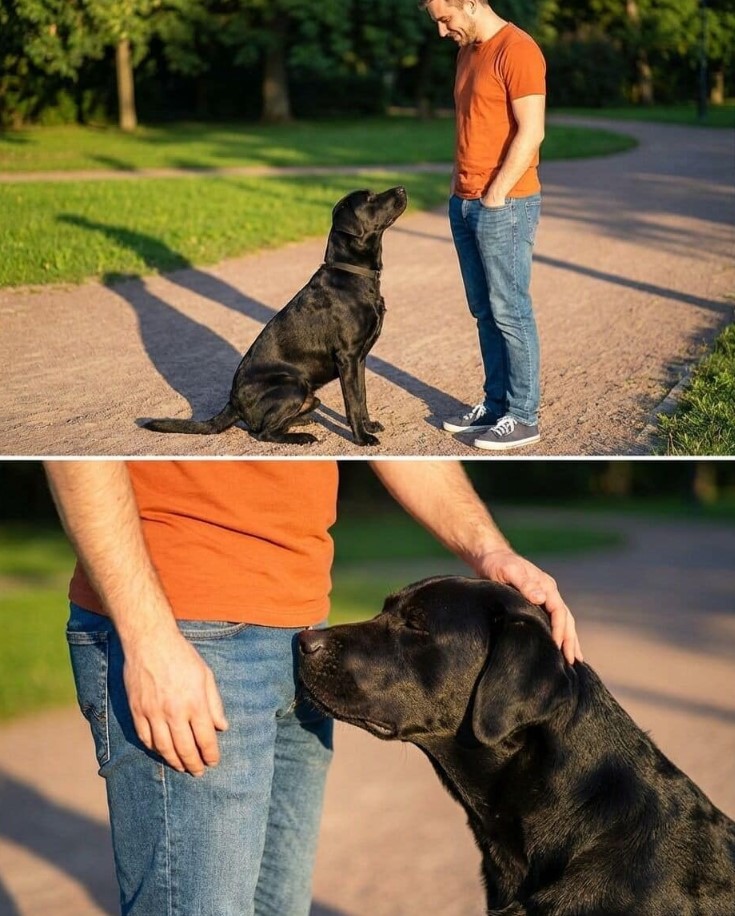
If you’ve ever spent time around dogs, you’ve probably witnessed a behavior that can feel a bit awkward—especially when it happens in public. Dogs often seem very interested in sniffing specific areas, whether it’s another dog, a person, or even certain objects. While this might appear strange or even inappropriate from a human perspective, it is actually one of the most natural and important behaviors in a dog’s life.
Dogs don’t rely on sight the way humans do. Instead, they experience the world primarily through their sense of smell. Every sniff they take is like gathering information, almost as if they are reading a detailed story written in scent. What seems like a simple action is actually a complex and meaningful way for dogs to understand their surroundings.
In this article, we’ll explore why dogs sniff certain areas, what they’re actually detecting, and why this behavior is far more important than it might seem.
Dogs “See” the World Through Their Nose
Humans depend mostly on vision, but for dogs, smell is the dominant sense. Their noses are incredibly powerful, containing hundreds of millions of scent receptors—far more than humans.
Because of this:
- Dogs can detect tiny scent particles in the air
- They can distinguish between multiple smells at once
- They rely on scent to understand people, animals, and environments
In simple terms, dogs don’t just smell things—they interpret them. A single sniff can give them information we wouldn’t even notice.
Why Dogs Sniff Certain Areas
1. It’s Their Way of Greeting
When dogs meet, they don’t communicate with words—they use scent.
Sniffing specific areas, especially other dogs’ rear ends, is their version of saying hello. It’s a normal and instinctive greeting behavior that helps them quickly gather information about one another.
Think of it as a combination of a handshake and a conversation—done entirely through smell.
2. They’re Gathering Detailed Information
Dogs aren’t sniffing randomly. They are collecting detailed data through scent.
From just one sniff, a dog can learn:
- Who the other dog or person is
- What they’ve been eating
- Their emotional state
- Their health condition
Dogs can even detect changes in hormones and body chemistry, giving them insights that humans simply cannot perceive.
3. Certain Areas Contain Stronger Scents
Dogs often focus on specific areas because those spots produce stronger smells.
For example:
- Humans have more scent-producing glands in areas like the armpits and groin
- Dogs have anal glands that release unique scent signals
These areas provide the most information, which is why dogs are naturally drawn to them.
4. They Use Pheromones to Communicate
Dogs have a special sensory system called the vomeronasal organ, which helps them detect pheromones—chemical signals used for communication.
These pheromones can reveal:
- Mood and emotional state
- Reproductive status
- Identity
This allows dogs to communicate silently in a way humans can’t even detect.
5. Sniffing Helps Them Understand Their Environment
Dogs don’t just sniff people or other animals—they sniff everything around them.
This helps them:
- Identify who has been in an area
- Detect food or danger
- Recognize changes in their surroundings
For dogs, sniffing is like reading the “news” of their environment.
6. It Can Also Be About Attention
Sometimes, dogs learn that certain behaviors—like sniffing people in noticeable ways—get a reaction.
Even negative reactions can reinforce the behavior, because from the dog’s perspective, any attention is rewarding.
Is This Behavior Normal?
Yes — completely.
Sniffing is:
- Natural
- Instinctive
- Essential for communication
It plays a major role in how dogs socialize, gather information, and feel comfortable in their environment.
When Should You Be Concerned?
In most cases, sniffing is harmless. However, you might want to pay attention if:
- The behavior becomes excessive or obsessive
- Your dog seems anxious or stressed
- Other dogs react aggressively
These situations may require training or guidance, but they are not common.
Why This Behavior Is Actually Important
Sniffing is not just a habit—it’s a key part of a dog’s mental and emotional well-being.
It helps dogs:
- Explore the world
- Reduce stress
- Stay mentally stimulated
In fact, allowing dogs to sniff during walks is considered an important form of enrichment and can even help them feel calmer.
Conclusion :
What might seem like an awkward or strange habit is actually a fascinating and essential part of how dogs experience the world. When dogs sniff certain areas, they are not being rude or random—they are gathering information, communicating, and making sense of their surroundings in a way that is completely natural to them.
Their powerful sense of smell allows them to detect details far beyond human perception, turning every sniff into a meaningful interaction. Whether they are greeting another dog, investigating a person, or exploring their environment, each sniff serves a purpose.
Understanding this behavior helps us see dogs in a new light. Instead of viewing it as something unusual, we can appreciate it as a vital part of their instincts and communication.
At the end of the day, dogs don’t experience the world the way we do—and that’s exactly what makes them so unique and fascinating.