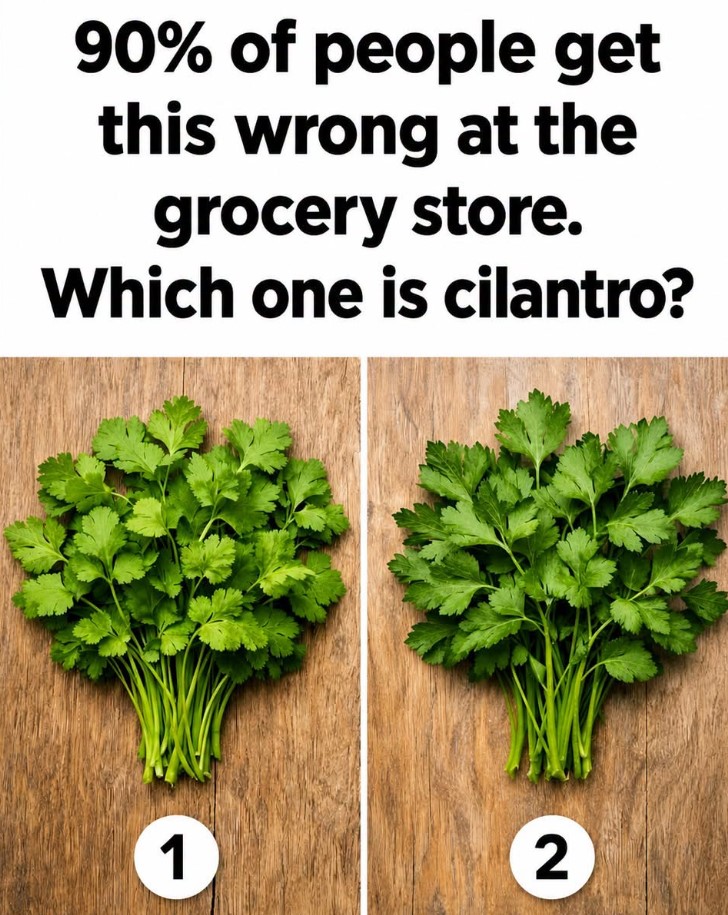
Have you ever walked through the fresh produce section of a grocery store, spotted two bundles of green herbs that looked almost identical, and wondered which one you should pick? You’re certainly not alone! Cilantro and flat-leaf parsley are two popular herbs that can easily confuse shoppers, especially when they are placed next to each other.
At first glance, both have bright green leaves, thin stems, and a similar appearance. However, choosing the wrong one can make a noticeable difference in your cooking. If you’re preparing homemade salsa, tacos, guacamole, or a delicious pasta dish, knowing which herb you’re buying is important.
A popular grocery store challenge claims that 90% of people struggle to identify cilantro correctly. Whether or not that percentage is accurate, this little visual puzzle is a fun way to test your observation skills.
So, take a close look at the two herbs and see if you can identify cilantro before discovering the answer!
Why Are Cilantro and Parsley So Difficult to Tell Apart?
Cilantro and flat-leaf parsley are surprisingly similar, which explains why so many people mix them up.
Both herbs belong to the Apiaceae family, a botanical family that also includes carrots, celery, fennel, and several other familiar plants. They grow with slender green stems and clusters of delicate leaves, making them look almost identical when bundled together at the grocery store.
The confusion becomes even greater when the herbs are fresh, washed, and arranged side by side. Their leaves can overlap, and the differences aren’t always obvious from a distance.
However, once you know what to look for, distinguishing between them becomes much easier. Their leaf shapes, colors, and especially their aromas can help you identify the correct herb without much difficulty.
How to Identify Cilantro by Its Leaves
One of the easiest ways to recognize cilantro is by examining the shape of its leaves.
Cilantro generally has softer, rounded leaves with curved edges. The individual leaf sections often resemble small fans or delicate clouds. Its appearance is slightly less pointed than that of flat-leaf parsley.
Depending on how fresh the herb is and how it has grown, cilantro may also have a lighter, brighter green color.
Flat-leaf parsley, on the other hand, usually has more defined, pointed leaf sections. Its edges appear sharper and more jagged, giving the leaves a somewhat triangular appearance.
These differences may seem small, but looking closely at the leaves can help you make the right choice.
The Easiest Way to Tell Them Apart: Use Your Nose
If you’re still unsure after examining the leaves, there’s another simple trick that works wonderfully: smell the herbs.
Cilantro has a distinctive, fresh aroma that many people describe as citrusy, with hints of lime and a slightly pungent scent. It’s the familiar smell associated with fresh salsa, tacos, guacamole, and many Mexican and Asian-inspired dishes.
Flat-leaf parsley has a much milder fragrance. Its aroma is fresh, green, earthy, and slightly peppery without the same strong citrus-like character.
If you’re shopping and can’t confidently identify the herbs by sight, gently rubbing a leaf between your fingers can release its natural aroma and make the difference much easier to recognize.
Why Does Cilantro Taste Like Soap to Some People?
Cilantro has another interesting characteristic that makes it one of the most talked-about herbs in the kitchen.
While many people love its fresh, distinctive flavor, others find that it tastes unpleasantly similar to soap or dishwashing liquid.
This unusual reaction isn’t simply a matter of personal preference. Genetics can play a role in how people experience cilantro’s flavor.
Some people carry variations in an olfactory receptor gene called OR6A2. This receptor is associated with sensitivity to certain aldehydes, chemical compounds that contribute to cilantro’s characteristic aroma.
For people who are particularly sensitive to these compounds, cilantro can have a soapy taste that makes it difficult to enjoy.
This explains why two people can taste the exact same dish and have completely different opinions about the cilantro added to it.
Interestingly, parsley doesn’t usually create the same reaction, which is another reason why it’s useful to know how to distinguish these two herbs.
The Big Reveal: Which One Is Cilantro?
Now it’s time to reveal the answer!
Number 1 is Cilantro.
It has the softer, more rounded leaves, with gentle curves along the edges and a slightly lighter green appearance. Its distinctive citrusy aroma makes it easy to recognize once you know what to look for.
Number 2 is Flat-Leaf Parsley.
Its leaves have more pointed sections, sharper edges, and a somewhat darker, glossier appearance. It has a milder, earthy flavor that works beautifully in soups, sauces, pasta dishes, and Mediterranean recipes.
So, if you chose number 1 as cilantro, congratulations! You successfully solved the grocery store challenge.
Conclusion
This little grocery store challenge shows how two herbs that appear almost identical at first glance can actually have very different characteristics. Cilantro and flat-leaf parsley may share a similar green color, delicate stems, and leafy appearance, but knowing a few simple details makes identifying them much easier.
The most important clue is the shape of their leaves. Cilantro generally has softer, rounded sections, while flat-leaf parsley has more pointed and sharply defined leaves. Their aromas also provide an excellent way to tell them apart. Cilantro has a stronger, distinctive fragrance with citrus-like notes, whereas parsley offers a gentler, earthy scent.
Learning to recognize these differences can be surprisingly useful when preparing everyday meals. Nobody wants to buy parsley when a recipe specifically calls for cilantro, especially when making fresh salsa, guacamole, or homemade tacos. A quick look at the leaves or a gentle sniff before placing the bundle in your shopping basket can save you from choosing the wrong ingredient.
And let’s not forget the interesting science behind cilantro’s soapy taste! Something that one person considers delicious can taste completely different to someone else because of their genetic sensitivity to certain aromatic compounds. It’s a fascinating reminder that we don’t all experience food in exactly the same way.
Now it’s your turn! Did you correctly identify cilantro, or did the two nearly identical bundles trick you? If you recognized number 1 immediately, you deserve a little credit for your observation skills. Share this challenge with your friends and family and see whether they can identify the correct herb without looking at the answer. You might be surprised by how many people get confused when faced with two simple bundles of green leaves!