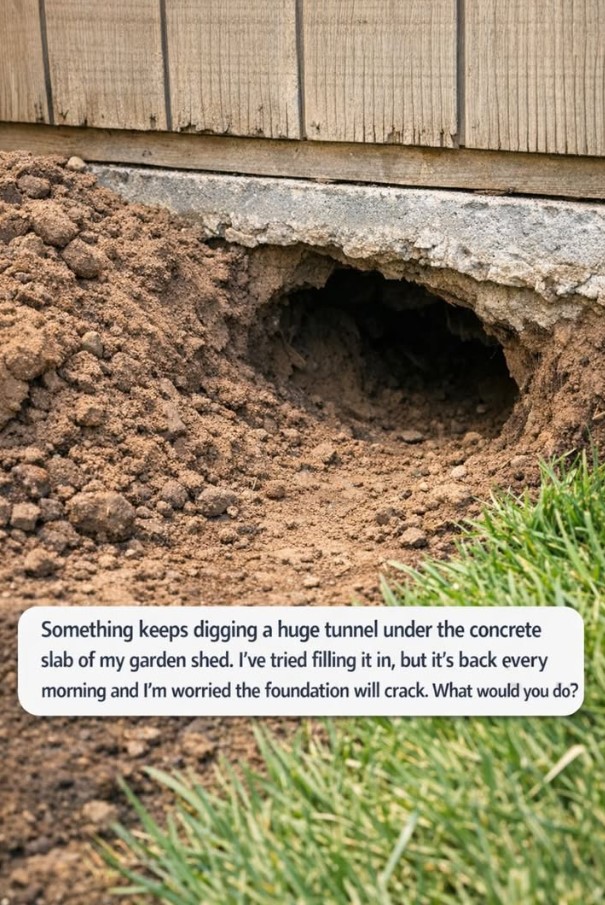
Finding a large tunnel appearing under a garden shed — especially one that keeps reappearing even after you fill it in — can be unsettling and frustrating. Not only is it a mystery to solve, but it’s also a serious structural concern. If an animal is continuously digging beneath a concrete slab, the foundation of the shed could weaken and eventually crack. Preventing that damage and identifying what’s causing the digging are the first priorities.
In this guide, we’ll explore the likely causes of persistent digging under sheds, what kinds of animals are usually responsible, why conventional fill-and-pack methods often fail, and what steps you can take to stop the digging and protect your shed’s foundation long term.
What Kind of Animal Might Be Making the Tunnel?
When you see a large tunnel under a structure, several animals could be responsible. The size of the opening, the soil type, the local environment, and evidence like tracks or droppings can help narrow down the culprit. Some of the most common diggers include:
1. Groundhogs (Woodchucks)
Groundhogs are classic tunnel builders. They dig large burrows with multiple entrances, often hidden around foundations, decks, or sheds. Their tunnels can extend several feet underground and pose serious risks to structures.
Signs of groundhogs:
- Large holes (4–8 inches wide)
- Loose soil piled near the entrance
- Nearby grassy or garden areas with missing plants
2. Rabbits
Rabbits sometimes dig shallow burrows, particularly in soft soil, but they are less likely to create deep concrete-undermining tunnels unless vegetation is dense and shelter is nearby.
Signs of rabbits:
- Smaller holes (2–3 inches wide)
- Chewed vegetation nearby
- Droppings that are small, round pellets
3. Rats or Mice
Rats and mice dig smaller tunnels and burrows along edges, but their holes are typically small and narrow. If what you’re seeing is large, it’s likely not rodents.
4. Skunks, Opossums, or Raccoons
These animals dig in search of insects, grubs, or worms. If the soil around your property is rich in food sources, you may see repeated digging around structures and gardens.
Signs of larger mammals:
- Disturbed soil in broad patches
- Scrape marks or footprints
- Trash or food remnants nearby
5. Armadillos or Other Burrowing Species
In some regions, armadillos, badgers, or other digging mammals create deep burrows. These tunnels can be extensive and destructive if left unchecked.
Why Filling the Tunnel Doesn’t Work
Filling the tunnel with dirt or gravel might seem like a logical step, but in most cases, it doesn’t stop the digging. Here’s why:
Animals See Filling as a Challenge
Many burrowing animals will simply dig around fresh fill. They see the disturbance as something new to explore or clear and will continue tunneling.
Loose Soil Is Easy to Move
When soil is loose or freshly dumped, it’s actually easier for a digging animal to push aside. Solid, tightly packed soil with barriers is much more difficult to bypass.
The Source Isn’t Just the Hole
The problem isn’t just the opening — it’s the reason the animal is there in the first place. Whether it’s food, shelter, or instinct, the animal has motivation to stay and dig.
Steps to Stop the Tunnel and Protect Your Shed
Here’s a comprehensive plan you can follow to tackle the problem effectively and prevent further structural damage:
1. Identify the Animal
Before you can stop the digging, try to determine what is digging. Look for tracks, droppings, or behaviors around sunrise and sunset when many animals are most active.
- Large holes + soil mounds: Likely groundhogs or badgers
- Small repetitive holes near edges: Possibly rabbits or rodents
- Shallow scrapes and scattered digs: Larger mammals searching for food
2. Install a Barrier Around the Perimeter
Animals will stop digging if they encounter a physical barrier that is difficult to penetrate. Consider one or more of these:
- Wire mesh or hardware cloth: Bury it 1–2 feet into the ground perpendicular to the shed foundation
- Concrete or cement collars: Pour a reinforced footing around the base to block underground access
- Large stone or gravel apron: This can discourage digging if it extends out from the slab
A barrier needs to be buried deep enough that the animal cannot simply dig under it.
3. Remove Attractants Nearby
What’s drawing the animal to your shed?
- Food sources: Pet food, compost, gardens
- Shelter: Piles of wood or debris
- Water sources: Leaky hoses or standing water
Clearing these away reduces motivation for the animal to stay and dig.
4. Use Humane Deterrents (If Appropriate)
Depending on the animal identified, certain deterrents can encourage them to move on:
- Motion-activated lights or sprinklers — startle nocturnal animals
- Scent deterrents — predator urine or certain repellents can discourage presence
- Noise devices — irregular noises can make the area less inviting
Keep in mind that deterrents work best when combined with barriers and removal of food sources.
5. Consider Trapping and Relocation
If the animal is persistent and causing damage, professional wildlife removal services can trap and relocate it safely and humanely. Make sure this is done according to local regulations.
6. Reinforce the Shed Foundation
Once the digging is no longer active, consider reinforcing the slab:
- Concrete patching — fill and level tunnels with firm, compacted material
- Gravel and compacted soil — reduces the chance of future tunneling
- Reinforced footings — provide long-term structural integrity
When It Becomes Urgent
While most digging under sheds is caused by animals seeking shelter or food, there are times when the situation becomes urgent:
- Cracks appearing in the slab or walls
- Uneven floors inside the shed
- Visible sagging or shifting of the structure
- Large openings that could house predators or pests
If you notice structural damage, contact a builder, engineer, or pest control professional promptly to assess and address the foundation safety.
Conclusion :
Persistent digging under a garden shed is more than just a nuisance — it’s a structural risk that can worsen over time if left unaddressed. Understanding the likely animals responsible, why simple filling fails, and how to implement long-lasting barriers and deterrents will help you stop the tunnels before they cause serious damage.
By identifying the animal, installing effective barriers, removing attractants, and reinforcing the foundation, you can protect your shed’s slab without constant maintenance. When necessary, humane removal and professional support ensure both the welfare of wildlife and the safety of your property.
With a thoughtful approach and the right tools, you can reclaim your garden space and keep your shed stable and secure for years to come.