
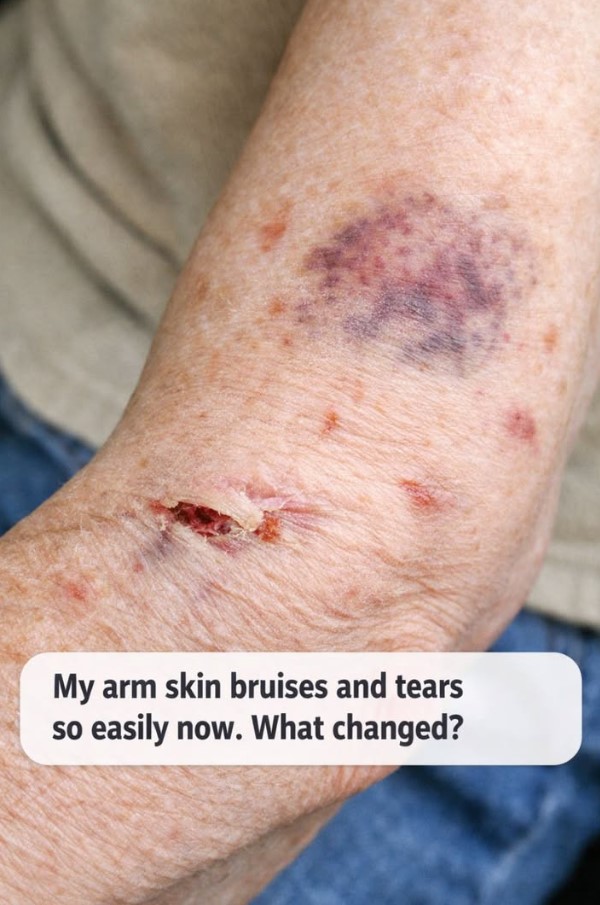
Noticing that your arm skin bruises or tears more easily than it used to can be surprising and even a little worrying. One day your skin seems fine, and suddenly a small bump or minor scrape leaves a noticeable mark or break in the skin. If this is something you’ve started to notice more recently, you’re definitely not alone — many people experience changes in how their skin reacts over time.
In this article, we’ll explain why skin can become more fragile, what factors might be contributing to the change, and most importantly, safe and practical next steps you can take. You’ll walk away with a better understanding of why this might be happening and how to keep your skin healthy and protected.
How Healthy Skin Works
Your skin is your body’s largest organ, and it acts as a barrier against injury, infection, and fluid loss. The outer layer (the epidermis) protects the deeper layers, while the layer beneath (the dermis) contains blood vessels, collagen, and elastin that give your skin strength, elasticity, and resilience.
When this structure is strong, your skin can handle everyday bumps and minor scrapes with minimal bruising or tearing. But if something changes in the layers beneath, your skin may become thinner or less able to withstand mild impacts.
Common Reasons Skin Becomes More Fragile
There are many possible reasons your skin might bruise or tear more easily than before. Most are common, but paying attention to patterns and other symptoms can help you figure out what’s going on.
1. Aging Skin and Loss of Collagen
As we get older (and yes, this can begin earlier for some people), our skin naturally loses collagen and elastin — the proteins that keep it strong and elastic. This makes your skin thinner and more delicate, so even a slight bump can cause a visible bruise or a small tear.
2. Sun Exposure Over Time
Years of unprotected sun exposure can weaken the skin’s structure. Ultraviolet (UV) rays break down collagen and elastin, making the skin more fragile. If you spend a lot of time outdoors without protective clothing or sunscreen, this can contribute to increased bruising.
3. Medications or Topical Treatments
Some medications and creams can affect skin integrity or how your blood vessels respond to minor injury. For example:
- Long‑term corticosteroid use
- Certain blood thinners
- Some acne medications or retinoids
These can make your skin more prone to bruising and tearing — so it’s worth reviewing your current medications with a health professional if you’re noticing changes.
4. Nutritional Factors
Your body needs specific nutrients to maintain strong, healthy skin and support healing:
- Vitamin C helps with collagen production
- Zinc supports tissue repair
- Protein is essential for skin structure
If your diet has changed or you aren’t getting enough of these nutrients, your skin may not be as resilient as it once was.
5. Hydration and Moisture Level
Dry skin is more easily irritated and more likely to crack or tear. Factors that contribute to dryness include:
- Low humidity environments
- Frequent hot showers
- Harsh soaps
- Not drinking enough water
Keeping your skin well‑hydrated can help improve its flexibility and reduce tearing.
6. Underlying Health Conditions
Some health conditions can affect blood vessels, tissue strength, or healing. These include:
- Connective tissue disorders
- Circulation issues
- Diabetes
- Certain blood disorders
If the bruising is new, frequent, or happening with very minor contact, it’s worth discussing with a health care provider.
What “Easy Bruising” Looks Like
When skin bruises easily, you might notice:
- Purple, blue, or green marks from minor knocks
- Bruises appearing without a clear cause
- Areas that stay discolored for longer than expected
- Skin tearing or breaking from light friction (like clothing rub)
These signs can feel alarming, but they’re clues about what your skin and body are experiencing.
Practical Tips to Protect and Support Your Skin
Here are some simple, safe ways to help support your skin’s strength and reduce the frequency of bruising and tearing:
1. Moisturize Regularly
Use a gentle, fragrance‑free moisturizer daily, especially after bathing, to help maintain skin hydration and flexibility.
2. Use Gentle Cleansers
Harsh soaps strip natural oils from the skin. Choose creamy, mild cleansers that don’t dry out your skin.
3. Protect from the Sun
Wearing sunscreen with at least SPF 30, along with hats and long sleeves, helps protect collagen and elastin from sun damage.
4. Eat a Balanced Diet
Include foods rich in:
- Vitamin C (citrus fruits, berries, peppers)
- Protein (lean meats, beans, nuts)
- Zinc (whole grains, seeds)
- Healthy fats (avocado, olive oil)
These nutrients support skin health and healing.
5. Stay Hydrated
Drink plenty of water throughout the day to help keep your skin plump and resilient.
6. Move Carefully
If you notice your skin bruises at the slightest bump, being more mindful in activities where scraping or contact is likely (sports, carrying objects) can help prevent injuries.
When You Should Talk to a Health Care Provider
While occasional bruising is normal, you should consider seeking medical advice if:
- Bruises appear frequently or without a clear cause
- You develop large or painful bruises easily
- Small bumps lead to deep skin tears
- You’re taking medications and suspect they may be contributing
- You experience other unusual symptoms, such as fatigue, bleeding gums, or dizziness
A health care provider can review your health history, medications, and lifestyle, and possibly run simple tests to check for underlying conditions that might be contributing to your symptoms.
What a Professional Evaluation Can Offer
Talking with a provider can help:
- Rule out underlying causes that need treatment
- Adjust medications if they affect your skin
- Recommend specific supplements if your diet is lacking nutrients
- Provide tailored guidance for care and protection
Remember, asking questions about your health is always a smart move — especially when you notice changes that affect your day‑to‑day comfort.
Conclusion:
Noticing that your skin bruises or tears more easily can feel unsettling, but it’s often a sign that your skin’s structure or environment has changed. Many factors — from sun exposure and hydration to nutrition and medications — can influence how resilient your skin feels. The good news is that small, consistent changes to your skincare habits, diet, and protection strategies can make a real difference.
If your symptoms are persistent or worrying, don’t hesitate to reach out for medical advice. Taking care of your skin is part of taking care of your whole body — and with the right support, you can feel confident and comfortable in your own skin again.