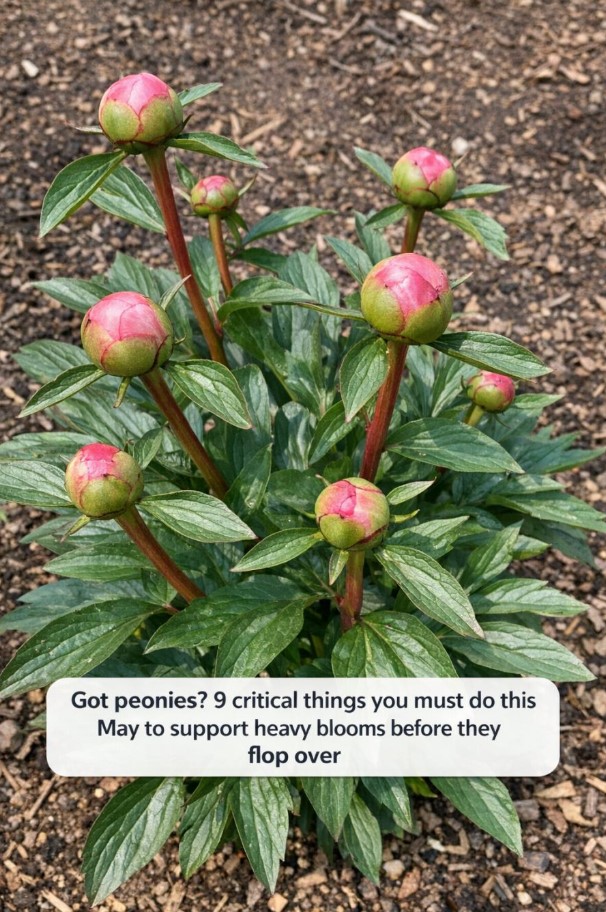
Peonies are among the most beloved garden flowers, known for their large, lush blooms and delicate fragrance. When they’re at their best, they can transform a garden into something truly eye-catching. But as stunning as they are, peonies can also be surprisingly sensitive—especially in late spring.
May is a critical time for peony care. This is when buds begin to develop rapidly, stems stretch upward, and the plant prepares to produce its signature heavy blooms. Without the right care during this period, those same flowers can become too heavy, causing stems to bend, droop, or even break.
The good news is that with a few simple, timely actions, you can support your peonies and help them reach their full potential. From proper watering to structural support, each step plays a role in keeping your plants healthy and upright.
Here are nine essential things you should do in May to ensure your peonies bloom beautifully and stay strong.
1. Provide Proper Support Early
One of the most common problems with peonies is flopping. Their large blooms can become too heavy for their stems, especially after rain.
To prevent this:
- Install plant supports or rings early in the season
- Position them while the plant is still growing
Adding support early allows the stems to grow through the structure naturally, giving them stability before the blooms become heavy.
2. Water Consistently, but Not Excessively
Peonies need steady moisture during their growth phase, but too much water can cause problems.
Aim to:
- Water deeply once or twice a week
- Keep soil moist but not soggy
Overwatering can lead to root issues, while underwatering can stress the plant and affect bloom quality.
3. Mulch Lightly Around the Base
Mulching helps retain moisture and regulate soil temperature, which is especially important in late spring.
Use a thin layer of mulch to:
- Keep roots cool
- Reduce weed growth
- Maintain consistent moisture
Avoid piling mulch directly against the stems, as this can trap moisture and lead to disease.
4. Remove Side Buds for Larger Blooms
If you want bigger, more dramatic flowers, consider removing smaller side buds.
This process, often called disbudding, allows the plant to:
- Focus energy on the main bud
- Produce larger, fuller blooms
While this step is optional, it’s a popular technique for gardeners who want show-quality flowers.
5. Fertilize at the Right Time
Peonies benefit from light feeding in spring, but timing matters.
In May:
- Use a balanced, low-nitrogen fertilizer
- Apply it around the base, not directly on the plant
Too much nitrogen can encourage leaf growth at the expense of flowers, so moderation is key.
6. Watch for Pests
Peonies are generally hardy, but they can still attract pests such as ants or aphids.
Ants are often seen on peony buds, but they are usually harmless—they are attracted to the sugary nectar.
However, keep an eye out for:
- Aphids
- Leaf damage
- Sticky residue
If needed, gently rinse the plant with water or use a mild, plant-safe solution.
7. Ensure Good Air Circulation
Crowded plants can lead to moisture buildup and increase the risk of disease.
To improve airflow:
- Space plants properly
- Avoid overcrowding nearby vegetation
Good air circulation helps keep leaves dry and reduces the chance of fungal problems.
8. Protect from Heavy Rain
Spring rain can be beneficial, but too much can weigh down blooms and cause stems to bend.
If heavy rain is expected:
- Check that supports are secure
- Gently tie stems if needed
Taking preventive action can help avoid damage before it happens.
9. Avoid Transplanting or Disturbing the Plant
May is not the time to move or divide peonies.
During this stage:
- The plant is focused on blooming
- Disturbing roots can stress it
If you need to transplant peonies, it’s best to wait until fall when the plant is dormant.
Why May Care Matters So Much
Peonies have a relatively short blooming window, which makes proper timing essential.
What you do in May directly affects:
- Bloom size
- Stem strength
- Overall plant health
Because this is the plant’s most active growth period, even small adjustments can have a noticeable impact.
Common Mistakes to Avoid
Even experienced gardeners sometimes make small mistakes that affect their peonies:
- Adding support too late
- Overwatering or underwatering
- Using too much fertilizer
- Ignoring early signs of pests or disease
Being proactive is the best way to prevent problems.
The Reward: Strong, Upright Blooms
When properly cared for, peonies reward you with:
- Large, vibrant flowers
- Strong stems that hold their shape
- A longer-lasting display in the garden
The effort you put in during May helps ensure that your plants not only bloom—but thrive.
Conclusion :
Peonies may look delicate, but with the right care at the right time, they can be strong, resilient, and incredibly rewarding. May is the most important month to guide their growth, support their structure, and set them up for success.
By focusing on simple steps—like proper watering, early support, and careful observation—you can prevent common issues and enjoy full, upright blooms that last.
Gardening is often about timing as much as technique. With peonies, what you do now makes all the difference later. And when those blooms open fully, the results speak for themselves—lush, elegant flowers that turn any garden into something special.