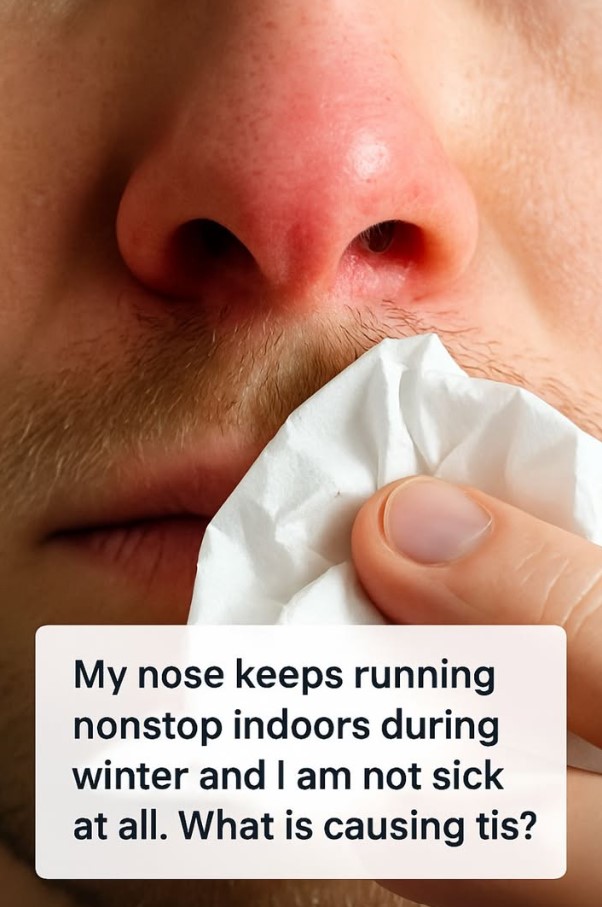
Many people associate a runny nose with catching a cold or having seasonal allergies. But what happens when your nose keeps running even though you feel perfectly healthy? For some individuals, this frustrating symptom appears during the winter months—especially when they are indoors.
It may seem confusing at first. You’re not coughing, you don’t have a fever, and you feel fine otherwise. Yet your nose continues to drip, sometimes constantly. While it might feel like something is wrong, this situation is actually quite common.
During winter, several environmental and biological factors can trigger nasal irritation and increased mucus production. These changes can cause your nose to run even when there is no infection present.
Understanding why this happens can help you manage the symptoms and avoid unnecessary worry. In many cases, the cause is simply your body’s natural response to dry air, temperature changes, or indoor environmental conditions.
How Your Nose Protects Your Body
Your nose plays a vital role in protecting your respiratory system. Every time you breathe in, the nose helps warm, filter, and humidify the air before it reaches your lungs.
When cold or dry air enters the nose, the body responds by producing extra mucus to keep the nasal passages moist and protected. This mucus traps dust, bacteria, and other particles so they can be expelled before reaching deeper parts of the respiratory system.
In winter, the air tends to be colder and drier. Because of this, the nose often produces more mucus than usual, which can lead to a persistent runny nose.
The Impact of Cold and Dry Air
One of the most common reasons for a runny nose in winter is exposure to cold, dry air.
Cold air contains much less moisture than warm air. When you breathe it in, your nasal passages try to compensate by producing extra mucus to add moisture and protect the lining of the nose.
This reaction is completely normal. Medical experts explain that the nose produces more mucus because cold air irritates the nasal lining, causing glands in the nose to release additional fluid.
As a result, you may notice clear, watery mucus dripping from your nose even though you’re not sick.
Why It Happens Even Indoors
You might expect the symptoms to disappear once you go inside, but that’s not always the case. In fact, indoor environments during winter can sometimes make the problem worse.
Heating systems used in homes and offices often dry out indoor air, which can irritate the nasal passages. When the lining inside the nose becomes dry, the body produces more mucus in an attempt to restore moisture.
Additionally, heating systems can circulate dust and other particles in the air. These irritants may trigger nasal sensitivity and cause the nose to run.
Because of these conditions, it’s possible to experience a runny nose indoors even if you’re not exposed to cold outdoor temperatures.
A Condition Called Nonallergic Rhinitis
Another possible explanation is a condition known as nonallergic rhinitis, sometimes referred to as vasomotor rhinitis.
Unlike allergies, this condition is not caused by pollen, pet dander, or other allergens. Instead, it occurs when the blood vessels and nerves in the nose react strongly to environmental triggers such as:
- Temperature changes
- Dry air
- Strong odors
- Smoke or pollution
- Hormonal changes
- Certain medications
These triggers cause the nasal tissues to swell and produce excess mucus, leading to symptoms like a runny or stuffy nose.
Many people with this condition notice symptoms throughout the year, but they may become more noticeable during winter due to environmental factors.
The Role of Temperature Changes
Another factor that contributes to winter nasal drip is the sudden transition between outdoor cold air and warm indoor air.
When you move from cold to warm environments, the blood vessels in the nose expand. This change can signal mucus-producing cells to release more fluid, creating thin, watery mucus.
Because winter often involves frequent temperature changes—such as going from cold outdoor air to heated indoor spaces—your nose may constantly adjust by producing extra mucus.
Other Possible Triggers
While cold air and dry environments are the most common causes, other factors may also contribute to a persistent runny nose during winter.
Indoor Allergens
Dust mites, mold, and pet dander are common indoors during colder months. These allergens can irritate the nasal passages and trigger symptoms similar to allergies.
Strong Scents and Irritants
Perfumes, cleaning products, and cigarette smoke may irritate sensitive nasal tissues.
Spicy Foods or Alcohol
Certain foods and beverages can temporarily trigger nasal mucus production.
Hormonal Changes or Medications
Hormonal fluctuations and some medications may also affect nasal tissues and cause symptoms.
These triggers can make winter symptoms more noticeable, especially if the nose is already sensitive.
Simple Ways to Reduce the Problem
Although a winter runny nose is usually harmless, there are several practical steps that may help reduce the symptoms.
1. Use a Humidifier
Adding moisture to the air can help prevent nasal passages from drying out.
2. Drink Warm Fluids
Warm beverages help keep the body hydrated and may soothe irritated nasal tissues.
3. Try Saline Nasal Sprays
Saline sprays or rinses can help moisturize the nose and flush out irritants.
4. Improve Indoor Air Quality
Regularly cleaning dust, vacuuming carpets, and replacing air filters can reduce airborne irritants.
5. Protect Your Nose Outdoors
Wearing a scarf over your nose and mouth can warm and humidify the air before it reaches your nasal passages.
These simple measures can often make a noticeable difference.
When to See a Doctor
In most cases, a runny nose during winter is harmless and temporary. However, it may be worth consulting a healthcare professional if:
- Symptoms persist for many weeks
- The mucus becomes thick, yellow, or green
- You experience severe congestion or facial pain
- Over-the-counter treatments don’t help
A doctor can determine whether allergies, sinus issues, or another condition might be responsible.
Conclusion :
A constantly running nose during winter—even when you’re not sick—can feel frustrating and confusing. However, in many cases it’s simply your body responding to cold temperatures, dry air, and indoor environmental conditions.
Your nose works hard to protect your lungs by warming and humidifying the air you breathe. When winter conditions disrupt this balance, your body naturally produces extra mucus to compensate.
Understanding these triggers can help you manage the symptoms and prevent unnecessary worry. With simple steps like maintaining indoor humidity, reducing irritants, and keeping nasal passages moisturized, you can often keep the problem under control and breathe more comfortably throughout the winter season.