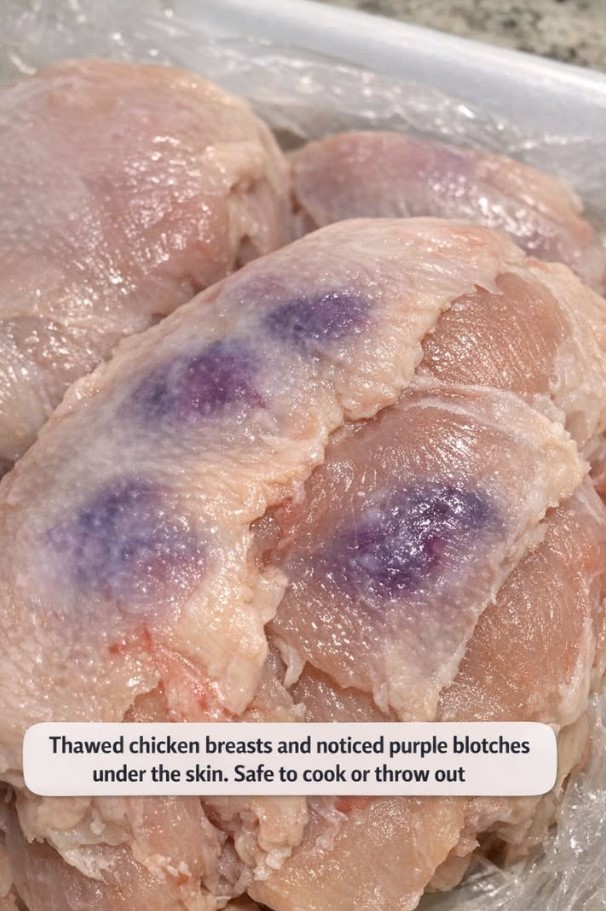
It’s always a bit unsettling when you open a package of chicken breasts and notice something unexpected — especially if the meat was frozen and you only see it after thawing. One of the more surprising things people sometimes find are purple or dark blotches under the skin or in the meat. Since poultry safety is a serious concern, it’s completely normal to wonder whether those spots mean the chicken is unsafe to eat.
Thankfully, purple blotches on chicken are often not a sign of spoilage or danger — but that doesn’t mean they should be ignored. Understanding what causes these discolorations and how to tell the difference between harmless color changes and real spoilage can help you decide whether to cook the chicken confidently or discard it to stay safe. Let’s break it down and explain what’s going on.
What Those Purple Spots Really Are
There are a few common reasons why raw chicken meat might show purple, dark red, or bluish spots after thawing:
⭐ Myoglobin and Natural Pigments
Chicken meat contains a protein called myoglobin, which helps store oxygen in muscles. It naturally has a dark, reddish‑purple color before it’s exposed to air. When chicken is vacuum‑packed or freshly cut, that myoglobin can give the meat a purple‑red appearance — especially under the skin or close to the bone.
This is a normal natural pigment change and not a safety concern by itself.
⭐ Bone Marrow Leakage
One of the most common causes of purple spots — especially near bones — is bone marrow pigment leaching out. When chicken is frozen, ice crystals form inside the meat and bones. As the chicken thaws, those crystals can rupture tiny cells and allow bone marrow colour to spread into nearby tissue. This can look like blotchy purple or reddish areas under the skin or deep inside the meat.
This is more common in younger birds, whose bones are more porous, but it doesn’t mean the chicken is unsafe.
⭐ Freezer and Thawing Effects
The process of freezing and thawing can affect how pigments move around inside poultry. Rapid thawing or fluctuating freezer temperatures can make those pigments look more pronounced.
This doesn’t imply bacterial contamination — just a change in appearance.
When Purple Color Is Harmless
In many cases, those purple or dark areas are cosmetic and harmless. If the chicken:
- Smells normal (no sour or “off” odor)
- Feels moist but not slimy
- Has normal texture and no sticky residue
…then the purple blotches are likely just pigment changes and bone marrow leakage and not a sign of spoilage.
As long as those are the only unusual thing you see, and you cook the chicken properly, it can still be safe to eat.
How to Tell If the Chicken Is Actually Bad
Color alone shouldn’t be the only test, because raw meat can vary in appearance for many normal reasons. What really matters are these safety checks:
🧪 Smell Test
Fresh chicken should have a mild or no smell. If it has a sour, rotten, or ammonia‑like odor, that’s a strong sign it’s spoiled and should be thrown out immediately.
👅 Texture Check
Fresh chicken should be moist and slightly slippery, but not slimy, sticky, or tacky. These textures often mean bacteria have started to grow and you should not cook or eat it.
🩸 Discoloration Beyond Purple
Purple or dark red blotches can be normal, but green, gray‑green, or black spots are more likely signs of spoilage. Also, if there’s a lot of grayish discoloration around the entire piece, that’s a concern.
🕒 Storage History
If the chicken was thawed incorrectly (e.g., at room temperature for a long time) or stored past its safe window in the fridge, that increases the risk of spoilage even if it just looks “weird.”
If You Decide to Cook It
If the chicken passes the smell and texture tests and you believe the purple blotches are just pigment or marrow leakage:
✔ Cook it to a Safe Temperature
Use a meat thermometer — poultry must reach 165°F (74°C) in the thickest part to kill harmful bacteria and be safe to eat.
Even if there’s some color remaining after cooking, that doesn’t necessarily mean it’s unsafe as long as it hit the right temperature.
When You Should Throw It Out
Even though purple spots are often harmless, you should discard the chicken if:
- It smells bad or sour
- The texture is slimy, sticky, or tacky
- You see green, gray, or black discoloration
- The chicken was left out at unsafe temperatures
- It behaved unusually after thawing (e.g., excessive liquid, bad smell)
In these cases, it’s not worth the risk — bacteria that don’t change smell or color can still make you sick.
Tips to Reduce Purple Discoloration
If you want to minimize this appearance in the future:
- Thaw in the fridge overnight — slow thawing helps keep pigments stable.
- Use airtight packaging when freezing — this reduces bone marrow leakage staining the meat.
- Avoid repeated freeze/thaw cycles — every cycle increases pigment leakage.
Final Thoughts
Seeing purple blotches on raw chicken breast after thawing can be scary at first, but it’s often a natural pigment effect or bone marrow leakage rather than a sign of spoilage. If the chicken smells normal, feels right, and has proper texture, it’s usually safe to cook — just make sure you reach the proper internal temperature of 165°F (74°C) when cooking.
However, always trust your senses: if something smells off, feels slimy, or looks gray/green, throw it out. Food safety is more important than saving a piece of chicken.