
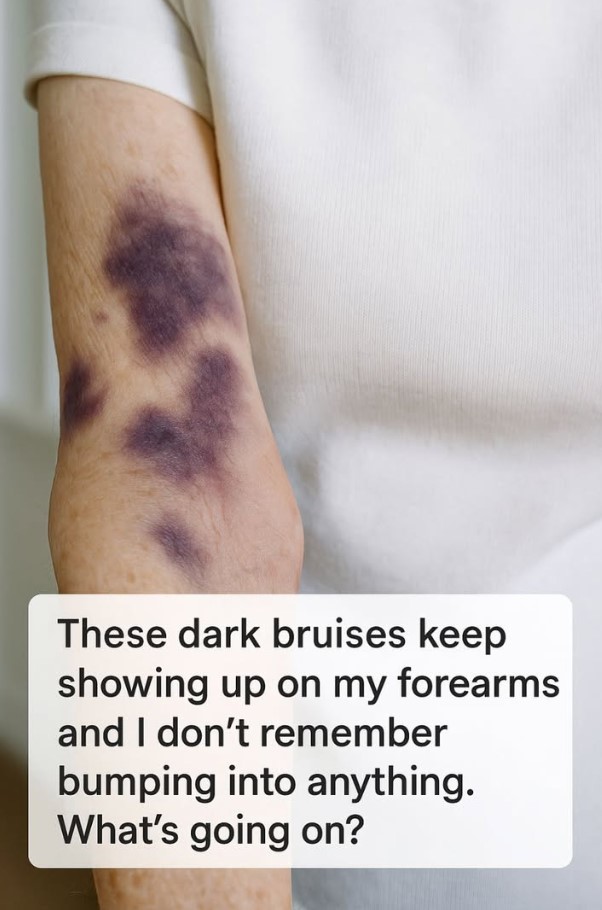
It can be unsettling to notice dark bruises appearing on your skin—especially when you don’t remember hitting anything. One day your arms look completely normal, and the next, you spot deep purple or blue marks that seem to have come out of nowhere.
If this has been happening on your forearms, you’re not alone. Many people experience what’s often called “mystery bruising”, and while it can feel alarming, the explanation is often simpler than it seems.
Still, understanding why these bruises appear—and when they might signal something more serious—is important. Let’s break down what could be happening and what you should watch for.
What a bruise actually is
A bruise forms when tiny blood vessels under the skin break, causing blood to leak and collect beneath the surface.
Normally, this happens after a bump or injury—but sometimes the trigger is so minor that you don’t even notice it.
The most common cause: fragile skin and blood vessels
One of the most common explanations—especially for bruises on the forearms—is a condition known as age-related or sun-related bruising.
As we age:
- Skin becomes thinner
- Blood vessels become more fragile
- The protective fat layer under the skin decreases
This makes it much easier for bruises to appear—even from very light contact.
There’s also a specific condition called senile (or actinic) purpura, where:
- Dark purple bruises appear on the forearms and hands
- They show up without obvious injury
- They are linked to aging and long-term sun exposure
In many cases, these bruises are harmless—even if they look dramatic.
Why the forearms are affected the most
You might notice the bruises mainly on your forearms, and that’s not a coincidence.
This area is more vulnerable because:
- It’s frequently exposed to the sun
- The skin there is thinner
- It experiences small, unnoticed bumps throughout the day
Over time, these factors make forearms one of the most common places for unexplained bruising.
Other possible causes
While fragile skin is the most common reason, there are other factors that can contribute:
1. Medications
Some common drugs can increase bruising, including:
- Aspirin
- Ibuprofen
- Blood thinners
These affect how your blood clots, making bruises more likely.
2. Vitamin deficiencies
Low levels of certain nutrients—especially:
- Vitamin C
- Vitamin K
can weaken blood vessels and make bruising easier.
3. Intense physical activity
Even workouts or lifting heavy objects can cause small internal impacts that lead to bruises.
4. Underlying health conditions (less common)
In some cases, frequent unexplained bruising may be linked to:
- Blood clotting disorders
- Low platelet levels
- Liver problems
But these are usually accompanied by other symptoms, not just bruising alone.
When should you be concerned?
Most random bruises are harmless—but you should pay attention if you notice:
- Bruises appearing very frequently or getting larger
- Bruising in unusual areas (like the back, face, or stomach)
- Bleeding easily (gums, nosebleeds, etc.)
- Bruising that started suddenly without explanation
These could be signs that something else is going on and should be checked by a doctor.
Can you prevent these bruises?
While you can’t stop aging or completely avoid minor bumps, you can reduce bruising by:
- Protecting your skin from the sun
- Eating a balanced diet rich in vitamins
- Being mindful of medications and supplements
- Keeping your skin moisturized and healthy
Even small lifestyle changes can help strengthen your skin over time.
Conclusion :
Noticing dark bruises on your forearms without any clear cause can feel worrying at first, but in many cases, it’s simply a normal part of how the body changes over time. As skin becomes thinner and blood vessels more delicate, even the smallest, unnoticed bumps can leave visible marks.
Conditions like age-related or sun-related bruising are surprisingly common, especially on the forearms, and while they may look severe, they are often harmless and temporary. Understanding this can bring a sense of reassurance and help you see these changes in a different light.
That said, your body always gives signals worth paying attention to. If bruising becomes more frequent, more severe, or is accompanied by other unusual symptoms, it’s important not to ignore it. Getting professional advice can help rule out any underlying issues and give you peace of mind.
In the end, the key is balance—recognizing what’s normal while staying aware of what isn’t. With the right knowledge, what once seemed alarming can become something you understand and manage with confidence.