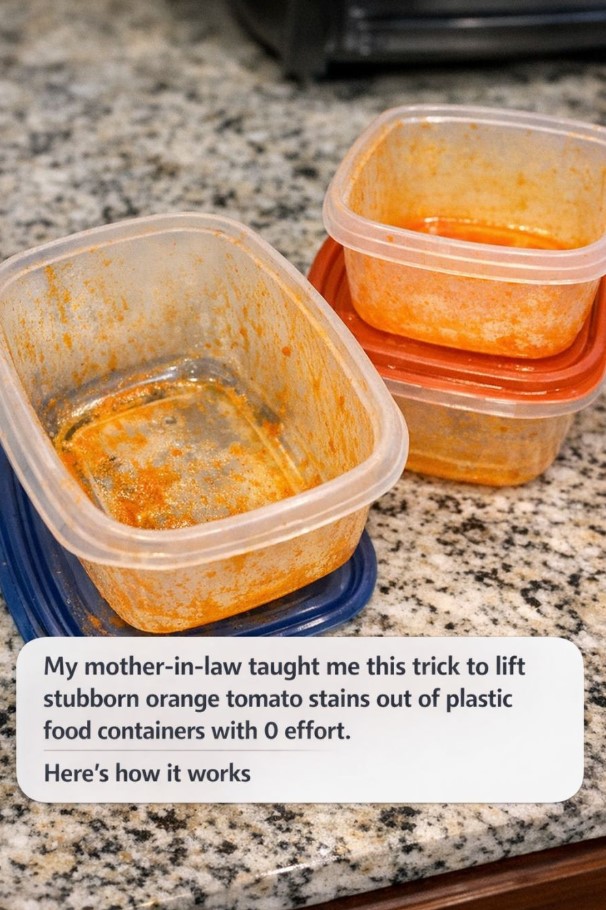
If you’ve ever stored pasta, curry, or any tomato-based dish in a plastic container, you’ve probably faced the same frustrating problem: those stubborn orange stains that just won’t come out.
No matter how much you scrub, wash, or run it through the dishwasher, the container still looks discolored. Over time, these stains can make even clean containers look old, dirty, and unusable.
That’s why simple “no-effort” cleaning tricks are so popular—especially ones that promise to remove stains without harsh scrubbing. But do these methods really work? And what’s actually happening behind the scenes?
Let’s break down the trick and the science behind it.
Why tomato stains are so hard to remove
Tomato stains aren’t like normal food stains.
They’re caused by a pigment called lycopene, which:
- Is fat-soluble
- Binds easily to plastic
- Becomes worse when heated
Plastic is slightly porous, so when you store hot tomato-based food inside, the pigment sinks into the material—creating that stubborn orange color.
That’s why regular washing often doesn’t work.
The “0-effort” trick explained
The viral method usually involves a simple combination of dish soap, paper towel, and water.
Here’s how it works:
- Add a few drops of dish soap into the container
- Place a piece of paper towel inside
- Add warm water
- Close the lid tightly
- Shake the container for 30–60 seconds
That’s it—no scrubbing needed.
Why this trick actually works
This method might seem too simple, but there’s real logic behind it:
- Dish soap breaks down grease and oil (which carry the stain)
- Paper towel acts like a soft scrubber and absorbs residue
- Shaking spreads the mixture across all surfaces
Tomato stains often stick because of oils in the sauce, and removing those oils helps lift the color from the plastic.
What results should you expect?
For fresh stains, this trick can work surprisingly well:
- Removes grease and surface residue
- Lightens or removes orange discoloration
- Leaves containers looking much cleaner
For older or set-in stains:
- It may only partially fade the stain
- You might need a stronger method
This is because older stains have already penetrated deeper into the plastic.
Other proven methods that actually work
If the stain doesn’t fully come out, there are a few effective alternatives:
1. Baking soda paste
- Mix baking soda with a little water
- Apply and let sit for 10–15 minutes
- Gently scrub
This works because baking soda helps lift and break down the stain.
2. Vinegar soak
- Fill container with vinegar or a vinegar-water mix
- Let sit for 30–60 minutes
Helpful for both stains and odors.
3. Sunlight method
- Fill with water and lemon juice
- Leave in direct sunlight for a few hours
UV rays help break down the pigment naturally.
4. Hydrogen peroxide (for tough stains)
- Mix with baking soda
- Let sit longer (even overnight)
This helps break down deeper pigment bonds.
Common mistakes to avoid
To get the best results, avoid these:
- ❌ Using very hot water first (it can set the stain)
- ❌ Scrubbing too hard (can damage plastic)
- ❌ Waiting too long before cleaning
- ❌ Using harsh bleach too often (can damage containers)
How to prevent stains in the future
Prevention is actually easier than cleaning:
- Let hot food cool before storing
- Avoid microwaving tomato sauce in plastic
- Rinse containers immediately after use
- Lightly coat containers with oil before storing food
These small habits can make a big difference.
Conclusion :
Stubborn orange stains in plastic containers may seem impossible to remove, but they’re not as permanent as they look. The simple shake-and-clean trick using dish soap, water, and a paper towel works because it targets the real cause of the problem—grease and pigment buildup.
For fresh stains, this method can feel almost effortless, saving you time and frustration. For older stains, combining it with other techniques like baking soda, vinegar, or sunlight can bring your containers back to life.
The key takeaway is that these stains aren’t just about dirt—they’re about chemistry. Once you understand how tomato pigments interact with plastic, it becomes much easier to clean smarter instead of harder.
In the end, keeping your containers clean doesn’t require expensive products or endless scrubbing. With the right approach—and a few simple tricks—you can restore them, extend their life, and keep your kitchen looking fresh and organized.