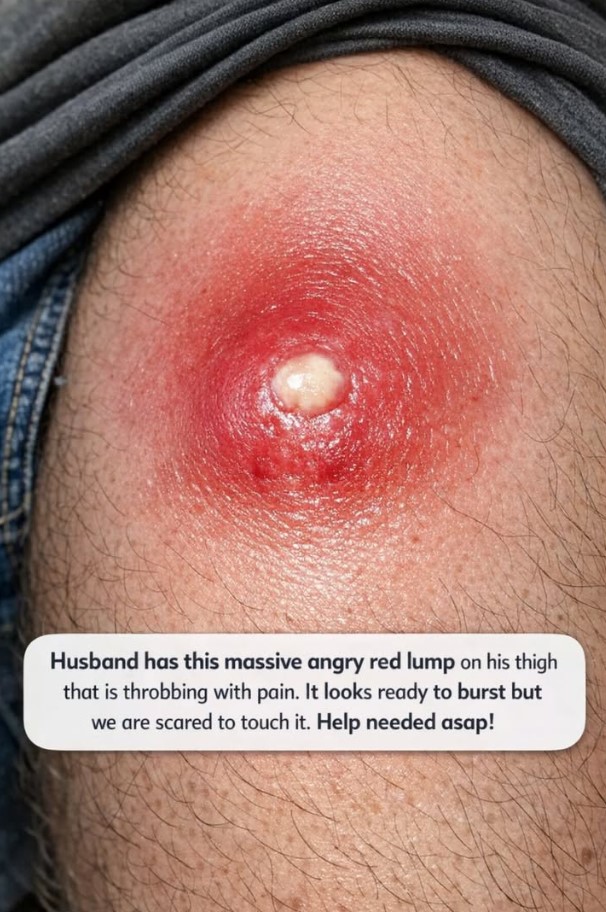
Seeing a large, angry-looking lump suddenly appear on the skin—especially one that’s red, swollen, and painfully throbbing—can be frightening. When it’s growing or feels like it might “burst,” it’s completely normal to panic and wonder if it’s something serious.
While not every lump is dangerous, a painful, inflamed swelling like this is often a sign that the body is fighting an infection. And in some cases, it does need medical attention sooner rather than later.
Let’s break down what this could be, what’s happening under the skin, and what you should do right now.
The most likely cause: a skin abscess (or boil)
Based on your description, the most common explanation is a skin abscess (sometimes called a boil).
This is:
- A pocket of pus under the skin
- Caused by a bacterial infection
- Often red, swollen, warm, and very painful
Abscesses typically form when bacteria enter through a small break in the skin and trigger inflammation.
They often:
- Grow over time
- Become more painful and “tight”
- Develop a soft center that feels like it could burst
That “ready to pop” feeling you described is actually pressure from pus building up inside.
Why it hurts so much
The intense pain and throbbing are key warning signs.
As the infection grows:
- The body sends immune cells to fight it
- Pus (dead cells + bacteria) builds up
- Pressure increases under the skin
This creates a tight, inflamed lump that can throb or pulse.
Common places this happens
The thigh is a very common location for these infections because:
- There’s friction (skin rubbing)
- Sweat and warmth encourage bacteria
- Hair follicles can become infected
Boils and abscesses often develop in areas like the inner thigh for exactly these reasons.
⚠️ Important: don’t try to pop it
This is one of the biggest mistakes people make.
You should NOT:
- Squeeze it
- Cut it
- Try to “drain” it at home
Doing this can:
- Push the infection deeper
- Spread bacteria to surrounding tissue
- Make it much worse
Medical sources specifically warn against squeezing abscesses because it can spread infection.
What you can do right now (safe steps)
While waiting to decide on care:
✔️ Apply warm compresses
- Use a clean, warm (not hot) cloth
- Apply for 10–15 minutes, a few times a day
- This can help it drain naturally over time
✔️ Keep the area clean
- Wash gently with soap and water
- Avoid irritation or friction
✔️ Pain relief
- Over-the-counter pain relief can help
🚨 When you should go to a doctor ASAP
Based on your description (large, painful, throbbing, possibly about to burst), this is already leaning toward needing medical care.
Go to urgent care or a doctor if:
- The lump is large or getting bigger
- Pain is severe or worsening
- The area is very red, hot, or spreading
- There is fever or feeling unwell
- It’s not improving within 1–2 days
Many abscesses need professional drainage, which is quick and done safely with numbing.
What doctors usually do
If it is an abscess, treatment may include:
- Draining the pus (small procedure)
- Antibiotics (if infection is spreading)
- Cleaning and dressing the wound
Once drained properly, relief is often very fast.
Rare but serious possibilities
Most cases are simple infections—but rarely, more serious conditions can occur, especially if ignored:
- Deeper infections in the muscle
- Spreading infection (cellulitis)
- Blood infection (sepsis)
These are uncommon, but that’s why worsening symptoms should never be ignored.
Conclusion :
A large, painful, red lump that feels like it’s about to burst is most often a skin abscess, which is a common but sometimes uncomfortable bacterial infection. While it may look alarming, it is usually treatable—especially when handled properly.
The key is not to panic, but also not to ignore it. Avoid trying to pop or squeeze it yourself, as this can make things worse. Instead, use simple care like warm compresses and monitor it closely.
However, given the size, pain, and “throbbing” you described, this situation likely needs medical evaluation sooner rather than later. Getting it checked and treated early can prevent complications and bring quick relief.
When it comes to infections like this, it’s always better to be safe—and get professional help if you’re unsure.