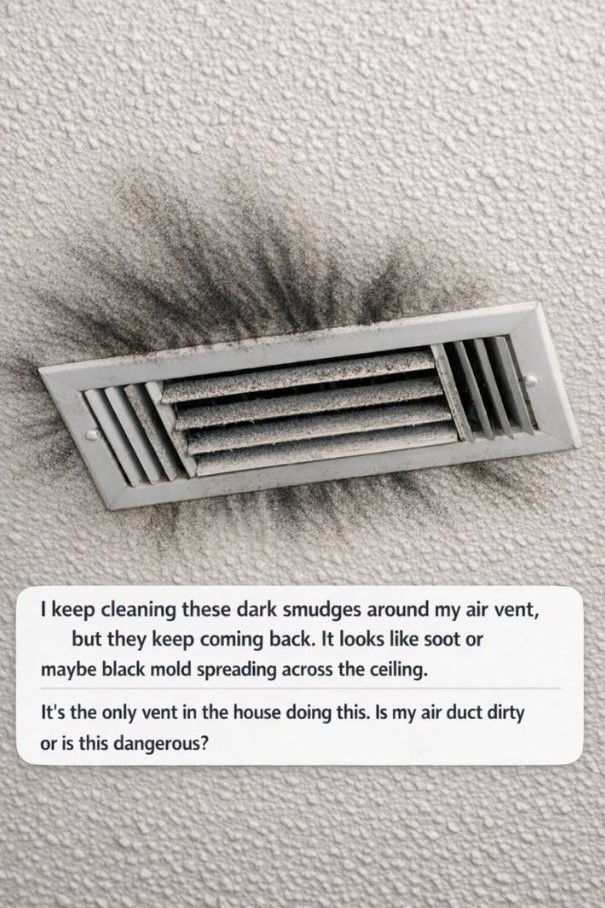
Noticing dark smudges forming around your air vent—and watching them return no matter how often you clean—can be unsettling. At first glance, they may look like soot, dirt, or even something more serious like black mold spreading across your ceiling.
When it’s only happening around one vent, the mystery becomes even more frustrating. Is your air duct dirty? Is something wrong with your HVAC system? Or could it actually be a health risk?
The good news is that in many cases, these marks have a common and explainable cause. But in some situations, they can point to underlying issues that shouldn’t be ignored. Let’s break down what’s really going on.
What are those dark smudges?
Dark marks around air vents are usually caused by particles in the air sticking to the ceiling surface.
These particles can include:
- Dust
- Soot
- Insulation fibers
- Airborne debris
As air flows through the vent, it pushes these particles outward, where they collect around the edges—creating visible smudges over time.
The most common cause: “thermal tracking” (ghosting)
One of the most common explanations is something called thermal tracking, also known as ghosting.
This happens when:
- Warm air meets cooler ceiling surfaces
- Tiny particles stick more easily to those cooler areas
- Over time, dark lines or smudges appear
These marks often:
- Follow patterns (like lines or edges around vents)
- Keep coming back even after cleaning
- Appear darker near airflow areas
This is usually not dangerous, but it does indicate airflow and insulation issues.
Why it’s happening around only one vent
If only one vent is affected, it usually means something is different about that specific area.
Possible reasons include:
- Different airflow strength from that vent
- Nearby sources of particles (like candles or cooking)
- Poor insulation in that part of the ceiling
- Slight temperature or humidity differences
Even small variations can cause one vent to collect more residue than others.
Could it be soot?
Yes—especially if you:
- Burn candles frequently
- Use a fireplace
- Have a furnace that isn’t working efficiently
Soot particles are:
- Dark, greasy, and black
- Easy to smear when wiped
These particles can travel through your home and settle around vents over time.
Could it be mold?
This is the biggest concern for most people—and sometimes it can be mold, but not always.
Signs it might be mold:
- Musty or damp smell near the vent
- Spots look fuzzy, slimy, or patchy
- Stains don’t wipe off easily
- Area feels damp
Mold tends to grow when moisture + dust are present—especially in HVAC systems.
Signs it’s probably NOT mold:
- Dry, powdery marks
- Smudges that wipe off easily
- No smell or moisture
Most of the time, these marks are dust or soot—not mold.
Another possible cause: moisture and condensation
Sometimes, dark or brown stains around vents are linked to moisture issues, not just dust.
This can happen when:
- Cold air passes through warm, humid spaces
- Condensation forms around ducts
- Water pulls dirt and debris into the ceiling
In these cases, you may see:
- Stains that grow over time
- Slight discoloration (yellow, brown, or dark edges)
- Damp or soft ceiling areas
This should be taken more seriously, as it can lead to mold if ignored.
Is this dangerous?
In most cases: no, it’s not dangerous.
If it’s just:
- Dust
- Thermal tracking
- Minor soot buildup
…it’s mainly a cosmetic issue.
However, it can become a concern if:
- There is mold growth
- Moisture is present
- Your HVAC system is spreading contaminants
Simple checks you can do at home
Before calling a professional, try these:
1. Wipe test
- If it smears easily → likely soot or dust
- If it doesn’t → could be deeper staining or mold
2. Smell test
- Musty odor = possible mold
3. Inspect inside the vent
- Remove the vent cover and look inside
- Check for buildup, moisture, or visible growth
4. Check patterns
- Straight lines or outlines = likely thermal tracking
When you should take action
You should consider professional help if:
- The stains keep spreading quickly
- You notice moisture or water damage
- There’s a persistent musty smell
- You or your family have respiratory symptoms
These signs may indicate mold or HVAC issues that need proper inspection.
How to fix and prevent it
Depending on the cause, solutions include:
- Improving insulation around ducts
- Sealing gaps around vents
- Reducing indoor humidity
- Cleaning or replacing air filters regularly
- Limiting soot sources (like candles)
- Scheduling HVAC maintenance if needed
Fixing the root cause is the only way to stop the stains from coming back.
Conclusion :
Dark smudges around your air vent may look alarming, especially when they keep reappearing, but in most cases, they are caused by common issues like dust buildup or thermal tracking—not something dangerous.
That said, these marks are still a signal. They tell you that air is moving particles, that surfaces may be cooler than expected, or that moisture might be present. While often harmless, ignoring them completely isn’t the best approach.
The key is to understand the difference between a simple cosmetic issue and a potential problem. By checking for signs like moisture, odors, or unusual growth, you can quickly determine whether it’s something minor—or something that needs attention.
In the end, a little investigation goes a long way. Once you identify the cause, you can take the right steps to fix it—and finally stop those stubborn marks from coming back for good.