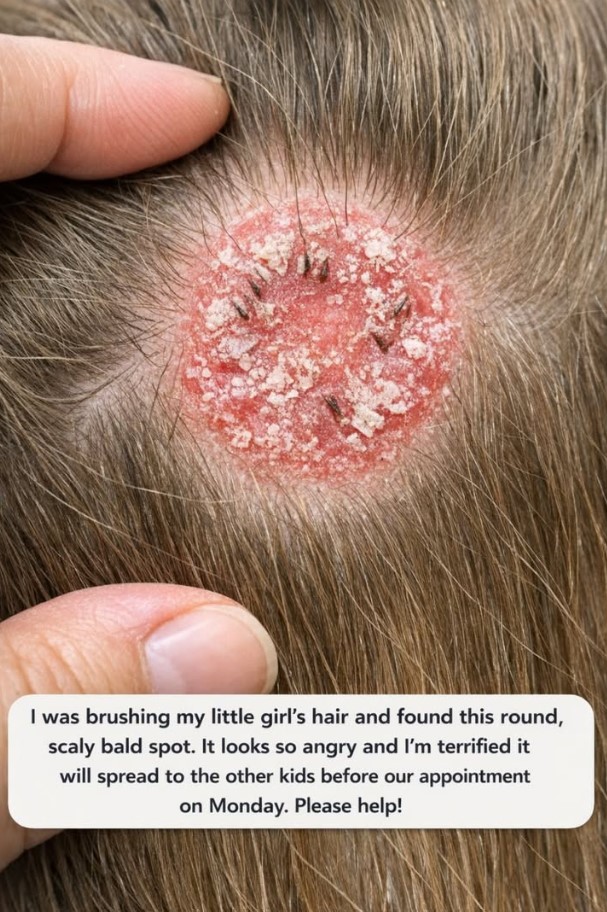
Finding a sudden bald spot on your child’s scalp—especially one that looks red, scaly, or irritated—can be very alarming. It’s even more stressful when the area looks inflamed and your child seems uncomfortable, leaving you worried about what it might be and whether it could spread to others in the household.
Many parents immediately fear something serious, but in reality, this type of symptom is quite common in children. One of the most likely causes is a condition that may sound scary at first but is actually very treatable with the right care. The key is understanding what you’re dealing with and how to manage it safely until your appointment.
What This Could Be
The description of a round, scaly bald patch on a child’s scalp strongly points to a condition called tinea capitis, also known as scalp ringworm.
Despite the name, it is not caused by worms, but by a fungal infection that affects the scalp and hair. Tinea capitis is very common in children and often appears exactly like this.
Typical signs include:
- Round or patchy areas of hair loss
- Dry, scaly or flaky skin
- Red or “angry-looking” patches
- Broken hairs that leave a bald spot
This happens because the fungus attacks the hair shaft, causing hair to break off near the scalp.
Is It Contagious?
Yes—this is one of the most important things to understand.
Scalp ringworm is highly contagious, especially among children. It can spread through:
- Direct head-to-head contact
- Sharing combs, brushes, hats, or pillows
- Contact with infected pets (like cats or dogs)
The fungus can live on objects and surfaces, making it easy to pass from one child to another.
That’s why your concern about it spreading to other kids is completely valid.
Why It Looks So “Angry”
The redness and irritation you’re seeing come from the body’s reaction to the fungal infection. In some cases, the immune system reacts strongly, making the area look swollen, inflamed, or even slightly crusty.
In more intense cases, it can form a tender, swollen patch (called a kerion), but even milder forms can still look quite dramatic.
What You Can Do Right Now (Before the Appointment)
While this condition usually requires prescription treatment, there are safe steps you can take to reduce spread and keep your child comfortable:
1. Avoid Sharing Personal Items
- Do not share brushes, combs, hats, or pillows
- Keep your child’s items separate
2. Keep the Scalp Clean
Wash the hair regularly with a gentle shampoo. Medicated antifungal shampoos can help reduce spread (but won’t fully cure it alone).
3. Limit Close Contact
Try to avoid head-to-head contact with other children until it’s treated.
4. Wash Bedding and Clothing
Clean pillowcases, hats, and towels frequently in hot water.
5. Check Other Family Members
Look for similar patches on siblings or even pets, since the infection can spread easily within households.
What NOT to Do
- Don’t ignore it and wait too long
- Don’t apply random creams without advice
- Don’t try to scrub or irritate the area
This condition needs proper treatment to fully go away.
Will the Hair Grow Back?
In most cases, yes.
When treated early, hair usually grows back normally after the infection clears. However, severe inflammation or delayed treatment can sometimes lead to scarring, which may affect regrowth.
When to Be More Concerned
Seek faster medical care if you notice:
- Rapid spreading of the patch
- Pain, swelling, or pus
- Fever or swollen glands
- Multiple patches appearing
These may indicate a more severe reaction that needs prompt attention.
Conclusion :
Finding a round, scaly bald spot on your child’s scalp can be frightening, but in many cases, it’s caused by a common and treatable condition like scalp ringworm. While the appearance can look severe, it’s often manageable with the right care and medication.
The most important thing to keep in mind is that this condition is contagious, which is why taking simple precautions—like avoiding shared items and maintaining good hygiene—can make a big difference in preventing it from spreading to others.
Although waiting for your appointment can feel stressful, you’re already doing the right thing by paying attention and seeking answers. With proper treatment, most children recover fully, and the hair typically grows back without lasting issues.
In the end, this situation is understandably worrying—but it’s also very manageable. Acting early, staying cautious, and following through with medical care will help ensure your child heals quickly and safely.